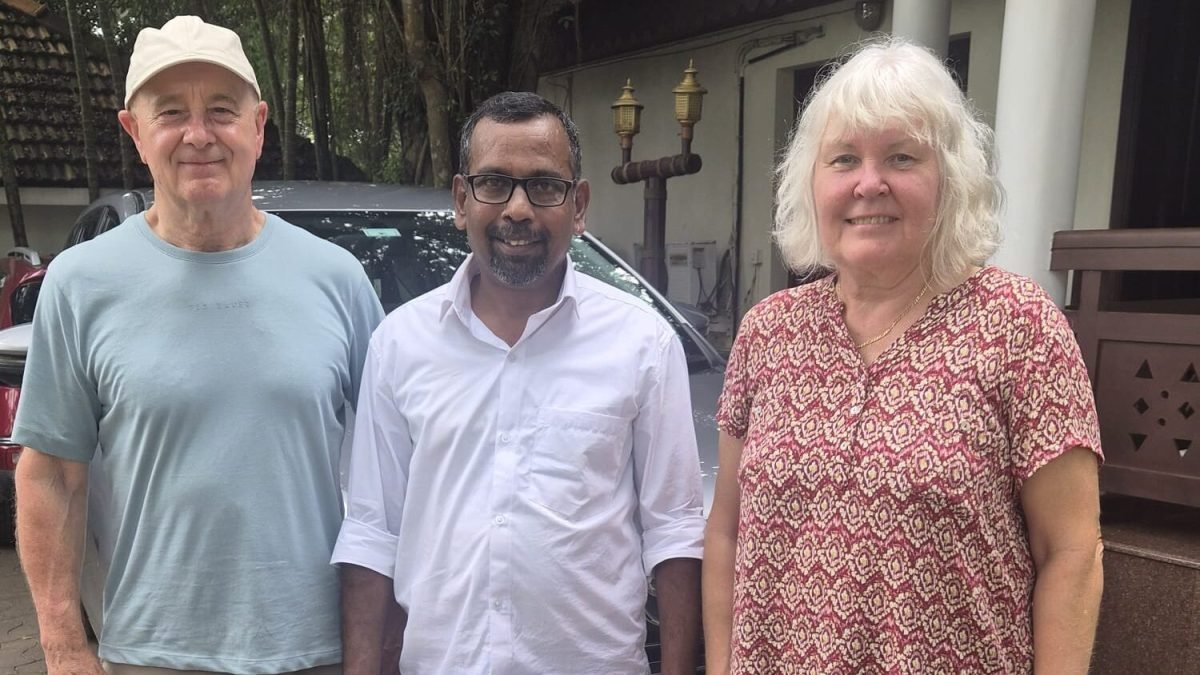
Amazing service. Communication excellent both before and during holiday.
All hotels excellent.
Sree, our driver absolutely superb.
Our 10 day tour around Kerala was perfect.
Shivaji called Gingee the most impregnable fortress in India, and the British later described it as the Troy of the East. Neither was exaggerating. Three granite hills — Rajagiri, Krishnagiri and Chandrayandurg — are linked by fortification walls enclosing around eleven square kilometres, with a moat, seven gates and a citadel reached across a drawbridge over a natural chasm. It is, by a considerable margin, the most impressive military architecture in Tamil Nadu.
It is also nearly empty on most days. Gingee sits in Villupuram district, about ninety minutes inland from Pondicherry, and it appears on almost no itinerary. Visitors climbing Rajagiri on a weekday will often have the summit to themselves.
The fort’s history explains its scale. Begun by the Chola era and substantially built by the Vijayanagara Nayaks in the sixteenth century, it passed to Bijapur, then to Shivaji’s Marathas in 1677, then to the Mughals after a siege lasting years, then to the French, then the British. Each occupant added to it, which is why the walls contain a Hindu temple, a mosque, granaries, a gymnasium, an elephant tank and the extraordinary seven-storey Kalyana Mahal with its water-lift system.
Ninety minutes west, the Kalvarayan Hills rise to about 1,200 metres — an Eastern Ghats range with a substantial tribal population, cashew and silk-cotton cultivation, and effectively no tourism infrastructure at all. Megam Falls is the main draw, reached on a forest walk.
Three days, one extraordinary fort, and a hill range that even most Tamilians have not heard of.
Related: this pairs naturally with our Tamilnadu Tour Packages for 3 Days covering Chennai, Kanchipuram and Mahabalipuram, or extends into the Classic Tamilnadu Temple Trail. Browse everything on our Tamil Nadu tour packages page.
It is the most demanding part of the itinerary, and skipping it is a genuine option rather than a failure.
Rajagiri involves roughly 1,200 steps cut into granite, with a total ascent of around 800 feet. Allow about two hours up and one hour down. Near the summit, you cross a drawbridge over a natural chasm — solid and safe, but exposed enough that anyone seriously uncomfortable with heights should know about it in advance.
The steps are uneven and largely unshaded, while the granite can become extremely hot by mid-morning. Starting by 7:00 AM is strongly recommended, particularly during warmer months.
We would not recommend the climb for anyone with knee or heart problems, very young children, or during rainy conditions.
Your climb briefing covers these considerations before travel. There is also a full alternative day built around the lower fort, Kalyana Mahal and Krishnagiri, which is considerably easier while still offering plenty to explore.
Gingee earned the nickname because of its formidable defensive design and reputation for being almost impossible to conquer.
Shivaji captured Gingee in 1677 and regarded it as one of the most impregnable fortresses in India. When Mughal forces under Aurangzeb’s commanders besieged it, the fort resisted for years before finally falling in 1698.
The design explains its reputation. Three fortified hills—Rajagiri, Krishnagiri, and Chandrayandurg—are connected by extensive walls enclosing a large fortified landscape, with moats, gates, and independent water sources supporting the defensive system. Capturing one hill did not mean capturing the entire fort.
The British later popularized the comparison with Troy. The complex is also of considerable archaeological importance and has been proposed for UNESCO consideration.
For context, Gingee is a much larger and more complex fortification than Vellore Fort, which is more familiar to many visitors. See our Vellore & Yelagiri package if you want to experience both.
The Kalyana Mahal is the most photographed structure in Gingee Fort and one of its most distinctive architectural features.
It is a square courtyard building with a seven-storey pyramidal tower, traditionally associated with the royal women of the Nayak court. Each level gradually steps inward, ending in a domed pavilion.
One of its most interesting features is its historic water-management system. Channels and lifting mechanisms were used to move water from a tank towards the upper levels, demonstrating sophisticated hydraulic planning for a hill fort. Some elements of the system can still be seen.
Unlike many structures at Gingee, which survive mainly as ruins, the Kalyana Mahal remains relatively well preserved and its architectural form is easy to appreciate.
November to February is generally the most comfortable period for exploring Gingee, particularly if you plan to climb Rajagiri.
March to June can be extremely hot. Exposed granite absorbs and radiates heat, making the climb considerably more demanding. If travelling during this period, an early start is essential.
October to December can bring northeast monsoon conditions. The landscape becomes greener and seasonal waterfalls may be flowing, but wet granite steps can become slippery.
For seasonal waterfalls such as Megam Falls, water flow is most likely during and after the monsoon period.
Opening arrangements and access can change, so your itinerary should be checked against current ASI/local access conditions before travel. If your planned visit falls on a restricted day or during a special closure, the route can be rearranged
The Kalvarayan Hills are an Eastern Ghats range extending across parts of Villupuram, Kallakurichi and Salem districts.
Unlike established hill stations, the area remains relatively undeveloped, with villages, agricultural landscapes and forested hills rather than large resort areas. Local communities cultivate crops including millet and other agricultural products across the region.
Megam Falls is one of the attractions, with a forest walk leading towards the waterfall. Conditions are seasonal, so the experience varies depending on recent rainfall.
The hills provide a useful contrast to Gingee’s granite fortifications. After spending time exploring military architecture and historic ruins, a forest landscape adds a completely different experience to the journey.
If you want a more extensive Eastern Ghats experience, our Kolli Hills and Yercaud packages explore those landscapes in greater depth.
Chennai International Airport (MAA) is the most practical major airport for many travellers, while Pondicherry Airport has limited connectivity and is much closer geographically.
By rail, Villupuram Junction is an important railway connection for reaching the Gingee area, with Tindivanam also providing another rail option.
Gingee works particularly well between Pondicherry and Tiruvannamalai, making it easy to add to a wider Tamil Nadu circuit.
Many travellers combine Gingee with Chennai, Kanchipuram, Mahabalipuram, Pondicherry or Tiruvannamalai. Our Tamilnadu Tour Packages for 3 Days covers Chennai, Kanchipuram, Mahabalipuram and Pondicherry, and Gingee can be incorporated into a longer customised route.
Accommodation around Gingee is relatively basic compared with major tourist destinations.
Gingee town has modest lodges and functional accommodation, while Tindivanam offers a wider selection of mid-range hotels.
Another option is to stay in Pondicherry, where there is a much broader choice of accommodation, including heritage properties, boutique hotels and beachside stays.
The trade-off is travel time. Staying in Pondicherry means an earlier departure if you want to reach Rajagiri before the heat. Staying near Gingee provides a much more convenient start but with fewer accommodation choices.
For travellers prioritising the fort experience, we generally recommend staying near Gingee for the fort visit and continuing to Pondicherry afterwards, depending on the wider route.
Yes, but the itinerary should be adjusted according to mobility and fitness.
For older travellers, the lower fort offers several worthwhile attractions without requiring the demanding Rajagiri ascent. The Venkataramana Temple, Kalyana Mahal, granary and tank can provide a substantial experience without tackling the full climb.
Rajagiri is not suitable for everyone, particularly those with mobility limitations or health concerns that make prolonged stair climbing difficult.
Krishnagiri involves a shorter climb and may be more manageable for some visitors.
For children, Gingee can be particularly engaging because of its walls, gates, drawbridge, fortifications and open spaces. Older children with reasonable stamina may enjoy Rajagiri, while younger children can explore the lower sections instead.
The Megam Falls walk is another option when conditions are dry, although the forest path is uneven.
One major reason is that Gingee sits slightly outside the standard Tamil Nadu tourist circuit.
Many travellers follow routes such as Chennai → Mahabalipuram → Pondicherry → Chola temples or Madurai, while Gingee requires a dedicated detour. Limited accommodation in the immediate area also means that many visitors treat it as a day stop rather than staying overnight.
That has helped preserve much of its sense of remoteness.
Despite its enormous historical and military significance, Gingee generally receives far fewer visitors than better-known Tamil Nadu attractions. On a weekday morning, visitors may find parts of the fort remarkably quiet, particularly compared with the state’s major temple destinations.
For travellers who enjoy history, architecture, photography and less-crowded heritage sites, that relative lack of visitors is one of Gingee’s biggest attractions
Planning a holiday in Kerala, Tamil Nadu or Karnataka? Instantly estimate your tour cost based on your travel dates, destinations, hotel category, vehicle, houseboat, activities and more. Download your trip estimate and plan your South India holiday with confidence.
Our prices vary based on season, dates, group size and custom add‑ons. Every quote is tailored for your exact travel plan.
This page shows a sample itinerary to give you a clear idea of the route, inclusions and timings. Every itinerary is fully customisable to match your dates, hotel preferences and interests. Once you share your travel details we will prepare a personalised itinerary and an itemised quote.
Amazing service. Communication excellent both before and during holiday.
All hotels excellent.
Sree, our driver absolutely superb.
Our 10 day tour around Kerala was perfect.
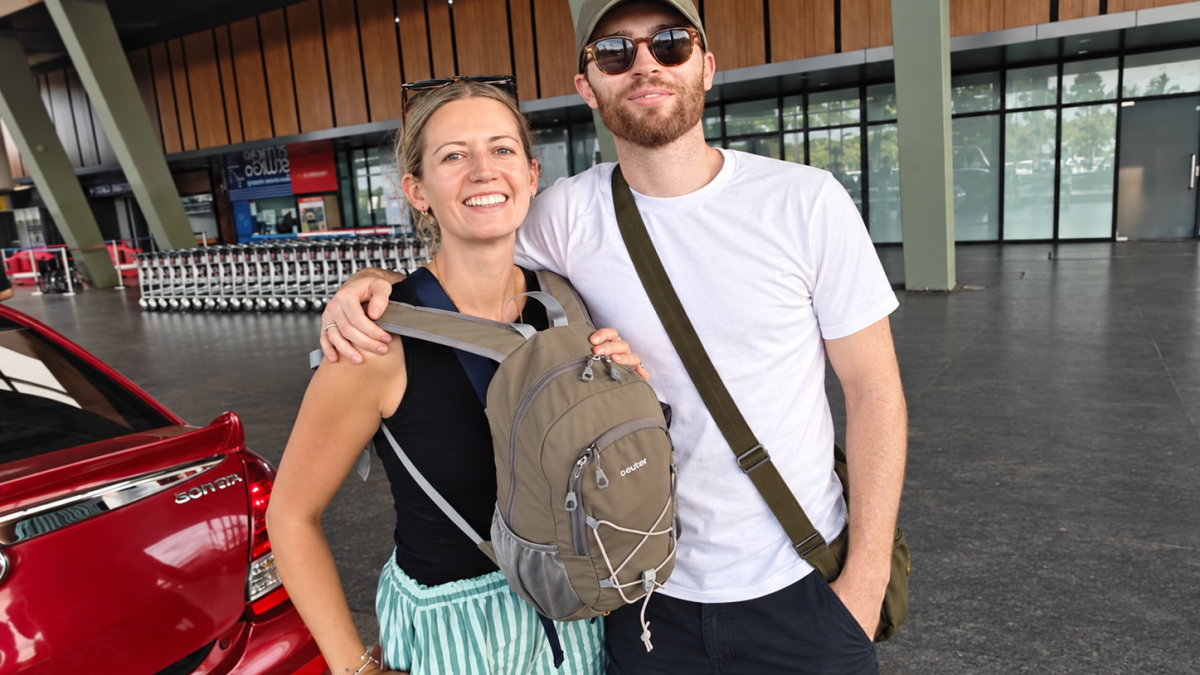
Our 5-day Kerala trip with Troper Tours was a lovely experience from the moment we arrived until the final day. My friend and I travelled from the UK and everything was organised smoothly, which made the journey comfortable and easy. We enjoyed the changing scenery, local food, tea hills, backwaters and the relaxed pace of the trip. One of our favourite moments was reaching Munnar, where we could enjoy the cool weather, plantations and peaceful mountain views. The vehicle was comfortable, our driver was punctual and helpful, and the team was always easy to contact whenever we needed anything. What we appreciated most was that the trip never felt rushed or overly planned. We had enough time to enjoy Munnar, Thekkady, Alleppey and Trivandrum properly. Troper Tours took good care of us throughout the five days. A memorable Kerala holiday, and we would happily recommend them to other travellers visiting from the UK.
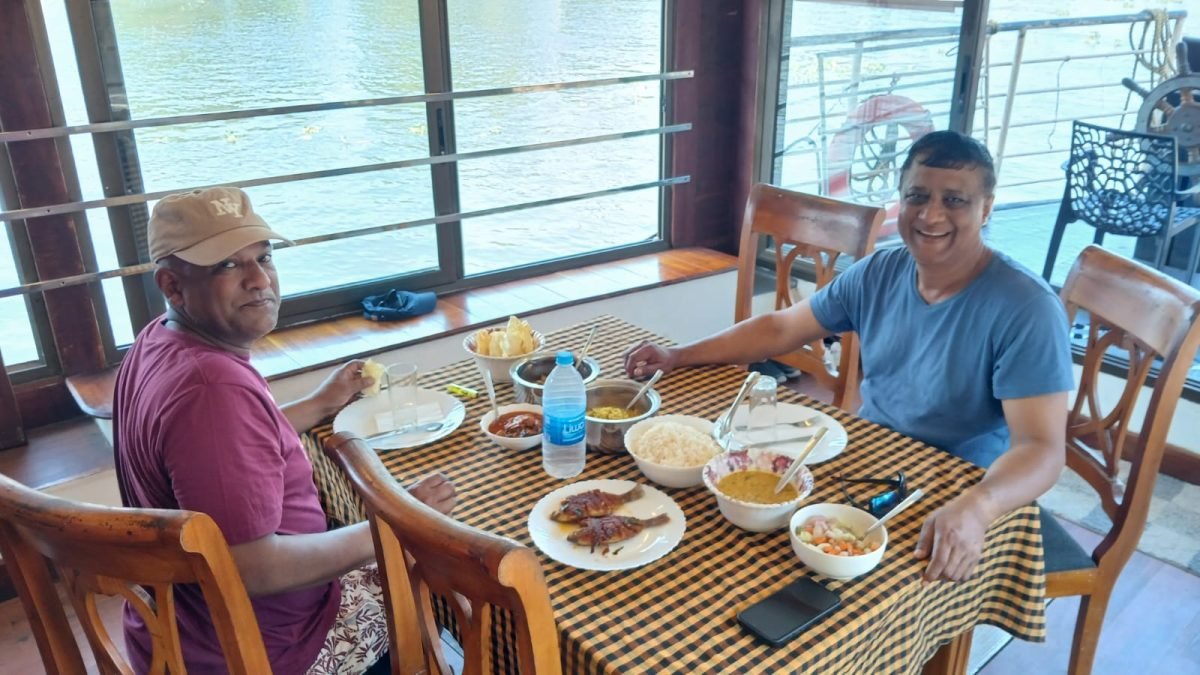
Our 6-day Kerala trip with Troper Tours was a wonderful experience from beginning to end. My brother and I travelled from Australia and everything was arranged very smoothly, which made the journey comfortable and stress free. We enjoyed the changing scenery, local food, backwaters and the relaxed pace of the trip. One of our favourite moments was the houseboat experience, where we could simply sit together, enjoy a nice meal and watch the peaceful water and village life around us. The vehicle was comfortable, our driver was punctual and helpful, and the team was always easy to contact whenever we needed anything. What we appreciated most was that the trip never felt rushed or overly planned. We had enough time to enjoy each place properly. Troper Tours took very good care of us throughout the six days. A memorable Kerala holiday, and we would happily recommend them to other travellers coming from Australia.