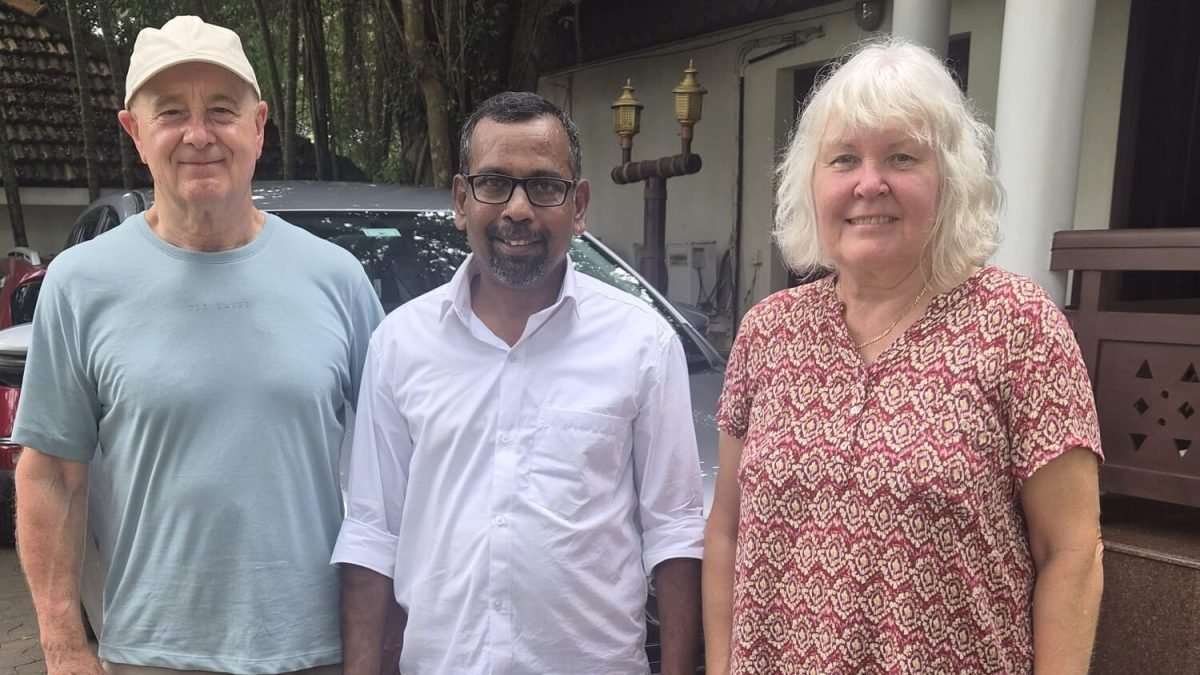
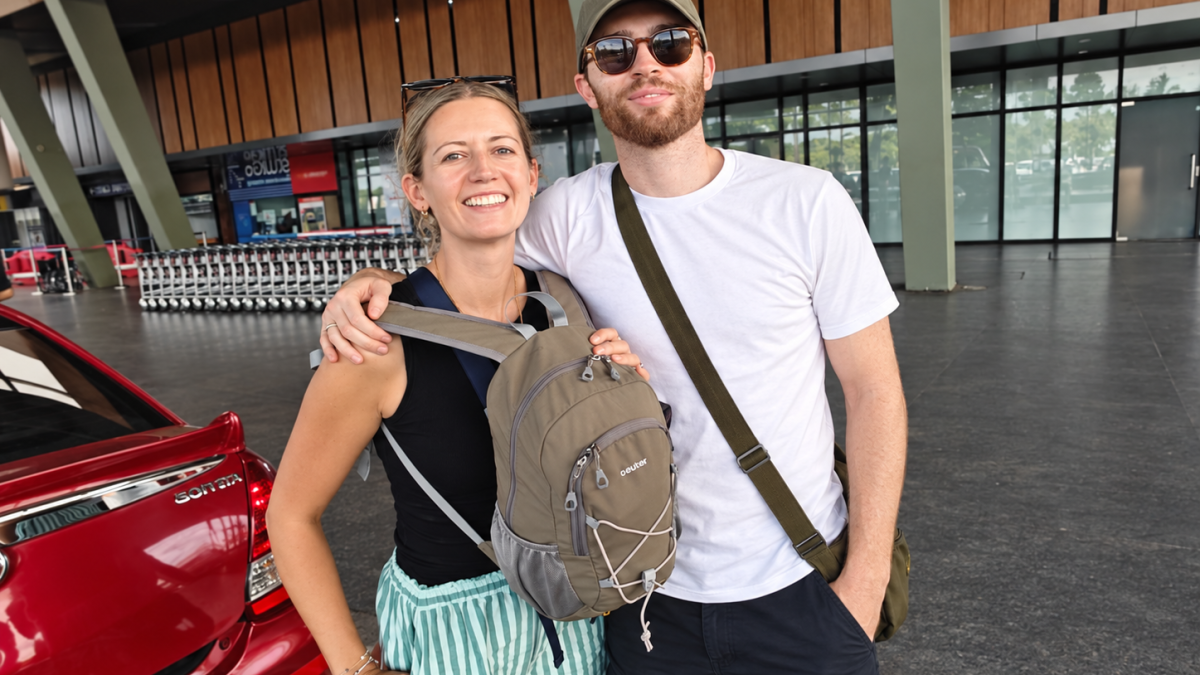
Amazing service. Communication excellent both before and during holiday.
All hotels excellent.
Sree, our driver absolutely superb.
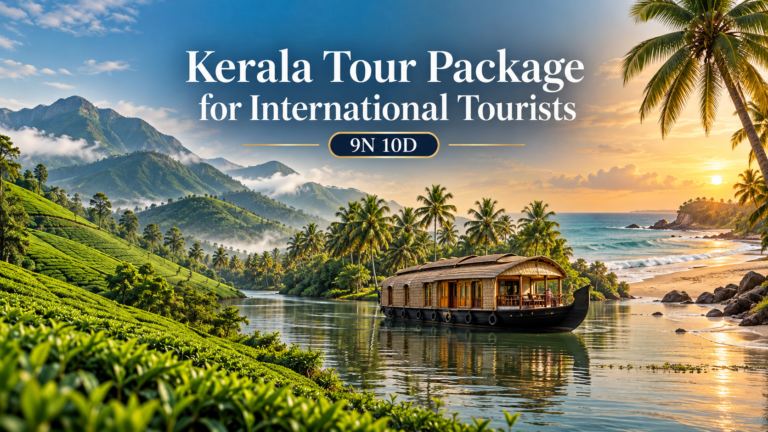
Our 10 day tour around Kerala was perfect.
The Cauvery runs 800 kilometres from Karnataka before it finally meets the Bay of Bengal, and where it does, it does not arrive as a river. It fans out through a network of distributaries into a wetland of channels, lagoons and mangrove forest that covers the eastern edge of Thiruvarur and Nagapattinam districts. Muthupet sits at the heart of it, and holds the largest mangrove forest in Tamil Nadu.
Mangroves are not scenery in the ordinary sense. They are a working ecosystem: the root systems break wave energy, the channels function as fish nurseries, and the whole formation acts as a buffer between the sea and the rice country behind it. The 2004 tsunami demonstrated that in a way nobody wanted — villages behind intact mangrove stood up considerably better than those behind cleared coast.
You see it from a boat. Narrow channels wind through Avicennia marina so dense in places that the branches touch across the water, and the guides who take you through are fishermen who have worked these creeks their whole lives. Otters, water monitors, fiddler crabs and more than a hundred bird species live in here.
An hour south, Point Calimere holds a different wetland again: the Great Salt Swamp, dry evergreen forest, blackbuck herds, and greater flamingos in their thousands from November through February.
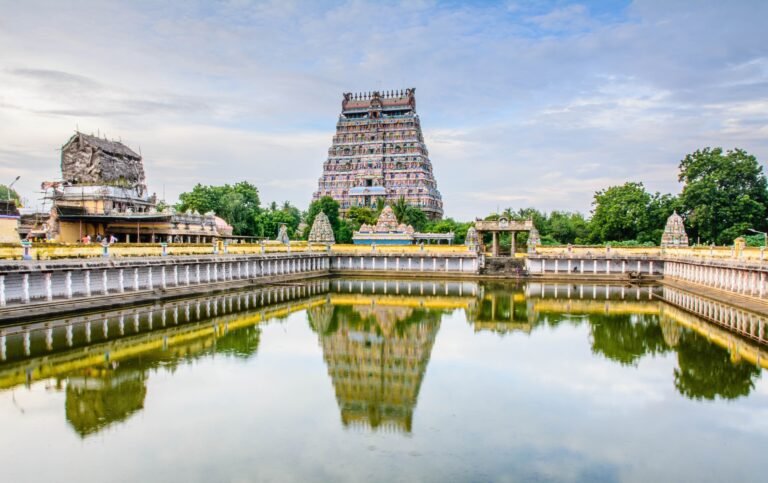
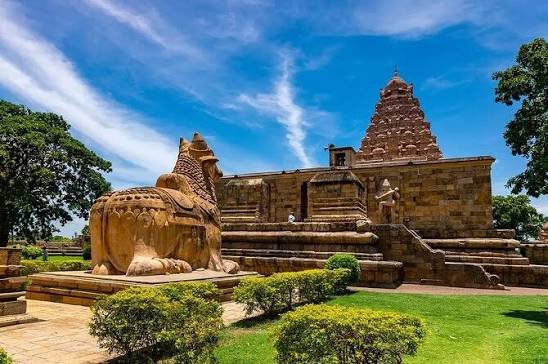
The trip starts at Thanjavur, at the head of the delta, which gives it a useful frame. You see the Brihadeeswarar temple that the Chola wealth built, then follow the river system that generated that wealth all the way to where it disappears into the sea.
Related: the temple side of this landscape is covered in depth in our Chola Temples Tour Package, and Point Calimere also features in our Coastal Faith Trail. Full range on the Tamil Nadu tour packages page.
The forest itself is the main event, and it is worth understanding what you are looking at.
Avicennia marina dominates here — grey mangrove, with the pencil-like roots called pneumatophores standing out of the mud so the tree can breathe in waterlogged soil. In the narrower channels the branches close overhead and the boat brushes both banks.
Wildlife is small-scale rather than dramatic. Fiddler crabs cover the mud flats in their thousands, males waving the one oversized claw. Water monitors bask on the roots. Otters are seen regularly and are the highlight when they appear. Over a hundred bird species use the wetland, including kingfishers, herons, egrets, and migratory waders in season.
Nobody should come expecting big mammals. What you get is an intact ecosystem seen from inside it, which is a different pleasure and a rarer one.
The dawn trip on Day 4 is quieter and better for birds than the afternoon trip.
Yes, and this shapes your day more than anything else on the trip.
The channels are shallow. At low tide some routes become unnavigable and the boat is restricted to the wider creeks. At high tide the full network opens up and you can get deep into the narrow channels, which is where the forest is at its most impressive.
Boat operations are run by the Forest Department with local boatmen, and timings shift daily with the tide table. We check the tides for your dates before finalising the schedule, which is why the itinerary gives an afternoon session on Day 2 and a dawn session on Day 4 — that spread means at least one falls on a favourable tide.
Your tide and season card shows what to expect. Boats are also suspended during cyclone advisories, which are a real risk on this coast between October and December.
November to February, with December and January the peak.
Greater flamingos come in when the Great Salt Swamp fills after the northeast monsoon and the salinity reaches the right level. Numbers can run into the thousands, alongside painted storks, pelicans and a wide range of waders.
Outside that window they are largely absent. From roughly March to September you will see blackbuck, spotted deer, wild boar and the dry evergreen forest — genuinely worth visiting, but not the photograph you may be picturing.
We will tell you which applies to your dates rather than let you find out on arrival. If flamingos are the reason you want this trip, travel in December or January.
Blackbuck are present year-round and Point Calimere holds one of the better populations in the state.
Because the difference was measurable, and it changed how this coast is managed.
Mangrove root systems break wave energy before it reaches land. After the December 2004 tsunami, settlements behind intact mangrove stands along this coast showed markedly less damage than comparable villages behind cleared or degraded coastline.
That evidence drove a serious restoration effort in the Muthupet wetland — channel clearing, replanting, and community-based management involving the fishing villages that depend on the creeks for their catch.
Your boatman will point out replanted sections, which look visibly different from the mature forest. It is one of the more encouraging conservation stories on this coast, and worth asking about while you are on the water.
Basic, and this is the trip’s main constraint.
Muthupet and Thiruthuraipoondi are small delta towns with modest lodges — clean, simple, adequate. There is no mid-range resort tier and certainly no luxury option.
Thanjavur, where you spend the first night, is a different matter entirely: a proper heritage town with good hotels across every level.
The honest alternative is to base at Thanjavur or Pattukkottai for all three nights and drive out each day. That costs you the dawn mangrove session, which is the best boat trip of the two, so we would rather you stayed close to the water for two nights.
Tell us at booking which matters more, and we will build it either way rather than making you discover the standard on arrival.
December to February is the strongest window: comfortable at 24–29°C, flamingos at Point Calimere, and the delta green after the monsoon.
March to May is hot and humid, though the mangrove channels stay noticeably cooler than the open country. Flamingos have gone; blackbuck and the forest remain.
June to September is dry and quiet here — the southwest monsoon largely misses this coast. Rates are lowest and the mangroves are perfectly navigable.
October to December is the northeast monsoon, which hits this coast hardest. Cyclone risk is real in November, boats are suspended during advisories, and roads across the delta flood. We monitor advisories and will move or refund an affected booking, but we would rather you chose another month.
Trichy International (TRZ) at 175 km is the practical airport, with domestic and some Gulf connections. Chennai (MAA) is 320 km if you need wider international options.
By rail, Thanjavur Junction (TJ) is the useful railhead. Thiruthuraipoondi (TTP) and Muthupet (MUT) are on a branch line with limited services.
The natural combination is with the Chola temple country, which sits directly to the north-west. Our Chola Temples Tour Package covers Thanjavur, Darasuram, Gangaikonda Cholapuram and Kumbakonam in eight days — adding the delta gives you the temples and the river system that funded them.
Velankanni and Nagapattinam are 60 km north, and Rameswaram 190 km south along the same coast. Tell us your wider plans and we will orient the route.
For older travellers, largely yes, with one consideration. The boats are low country craft and you step down into them from a bank or jetty. Stability is fine once you are seated, but the getting in and out can be awkward. Tell us at booking and the boatman will assist; we can also request a larger, more stable boat where available.
Everything else — the temple, the palace, the salt pans, the sanctuary drive — is level and undemanding.
For children, the mangrove trip usually works well, particularly the fiddler crabs and the monitors. Two hours in a boat is the limit for younger children, so we can shorten the Day 2 session. Point Calimere’s blackbuck are a reliable hit. Life jackets are provided and worn. We do not board without them.
Because this is the last chapter of the Cauvery, and very few people ever see it.
The river runs 800 kilometres from Karnataka, and everything about the Tamil delta — the rice, the Chola temples, the wealth that built Thanjavur — derives from what it deposits. Most visitors see the temples and never see the river system that made them possible.
Muthupet holds the largest mangrove forest in Tamil Nadu, and mangrove is one of the more interesting habitats you can be inside rather than look at. The channels are narrow enough that the forest closes around the boat.
Add Point Calimere — a Ramsar wetland with blackbuck and, in season, thousands of flamingos — and you have two protected ecosystems within an hour of each other, on a coast almost nobody visits.
It is quiet, it is cheap, and on most days you will have the channels to yourself.
Planning a holiday in Kerala, Tamil Nadu or Karnataka? Instantly estimate your tour cost based on your travel dates, destinations, hotel category, vehicle, houseboat, activities and more. Download your trip estimate and plan your South India holiday with confidence.
Our prices vary based on season, dates, group size and custom add‑ons. Every quote is tailored for your exact travel plan.
This page shows a sample itinerary to give you a clear idea of the route, inclusions and timings. Every itinerary is fully customisable to match your dates, hotel preferences and interests. Once you share your travel details we will prepare a personalised itinerary and an itemised quote.
Amazing service. Communication excellent both before and during holiday.
All hotels excellent.
Sree, our driver absolutely superb.
Our 10 day tour around Kerala was perfect.
Our 5-day Kerala trip with Troper Tours was a lovely experience from the moment we arrived until the final day. My friend and I travelled from the UK and everything was organised smoothly, which made the journey comfortable and easy. We enjoyed the changing scenery, local food, tea hills, backwaters and the relaxed pace of the trip. One of our favourite moments was reaching Munnar, where we could enjoy the cool weather, plantations and peaceful mountain views. The vehicle was comfortable, our driver was punctual and helpful, and the team was always easy to contact whenever we needed anything. What we appreciated most was that the trip never felt rushed or overly planned. We had enough time to enjoy Munnar, Thekkady, Alleppey and Trivandrum properly. Troper Tours took good care of us throughout the five days. A memorable Kerala holiday, and we would happily recommend them to other travellers visiting from the UK.
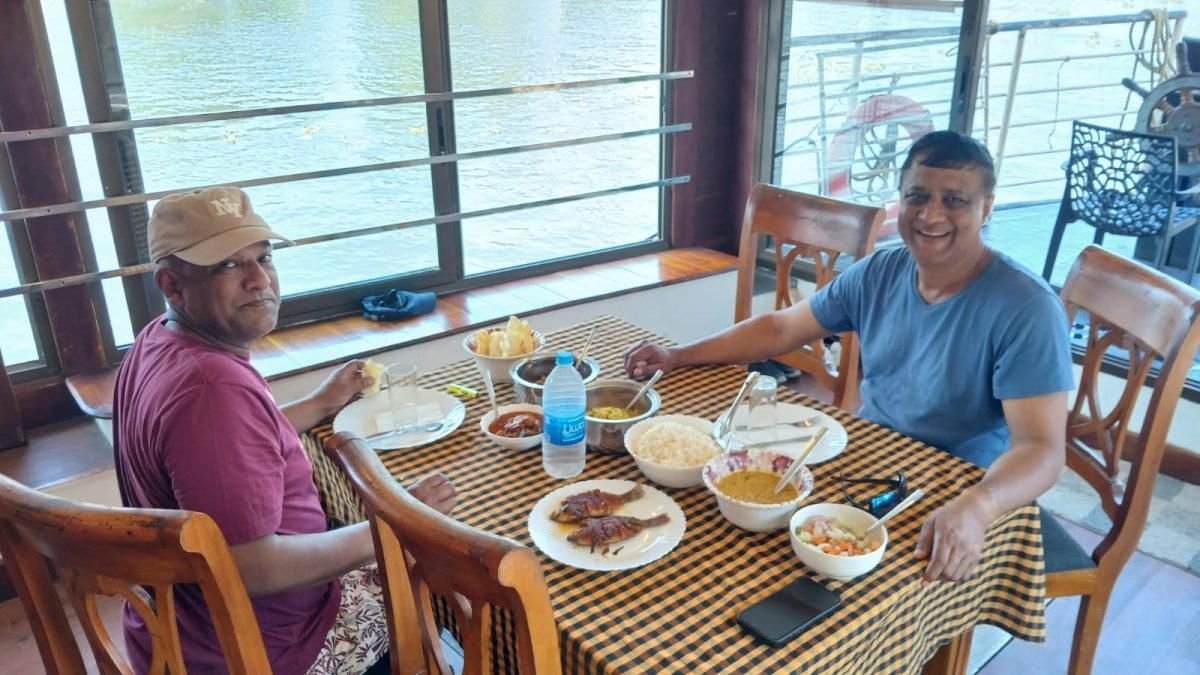
Our 6-day Kerala trip with Troper Tours was a wonderful experience from beginning to end. My brother and I travelled from Australia and everything was arranged very smoothly, which made the journey comfortable and stress free. We enjoyed the changing scenery, local food, backwaters and the relaxed pace of the trip. One of our favourite moments was the houseboat experience, where we could simply sit together, enjoy a nice meal and watch the peaceful water and village life around us. The vehicle was comfortable, our driver was punctual and helpful, and the team was always easy to contact whenever we needed anything. What we appreciated most was that the trip never felt rushed or overly planned. We had enough time to enjoy each place properly. Troper Tours took very good care of us throughout the six days. A memorable Kerala holiday, and we would happily recommend them to other travellers coming from Australia.