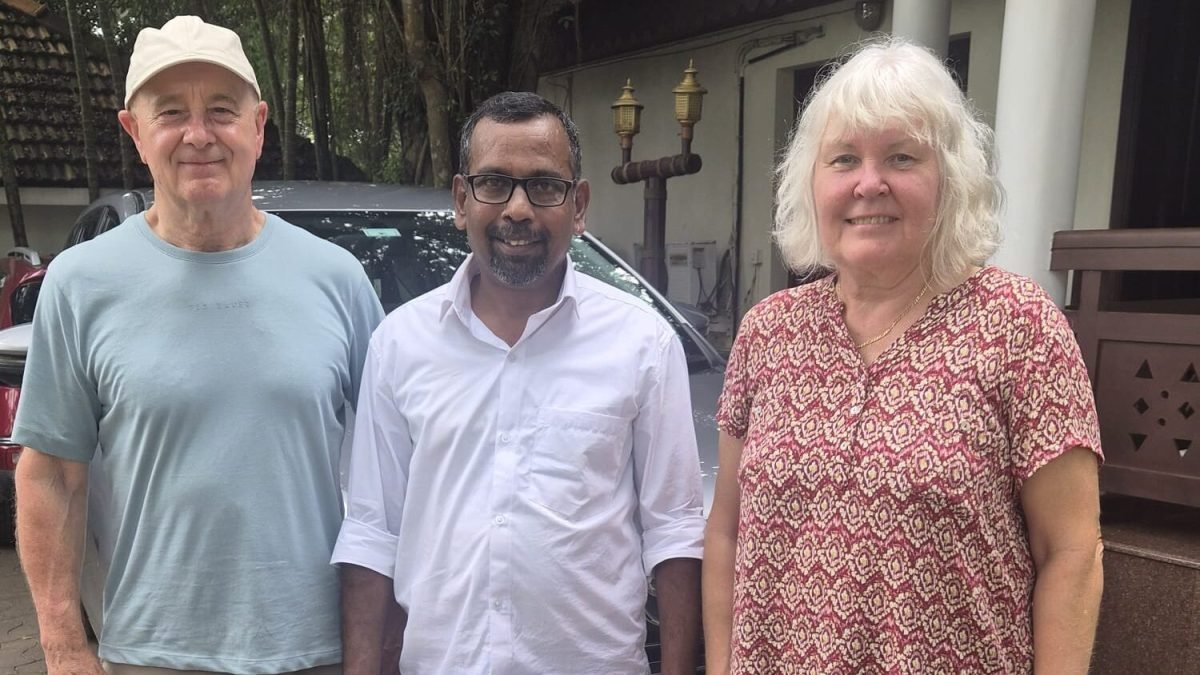
Amazing service. Communication excellent both before and during holiday.
All hotels excellent.
Sree, our driver absolutely superb.
Our 10 day tour around Kerala was perfect.
Vedanthangal has been protected for longer than almost any wildlife site on earth. Local villagers were guarding the birds here well before formal conservation existed anywhere, understanding that the guano enriching the tank water improved the paddy yields downstream. A British collector issued a protection order in the 1790s at the villagers’ request. That arrangement has held, in one form or another, ever since.
The sanctuary is small — a single irrigation tank ringed with barringtonia trees — and that is precisely why it works so well for visitors. The birds nest in the branches directly over the water, and the viewing path runs along the bund a short distance away. Between November and February you can stand and watch painted storks, pelicans, white ibis, night herons, cormorants and openbill storks raising chicks, at a distance where binoculars are useful but not essential.
Ten kilometres away, Karikili offers a second, quieter wetland that receives a fraction of the visitors.
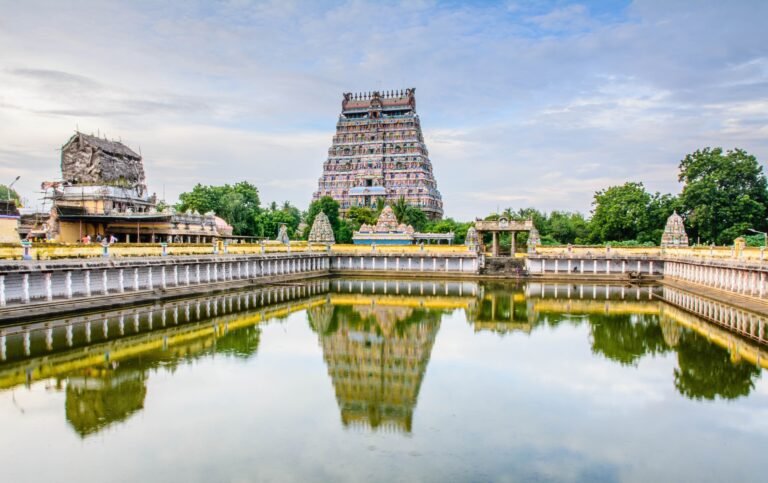
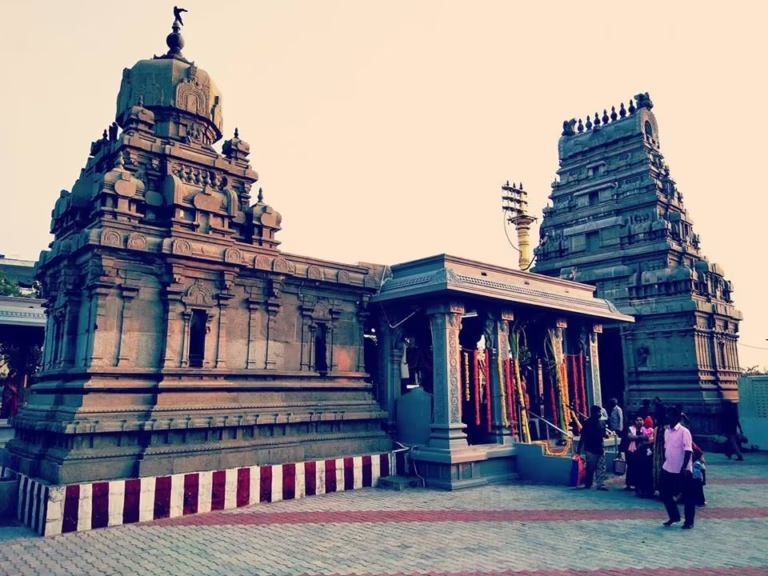
The other half of this trip is Kanchipuram, thirty-five kilometres north, and it is one of the most concentrated collections of temple architecture in India. It was the Pallava capital, and the Kailasanathar Temple they built around 700 CE predates the great Chola temples by three centuries. Traces of the original painted plaster survive inside the sandstone cells. Later dynasties kept building, so within a few square kilometres you can walk through twelve centuries of stone.
The city is equally known for silk. A genuine Kanchipuram sari has its border and body woven separately then joined, and the weaving floors here are working cooperatives rather than showrooms.
Related: the Pallava story continues at the coast in our Temples to Backwaters Journey, and this route sits comfortably alongside the ten-day Tamil Nadu Grand Tour if you want the full north-to-south sweep. Durations are compared on our Tamil Nadu tour packages page.
November to February is the core window, and December and January are usually the strongest.
Birds begin arriving in October once the northeast monsoon fills the tank, and the colonies build through November. By December the barringtonia trees over the water are crowded with nests, and chicks are visible in most of them. Numbers taper through March, and by April the birds have largely dispersed.
Between May and September you will find a quiet tank with a few resident waders and very little else. We will tell you plainly if your dates fall in that window rather than let you travel hopeful.
One thing outside anyone’s control: nesting depends on the tank filling. A poor monsoon means a poor season, and it can happen. Your nesting season card gives the honest position for your dates.
Because the villagers worked out that the birds were making them money.
Guano from the nesting colonies enriched the tank water, and the tank irrigated the paddy fields downstream. Better guano meant better yields. So the villages around Vedanthangal protected the birds as a matter of self-interest, generations before conservation existed as an idea.
When that protection was threatened in the late eighteenth century, the villagers approached the British collector and a protection order was issued in the 1790s. That makes Vedanthangal one of the oldest protected bird areas anywhere in the world.
The arrangement still holds. On the village walk you can see the same relationship working — the tank, the fields, the birds — which is a more interesting thing than most sanctuaries can show you.
Dawn and late afternoon, and the difference is dramatic.
Early morning is when the colonies are most active — feeding, calling, birds leaving for the day’s foraging — and the light comes across the tank at a useful angle. Late afternoon into dusk is when they return, and the return flights build into something genuinely loud.
Between about eleven and three there is very little to see. Birds settle, activity drops, and the light is flat and harsh.
The itinerary is built around this rather than around convenience, which is why Day 1 has a long unscheduled afternoon and Day 2 starts early. Anyone visiting Vedanthangal as a midday stop on a Chennai day trip sees a fraction of what is there.
Closer than at most sanctuaries, and this is what makes Vedanthangal work.
The tank is small and the nesting trees stand in the water near the bund. The viewing path runs along the bund, and there is a watchtower giving a wider view. You are typically within thirty to sixty metres of active nests.
Binoculars are useful but not essential, which is unusual. For photography, a 300mm lens is comfortable; you will not need the enormous glass that a larger wetland demands.
You cannot enter the water or approach the trees, and you should not — these are breeding colonies and disturbance costs chicks. Keep to the path, keep your voice down, and do not use flash.
Age, quiet and paint.
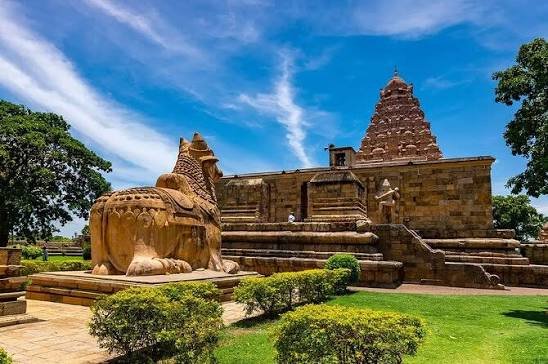
It was built by the Pallavas around 700 CE, which puts it three centuries before Thanjavur’s Brihadeeswarar and makes it the oldest structure in Kanchipuram. It is sandstone rather than granite, and considerably smaller than the temples that came later.
The remarkable part is inside. A passage of small cells runs around the sanctum, and in several of them fragments of the original painted plaster survive — Pallava-era pigment, thirteen centuries old. You need to look for them and it helps to have someone point them out, which is why a guide is included for the temple morning.
It is also the quietest temple in the city. Ekambareswarar and Kamakshi Amman are busy working temples; this one is largely visited by people who came specifically for it.
No, and that distinction matters enough that we choose the venue carefully.
You visit a working weaving floor, where saris are being made on handlooms. The thing worth watching is the join: a genuine Kanchipuram sari has the border and body woven separately and then interlocked, which is why the join is visible if you look closely and why the borders can be so much heavier than the body.
A single sari can take days to weeks depending on the design and the zari work.
There is no obligation to buy, and we take no commission on anything you do buy — which is worth asking about anywhere in India, because the arrangement is common and it distorts where you get taken.
Accommodation near Vedanthangal is limited — a small number of guesthouses and modest resorts, plus better options at Chengalpattu, about 30 km away.
Chennai is 85 km and roughly two hours, with hotels at every level.
Here the choice genuinely matters. Basing in Chennai costs you the dawn session, which is the single best hour of this trip. You would need to leave the city at half past four to make it, which nobody enjoys.
Our recommendation is to stay local for both nights and accept a simpler room in exchange for being fifteen minutes from the tank at first light. If comfort outweighs that for you, we will build the Chennai version and say honestly what you are giving up.
Very neatly, and that is a large part of the appeal.
Vedanthangal is two hours from Chennai airport and Kanchipuram is on the way back. The whole trip works as a self-contained three days either side of an international flight, without needing to build it into a longer itinerary.
It also sits naturally at the start of a southbound route. Kanchipuram is the northern end of the Pallava story that continues at Mahabalipuram and the coast — our Temples to Backwaters Journey picks that up and carries it into Kerala.
If you would rather see the whole state, the ten-day Tamil Nadu Grand Tour runs Chennai to Kanyakumari and includes Kanchipuram’s neighbours along the way.
Well suited to both, and it is one of the gentler itineraries we run.
For older travellers: the sanctuary path along the bund is level, short and shaded in places, and the watchtower is optional. Kanchipuram’s temples involve barefoot walking on stone, which we schedule for the morning before the granite heats up. No climbing anywhere, no ghat roads, no long drives.
For children: Vedanthangal is one of the easiest places in India to get a child interested in birds, because the nests are close and the activity is constant. The weaving floor holds attention too — a loom in motion is more compelling than a monument. The temples ask for more patience.
One quiet reminder for both: this is a breeding colony. Noise carries across water, and disturbance has real consequences for the chicks.
Because neither fills three days alone, and together they balance well.
Vedanthangal is two good sessions rather than two full days — dawn and dusk, with the middle of the day genuinely empty. Kanchipuram is a strong single day and would feel thin stretched across two.
They also sit 35 kilometres apart on the same road out of Chennai, which means the combination costs you almost no extra travel.
There is a thread connecting them, too. The Pallavas ruled from Kanchipuram, and the irrigation tanks across this landscape — Vedanthangal among them — belong to a water-management tradition their dynasty and successors built. The birds are there because the tank is there, and the tank is there because someone dug it a very long time ago.
Planning a holiday in Kerala, Tamil Nadu or Karnataka? Instantly estimate your tour cost based on your travel dates, destinations, hotel category, vehicle, houseboat, activities and more. Download your trip estimate and plan your South India holiday with confidence.
Our prices vary based on season, dates, group size and custom add‑ons. Every quote is tailored for your exact travel plan.
This page shows a sample itinerary to give you a clear idea of the route, inclusions and timings. Every itinerary is fully customisable to match your dates, hotel preferences and interests. Once you share your travel details we will prepare a personalised itinerary and an itemised quote.
Amazing service. Communication excellent both before and during holiday.
All hotels excellent.
Sree, our driver absolutely superb.
Our 10 day tour around Kerala was perfect.
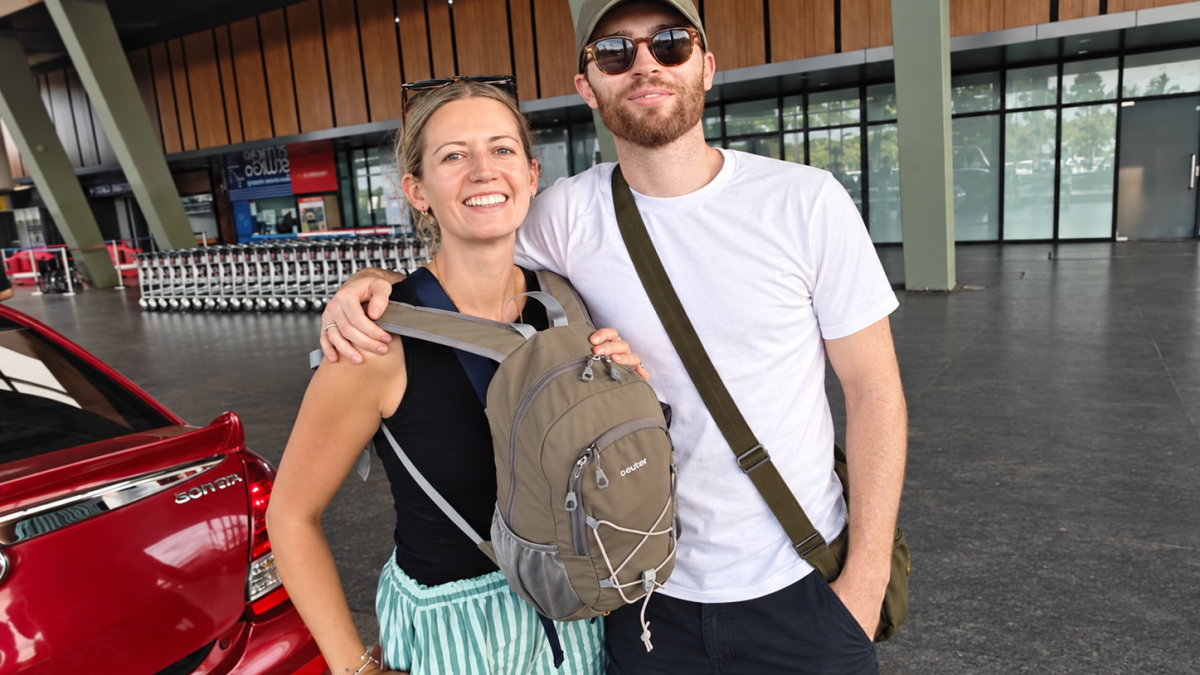
Our 5-day Kerala trip with Troper Tours was a lovely experience from the moment we arrived until the final day. My friend and I travelled from the UK and everything was organised smoothly, which made the journey comfortable and easy. We enjoyed the changing scenery, local food, tea hills, backwaters and the relaxed pace of the trip. One of our favourite moments was reaching Munnar, where we could enjoy the cool weather, plantations and peaceful mountain views. The vehicle was comfortable, our driver was punctual and helpful, and the team was always easy to contact whenever we needed anything. What we appreciated most was that the trip never felt rushed or overly planned. We had enough time to enjoy Munnar, Thekkady, Alleppey and Trivandrum properly. Troper Tours took good care of us throughout the five days. A memorable Kerala holiday, and we would happily recommend them to other travellers visiting from the UK.
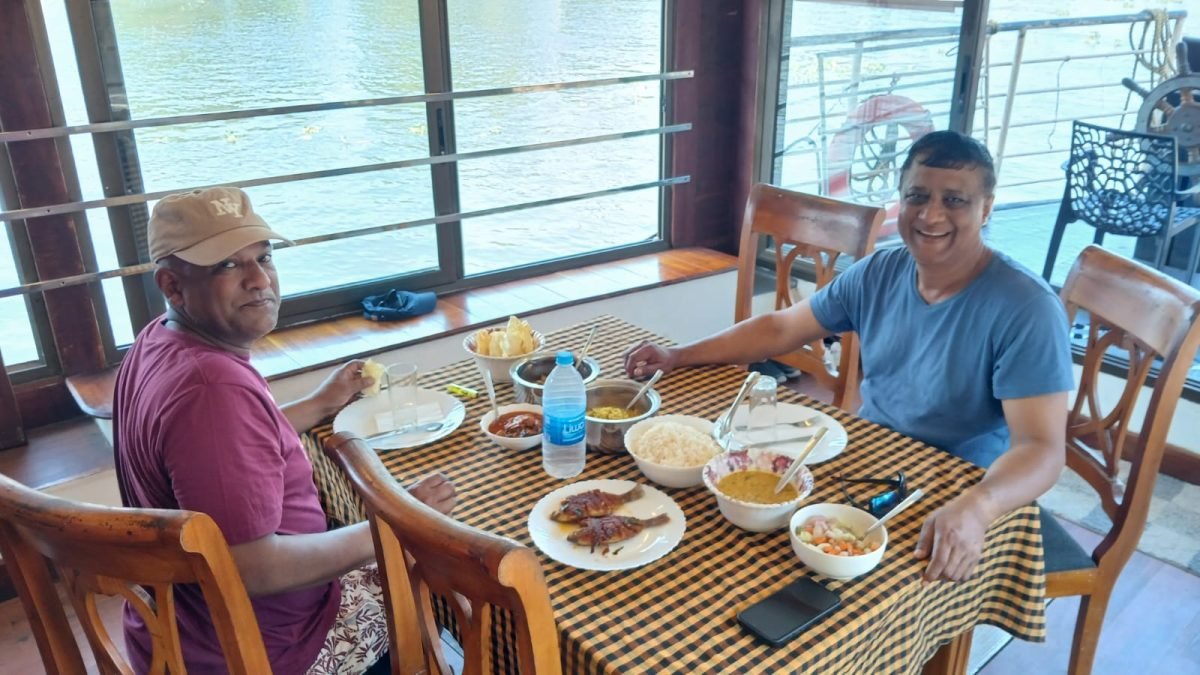
Our 6-day Kerala trip with Troper Tours was a wonderful experience from beginning to end. My brother and I travelled from Australia and everything was arranged very smoothly, which made the journey comfortable and stress free. We enjoyed the changing scenery, local food, backwaters and the relaxed pace of the trip. One of our favourite moments was the houseboat experience, where we could simply sit together, enjoy a nice meal and watch the peaceful water and village life around us. The vehicle was comfortable, our driver was punctual and helpful, and the team was always easy to contact whenever we needed anything. What we appreciated most was that the trip never felt rushed or overly planned. We had enough time to enjoy each place properly. Troper Tours took very good care of us throughout the six days. A memorable Kerala holiday, and we would happily recommend them to other travellers coming from Australia.