Chidambaram & Pichavaram Tour Package 3N 4D
A four-day Tamil Nadu itinerary combining Chidambaram’s Nataraja Temple with the Pichavaram mangroves, Vaitheeswaran Koil, Poompuhar and Trichy, with private road transfers and a relaxed coastal route.
Day 1 — Chennai to Chidambaram
Drive: about 5 hours · 235 km · Overnight: Chidambaram
We collect you at Chennai airport, railway station or hotel and head south. The first stretch runs down the East Coast Road beside the sea, then inland through Cuddalore.
It is a long drive and we break it properly rather than pushing through. The salt pans around Marakkanam are worth ten minutes if the light is right — flat white fields with workers raking in the heat, and one of the more photographed stretches of this coast.
You should reach Chidambaram in the late afternoon, in time for the evening puja at the Nataraja temple. The rituals here are performed by the Dikshitars, who wear their hair in a distinctive knot and have held the hereditary right for as long as anyone can date. The evening ceremony is the one to see if you see only one.
Day 2 — Pichavaram Mangroves & Chidambaram Nataraja Temple
Local travel: about 15 km each way · Overnight: Chidambaram
An early start for Pichavaram, because the first two hours after sunrise are the best of the day — cool, still, and before the boats fill up.
The boat you want is the rowboat. Motorboats are faster and louder and stay on the main waterways; the rowboats go into the channels where the mangrove roots arch over the water and the canopy closes above your head. Allow two to three hours. Between November and January the migratory birds arrive — herons, egrets, storks, kingfishers, and pelicans in good years.
Why the rowboat matters:
It can enter the narrow mangrove channels that the larger motorboats cannot reach, giving you a much quieter and more immersive experience.
One thing worth knowing while you are in it: this forest absorbed much of the force of the 2004 tsunami along this stretch, and the villages behind it survived where unprotected settlements did not. It is a working piece of coastal defence as much as a beauty spot.
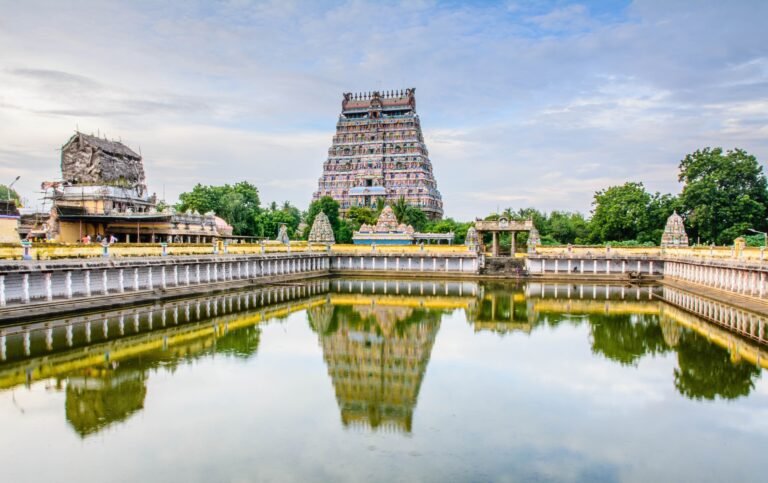
Back to Chidambaram in the afternoon for the Nataraja temple properly. Look for the 108 karanas — the fundamental postures of Bharatanatyam — carved into the passages of the eastern gopuram, which is the oldest surviving record of them anywhere. The Chit Sabha and Kanaka Sabha halls at the centre have roofs covered in gold plate.
Day 3 — Vaitheeswaran Koil, Poompuhar & Trichy
Drive: about 4 hours total · 180 km · Overnight: Trichy
South-west first to Vaitheeswaran Koil, one of the nine navagraha temples, associated with Angaraka — Mars. It is also the centre of Nadi astrology, the palm-leaf tradition in which readers claim to hold manuscripts written for specific individuals thousands of years ago, located by thumbprint. Whether you take a reading or not, the practice is genuinely interesting to see and the village is full of it.
Then east to the coast and Poompuhar, which was Kaveripoompattinam — the great Chola port described in the Silappatikaram, one of the five epics of Tamil literature. Most of the ancient city is under the sea, and marine archaeology has found structures offshore. What remains on land is a beach, the river mouth, and an art gallery built in the style of the epic with sculpted panels telling its story.
Then inland to Trichy, arriving in the evening. If you would like Srirangam or the Rockfort added on the way in, tell us and we will time the drive for it.
Day 4 — Trichy Departure
Transfer: about 20 minutes to the airport
A slow morning, then to Tiruchirappalli airport or railway station. Allow three hours before a domestic flight.
Trichy is central enough that this route joins onto almost anything — the Chola delta is an hour east, Madurai two and a half hours south, the Nilgiris four hours west. If you are continuing rather than flying home, tell us before you travel and we will carry the vehicle and driver on rather than ending the booking here.
Frequently Asked Questions – Chidambaram & Pichavaram Tour Package
Rowboat or Motorboat at Pichavaram?
Rowboat, without hesitation. It is the single decision that determines whether the visit is memorable or ordinary.
Motorboats are quicker and carry more people, but they cannot manoeuvre in the narrow channels, so they stay on the wide open waterways where the mangroves are a distant green edge. The rowboats go into the channels where the roots arch over the water and the canopy closes overhead. It takes longer and it is the entire point. We book the rowboat as standard and will only put you on a motorboat if water levels have closed the narrow channels, in which case we will tell you before you travel.
What Is the Chidambara Rahasyam?
Literally the secret of Chidambaram. Behind a curtain beside the main shrine there is no idol — only empty space, sometimes with a garland of golden vilva leaves hung in front of it. The curtain is drawn back during specific pujas.
The principle is that this temple represents akasha, space or ether, among the five elements, and that the formless cannot be given form. It is one of the more philosophically interesting things in any South Indian temple and it is easy to walk past without knowing it is there. A guide is worth having at Chidambaram for this reason alone.
What Is the Best Time to Visit Chidambaram and Pichavaram?
November to February. The coast is cooler, and for Pichavaram this coincides with the migratory bird season — November through January is when the herons, storks and pelicans arrive.
October to December is the northeast monsoon and this stretch of coast takes it directly, so expect some disruption in those months. March to June is hot and humid and the mangroves are less comfortable by mid-morning. One date to check is the Natyanjali festival around Mahashivaratri in February or March, when classical dancers from across India perform at the Nataraja temple over five days — extraordinary if you want it, and worth knowing about because Chidambaram’s limited accommodation fills completely.
Can Non-Hindus Enter Chidambaram Nataraja Temple?
The temple is open to visitors of all faiths and the outer prakarams, the gopurams and the tank are freely accessible. Access to the innermost sanctum areas is more restricted, as at most major Tamil temples.
Chidambaram is unusual in being run by the hereditary Dikshitar families rather than the state department, so its arrangements differ from other temples and can change. We confirm the current position before you travel. Dress modestly throughout, remove shoes at the entrance, and expect men to be asked to remove their shirts before the inner areas.
Is Pichavaram Good for Birdwatching?
Between November and January, genuinely good. Pichavaram’s backwaters hold herons, egrets, storks, kingfishers, snipe and pelicans, and the rowboat gets you far closer than any hide would.
If birds are the reason you are coming rather than a bonus, two other sites are worth building in.
Pulicat Lake
,
north of Chennai, is India’s second-largest brackish lagoon and takes flamingos in winter.
Vedanthangal
is one of the oldest protected bird sanctuaries in the country, about ninety minutes south-west of Chennai, and is at its best in exactly the same months. Both sit at the Chennai end of this route and add two or three days without backtracking.
Can We Break the Chennai to Chidambaram Drive?
Yes, and on a four-day itinerary it is worth considering. Five hours on day one is the longest leg of the trip.
Gingee Fort
sits inland roughly halfway, and it is one of the most dramatic forts in South India — three hilltop citadels linked by walls across a valley, described by Shivaji as the most impregnable in the country. Adding a night there turns a long transfer day into a proper stop. Tell us at enquiry and we will rebuild the route around it.
What Other Places Can We Add Near Chidambaram?
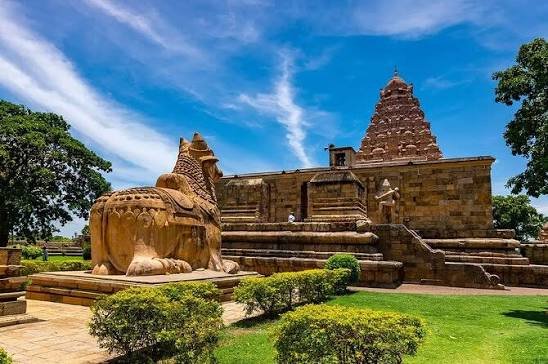
A great deal, and it is compact. Gangaikonda Cholapuram is only about forty kilometres west of Chidambaram — the abandoned Chola capital, and one of the three UNESCO-listed Great Living Chola Temples that almost no visitor reaches.
If the Chola period interests you, our
5-day Chola temples itinerary
covers all three UNESCO sites plus Srirangam and finishes at Trichy, which is exactly where this route ends. The two join together into a nine-day circuit with no repeated nights. Tell us at enquiry and we will build it as one booking with a single vehicle and driver.
How Much Walking Is Involved in This Chidambaram & Pichavaram Tour?
Not much. Pichavaram is done entirely by boat, with a short walk from the car park to the jetty. Chidambaram involves the usual temple walking on stone, barefoot inside the compound, and the complex is large but level.
Vaitheeswaran Koil and Poompuhar are both easy. This is one of the gentler itineraries in the range and suits older travellers and families with young children without adaptation. The only real consideration is the boat — the rowboats are stable but you step down into them from the jetty, and there is no seating with back support.