Kerala is often praised for its landscapes, backwaters, beaches, and hill stations, yet its food culture deserves equal attention, especially for travelers who prefer vegetarian or vegan meals. This is a state where plant-based eating is not a narrow niche. It is woven into daily dining, festive traditions, temple-town routines, and many hotel menus.
That makes A Kerala trip built around vegetarian or vegan preferences can include all of the following:
- rice-based breakfasts
- coconut-forward vegetable dishes
- banana leaf meals
- temple-town dining
- festive Sadya experiences
- custom requests for vegan or Jain food
Why Kerala suits vegetarian and vegan travel
Kerala’s cuisine has several natural advantages for plant-based travelers. Rice is central. Coconut appears in many forms, including fresh grated coconut, coconut oil, and coconut milk. Lentils, vegetables, bananas, tapioca, spices, and seasonal produce show up across the menu. Even when seafood and meat are prominent in the wider image of South Indian coastal food, Kerala’s vegetarian repertoire remains wide and deeply established.
Official tourism material points to this variety directly, describing Kerala cuisine as notable for its range of flavors and tastes for vegetarian travelers. A good example is breakfast, where dishes like puttu with kadala curry and appam with chutneys are already familiar vegetarian choices. This is not a case of removing meat from a menu and calling it suitable. Many dishes are designed that way from the start.
For vegan travelers, Kerala is encouraging, though not automatic. Dairy does appear in tea, coffee, some stews, sweets, and certain festive preparations. Still, the building blocks of the cuisine make adaptation relatively practical, especially when dietary needs are shared in advance with hotels, drivers, houseboats, or tour planners.
Everyday Kerala vegetarian dishes you can order confidently
A satisfying Kerala food plan does not depend on one grand meal. Everyday dishes carry the experience.
Breakfast can be especially rewarding. Puttu, a steamed cylinder of rice flour and coconut, is a classic choice, often paired with puttu with kadala curry made from black chickpeas. Appam, a soft-centered fermented rice pancake with lacy edges, is another staple. Depending on the preparation, it may be served with vegetable stew, coconut chutney, or a lightly spiced curry. Idli, dosa, upma, and idiyappam also appear widely across Kerala, especially in cities and established tourist circuits.
Lunch is where the region’s vegetarian depth becomes even more visible. A standard “meals” service can include rice, sambar, rasam, thoran, avial, pachadi, pickles, and papadam. Not every component will be vegan, but many often are, and a simple request can help refine the plate. Dinner often mirrors this pattern, with rice dishes, dosas, chapati, vegetable curries, and regional specialties available in a broad range of restaurants.
The table below gives a practical snapshot of dishes many travelers encounter.
| Dish | Usually Vegetarian | Often Vegan | What to Check |
|---|---|---|---|
| Puttu | Yes | Yes | Ask what it is served with |
| Kadala curry | Yes | Often | Usually vegan, but confirm oil and no ghee |
| Appam | Yes | Usually | Check whether the stew contains milk |
| Vegetable stew | Yes | Sometimes | Often made with coconut milk, sometimes dairy |
| Idiyappam | Yes | Usually | Confirm side dish |
| Dosa | Yes | Often | Ask if ghee is used |
| Thoran | Yes | Usually | Vegetable and coconut stir-fry, often vegan |
| Avial | Yes | Sometimes | May include curd |
| Sambar | Yes | Usually | Confirm no ghee finish |
| Banana chips | Yes | Usually | Check frying oil if needed |
Many travelers find that the simplest meals are among the best.
Kerala Sadya and the vegetarian feast tradition
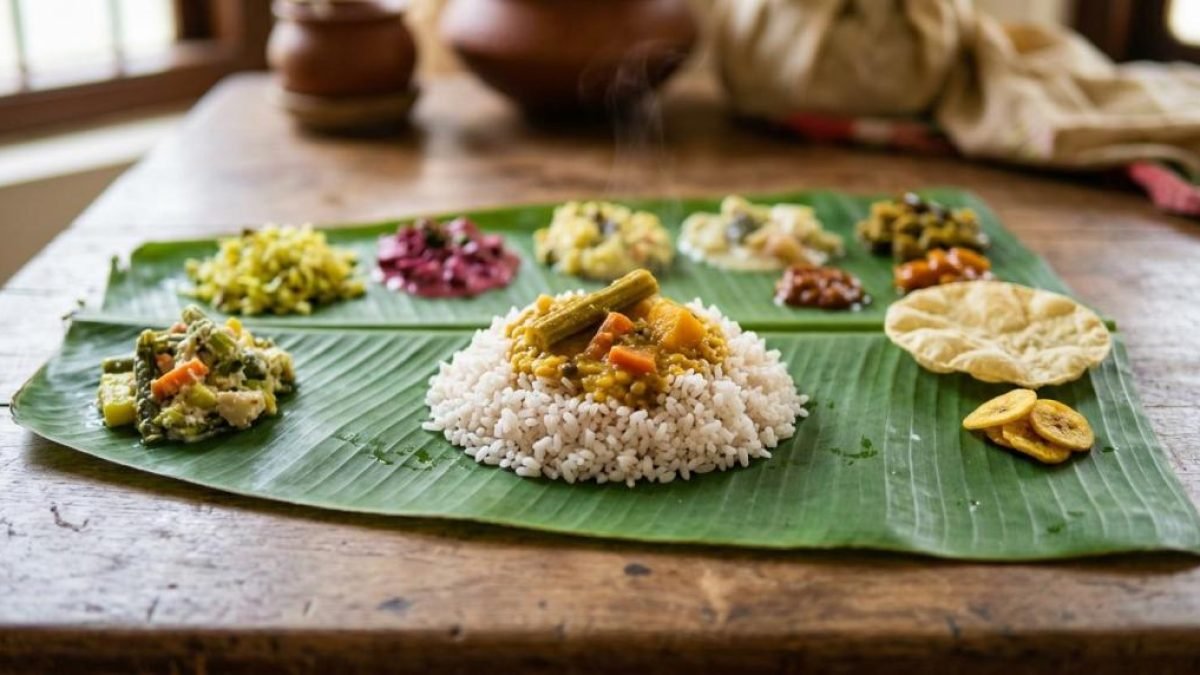
If there is one meal that captures Kerala’s vegetarian identity most vividly, it is traditional vegetarian feast served on a plantain leaf or banana leaf. Official Kerala Tourism material describes Sadya as a traditional vegetarian feast served on a plantain leaf or banana leaf, with some versions going up to 28 dishes. It is associated with Onam, Vishu, weddings, and other celebrations, and the serving order carries its own ritual logic.
A well-served Sadya is memorable not because it is large, though it often is, but because it presents balance with remarkable confidence. You may encounter rice, sambar, parippu, avial, olan, thoran, kalan, pachadi, kichadi, pickles, banana chips, pappadam, payasam, and more. The textures shift constantly. So do the sour, sweet, salty, earthy, and coconut-rich notes.
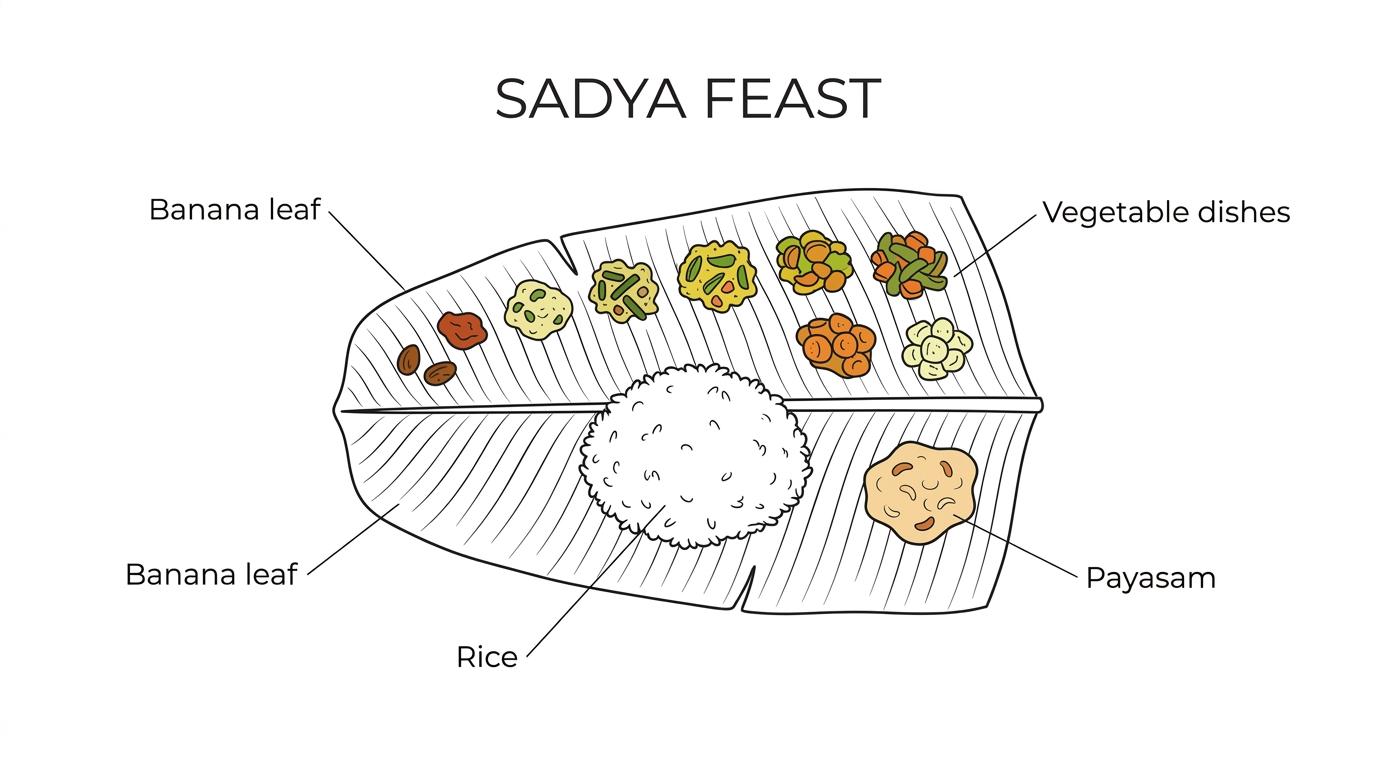
For vegetarians, Sadya is often one of the highlights of a Kerala visit. For vegans, it can still be rewarding, though it needs a bit of care. Some items may include curd, buttermilk, milk, or ghee, and payasam may be dairy-based unless a coconut milk version is served. When a Sadya is arranged privately or through a pre-planned itinerary, it becomes much easier to request a vegan-friendly version.
Kerala’s great advantage is that the cultural template is already vegetarian. The adjustments are usually about ingredients, not about inventing an entirely separate meal.
Vegan travel tips for Kerala hotels, houseboats, and restaurants
Kerala is a comfortable destination for vegans when communication is clear. The cuisine offers a strong base, yet assumptions can create small gaps. Tea may arrive with milk unless black tea is requested. A vegetable curry may be fully plant-based, or it may include ghee as a finishing touch. A stew may use coconut milk in one place and dairy milk in another.
This is why advance planning works so well. Hotels, resorts, houseboats, and private tour operators can often arrange vegan food when they know early enough. That is especially helpful for remote stays, premium houseboat experiences, wellness trips, and temple-focused travel where meal timing may be fixed.
Some temple-centered itineraries also note that vegan and Jain dietary preferences can be considered, alongside traditional Kerala vegetarian meals. That is encouraging for travelers who want religious visits, early darshan schedules, and food that stays consistent with personal practice.
A few requests can make the trip much easier:
- Ask early: Mention vegan, no dairy, no ghee, and no egg at the time of booking.
- Repeat at check-in: Hotel teams change by shift, so a fresh reminder helps.
- Check the side dishes: The main item may be vegan even when the accompaniment is not.
- Request black tea or coffee: Or ask for plant-based alternatives if available.
- Use simple language: “No milk, no curd, no butter, no paneer, no ghee, no egg.”
- Plan long transfer days: Keep fruit, nuts, or packaged snacks in the car.
Houseboats deserve special mention. They can offer beautiful, slow travel, and meals are often prepared onboard. For vegetarian guests, this is usually easy to arrange. For vegan guests, advance notice is wise because the kitchen shops for ingredients before departure. A thoughtful pre-trip note can shape the entire dining experience on the water.
Temple towns, religious travel, and Jain-friendly food in Kerala
Temple routes often work very well for vegetarian travelers. Around major pilgrimage centers and temple towns, vegetarian dining is common, and meal patterns may already reflect devotional practice. This can create a sense of ease that many travelers appreciate, especially when early morning visits or ritual schedules shape the day.
For guests following Jain preferences, planning becomes more specific rather than more difficult. Onion, garlic, root vegetables, or certain ingredients may need to be avoided depending on personal practice. In these cases, custom travel planning makes a visible difference. A driver who knows suitable meal stops, a hotel that receives the request in advance, and a tour schedule that leaves enough time for proper meals can turn a good trip into a very comfortable one.
This is one area where local coordination matters as much as the menu itself.
What to say when ordering vegetarian and vegan food in Kerala
Most travelers do not need elaborate language to communicate dietary needs in Kerala. Clear, direct requests usually work best. “Vegetarian food” is widely understood. Vegan travelers benefit from one extra sentence that lists what must be avoided.
A short routine can help each time you order:
- Say whether you are vegetarian, vegan, or Jain.
- Add the exact exclusions, like no milk, no curd, no ghee, no butter, or no onion and garlic.
- Confirm the side dishes and beverages, not only the main course.
When in doubt, choose simpler meals with fewer hidden ingredients. Puttu, plain appam, dosa without ghee, idiyappam, rice meals with selected curries, thoran, and fruit-based snacks often make ordering easier. So do restaurants that serve traditional South Indian breakfasts and lunches at high volume, where the food is fresh and the menu is familiar.
Building a Kerala itinerary around vegetarian and vegan food
Food planning becomes far easier when built into the itinerary from the start. A beach stay, a backwater cruise, a hill station break, and a temple circuit all present different meal contexts. Urban hotels may offer buffet flexibility. Houseboats need prior notice. Temple towns can be naturally vegetarian-friendly. Remote eco-stays may be excellent, though they work best with advance communication.
Travelers who care deeply about food quality should ask not only “Is vegetarian food available?” but also a few better questions. Is breakfast included, and can it be adapted? Can lunch stops be chosen around reliable vegetarian kitchens? Can a Sadya experience be arranged? Can vegan meals be confirmed in writing for the houseboat or resort? These details create confidence before the trip even begins.
Kerala rewards that kind of planning generously. With its strong vegetarian traditions, widely available everyday dishes, and the possibility of tailored meal arrangements for vegan and Jain preferences, it offers a travel experience where food can feel like a pleasure from the first morning to the last.