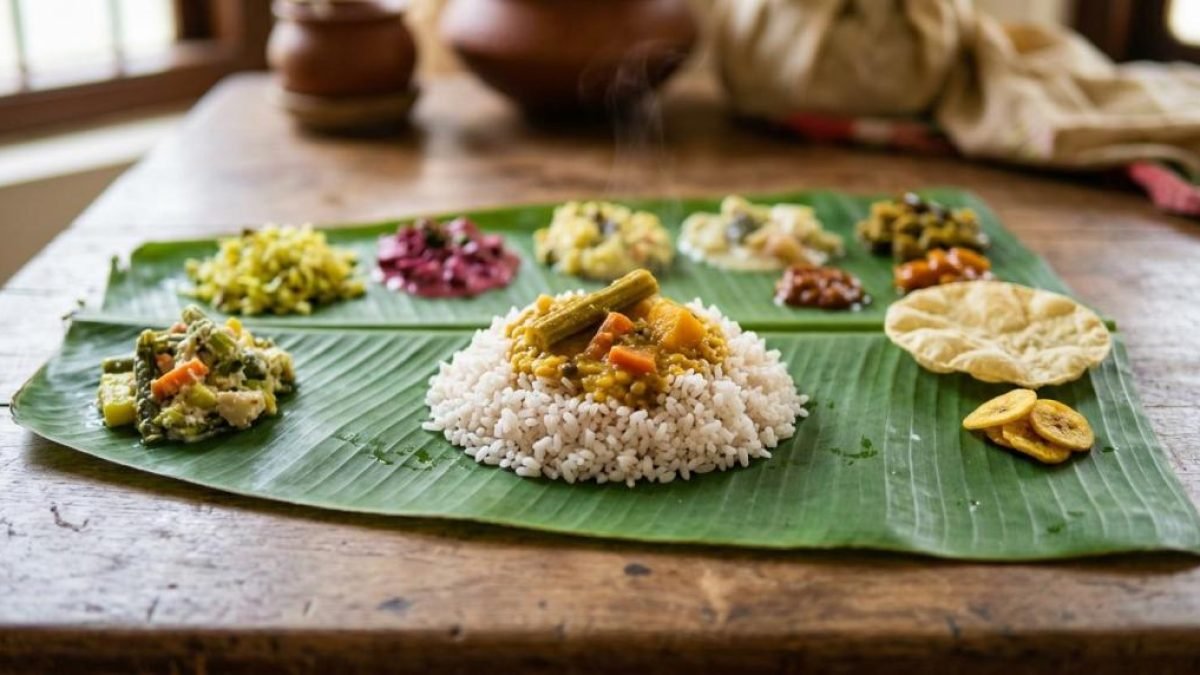
A memorable Kerala morning often begins with steam, a hot plate of dosa, or other local delights.
Not coffee, not toast, not a quick bite on the way out, but a plate built around rice, coconut, and carefully made accompaniments. Across the state, three traditional breakfast dishes appear again and again in homes, restaurants, and traveler itineraries: puttu, appam, and idiyappam. They are distinct in shape and texture, yet they share the same quiet logic that defines much of Kerala cuisine. The food is gentle in its base, deeply satisfying, and made complete by what comes alongside it.
Official Kerala tourism sources consistently present these dishes as breakfast staples, and that pattern matters. If someone wants a reliable introduction to Kerala food, these are among the clearest places to start.
A Kerala breakfast plate often gives you:
- soft steamed textures
- rice as the foundation
- coconut in different forms
- savory curries with depth
- a meal that feels light and filling at once
Why Kerala breakfast is shaped by rice, steam, and coconut
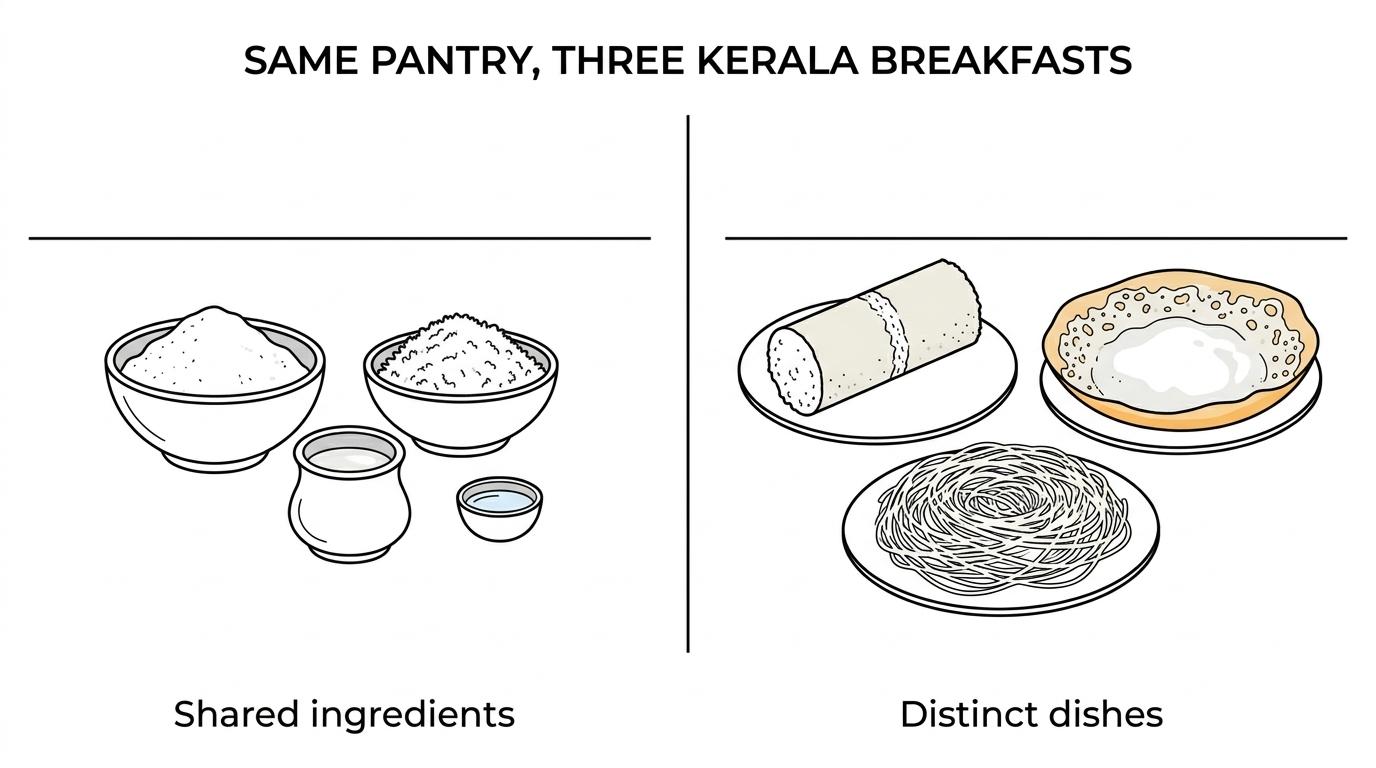
Kerala breakfast stands apart because it does not rely on one cooking style alone, reflecting the diversity of South Indian cuisine. Even when the main ingredient is rice, the result changes dramatically based on preparation. Puttu is layered and steamed into a cylinder. Appam is fermented and cooked into a bowl-shaped pancake. Idiyappam is pressed into fine strands and then steamed. The ingredients may sound simple, yet the finished dishes feel completely different from one another.
Coconut is the other constant thread. In Kerala, it appears as grated coconut, coconut milk, coconut oil, and coconut-based masala. That is one reason breakfast here feels so rooted in place. The region’s climate, agriculture, and cooking methods all show up on the plate without excess.
There is also a practical elegance to these breakfasts. They are satisfying enough to begin a full day of sightseeing, travel, or work, but they rarely feel heavy. That balance is one reason many travelers remember Kerala mornings so clearly.
Puttu breakfast in Kerala: the iconic steamed staple
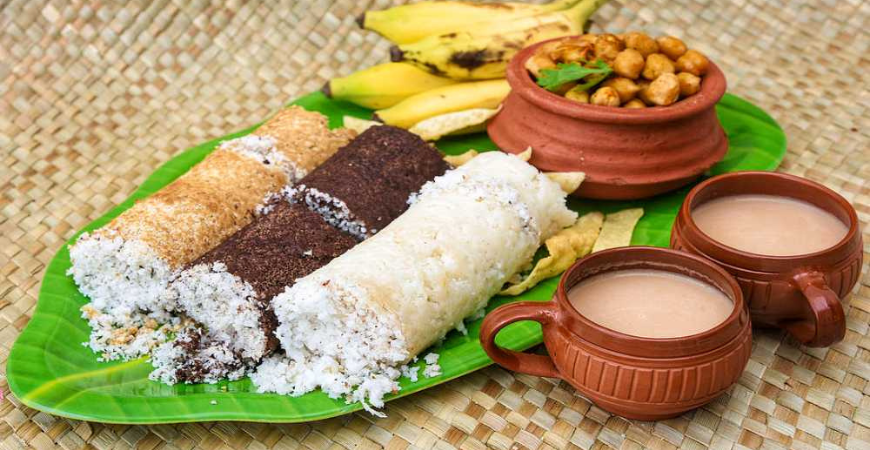
Puttu is one of the most recognizable breakfast dishes in Kerala. It is made with coarse rice flour, grated coconut, water, and salt, then steamed in layers inside a special cylindrical utensil called a puttu kutty. The result looks simple at first glance, yet a good puttu has remarkable character. It should hold its shape but break apart easily, with each layer carrying moisture and a subtle coconut aroma.
The classic match is kadala curry, a dark, earthy curry made with black chickpea and a coconut-based masala. This pairing appears repeatedly in official tourism references for Kerala, and with good reason. The puttu itself is mild and softly textured. Kadala curry brings body, spice, and depth. Together, they form one of the most representative breakfasts in the state.
Puttu is also more flexible than many first-time visitors expect. It may be served with ripe banana, pappadam, sugar, or even egg curry depending on the household or restaurant. Still, if the goal is to taste the version most closely tied to Kerala breakfast culture, puttu with kadala curry remains the standard to order first.
When ordering puttu, it helps to notice a few details:
- Texture: moist and crumbly, never dry or compact
- Coconut layering: evenly distributed through the cylinder
- Best-known pairing: kadala curry with black chickpea, or dosa for a classic experience
- Common extras: banana, pappadam, or a mild curry on the side
Appam breakfast in Kerala: fermented batter and delicate edges
Appam, a cherished South Indian dish, brings a completely different personality to breakfast. Kerala tourism descriptions often call it a staple, and that feels accurate the moment it arrives at the table. A good appam has a lace-like, lightly crisp edge and a soft, airy center. It is made from fermented rice batter with coconut milk, which gives it both structure and tenderness.
Fermentation is what sets appam apart from the other two dishes. The batter is typically left to rest for several hours, often overnight, allowing flavor and texture to develop. Cooked in a small curved pan called an appachatti, the batter spreads thin at the sides while staying pillowy in the middle. That contrast is the charm of the dish.
Appam is commonly paired with vegetable stew, chicken stew, or egg roast. Each pairing creates a different mood. With stew, appam becomes soft, creamy, and soothing. With egg roast, it turns sharper and more robust, with onions, spices, and rich gravy providing a stronger counterpoint. Both are popular, though appam with stew remains one of the gentlest and most widely loved Kerala breakfast combinations.
This is often the breakfast that wins over travelers who want something familiar in spirit but new in flavor. It has the comfort of a pancake, yet the taste and structure are unmistakably Kerala.
A strong appam plate usually offers:
- Center: soft, spongy, slightly sweet from coconut milk
- Edges: thin, lacy, and lightly crisp
- Classic pairing: vegetable or chicken stew
- Bolder option: egg roast with spiced onion gravy
Idiyappam breakfast in Kerala: nool puttu with elegant simplicity
Idiyappam is sometimes the quiet star of the breakfast table. Kerala tourism sources also identify it as nool puttu, a name that points directly to its thread-like form. It is made by pressing rice dough through a mold or press, often called a sevanazhi, to create fine strands that are then steamed into soft nests.
The beauty of idiyappam lies in its restraint. It is delicate, light, and clean in flavor, which makes it remarkably versatile. While puttu has a grainy crumble and appam has a fermented tang, idiyappam sits in a more subtle register. That quality makes it especially good at absorbing gravies without losing its identity.
Idiyappam is often served with stew, egg curry, or lightly sweetened coconut milk. In some settings, it appears with chicken curry or vegetable kurma as well. Travelers who prefer a softer breakfast with less textural contrast often gravitate to idiyappam quickly. It feels refined without being formal.
It is also a useful dish for multi-day travel through Kerala. After a rich dinner or a late evening, idiyappam can feel like exactly the right reset for the next morning.
Kerala breakfast pairings: what usually comes with each dish
The main dish matters, but the accompaniment is what completes the meal. Kerala breakfast culture is built on these pairings, and they are strikingly consistent across official food references, local menus, and traveler-facing food guides.
Here is a practical comparison:
| Breakfast dish | Main base | Cooking method | Common accompaniment | Texture profile |
|---|---|---|---|---|
| Puttu | Rice flour and grated coconut | Steamed in a puttu kutty | Kadala curry, banana, pappadam | Crumbly, moist, layered |
| Appam | Fermented rice batter and coconut milk | Pan-cooked in an appachatti | Vegetable stew, chicken stew, egg roast | Crisp edges, soft center |
| Idiyappam | Rice dough pressed into strands | Steamed after shaping | Stew, egg curry, coconut milk | Light, fine, tender |
This table also helps explain why many travelers choose all three on different mornings rather than picking only one. The ingredient family is similar, but the eating experience changes sharply from plate to plate.
What these Kerala breakfast dishes say about local food culture
A breakfast table in Kerala often reveals more than a lunch buffet ever could. These dishes show a strong preference for balance over excess. Spice is present, but not always in the base. Richness appears, but often through a curry instead of the starch itself. Technique matters. Fermentation matters. Steaming matters. Texture matters.
That is part of why these foods appeal so strongly to people visiting the state. They are rooted in daily life, not staged as festival dishes or reserved for special occasions. A traveler eating puttu in Kochi, appam in Kumarakom, or idiyappam in Munnar is not stepping outside the ordinary. The ordinary is the attraction.

For customized Kerala holidays, breakfast can become a surprisingly useful part of planning. One morning might suit a relaxed houseboat schedule with appam and stew. Another might call for a quicker restaurant breakfast of puttu and kadala before a drive into the hills. A later start in a beach town may pair beautifully with idiyappam and egg curry.
How travelers can order Kerala breakfast with confidence
The easiest way to approach Kerala breakfast is not to search for the single best dish. It is to match the dish with the kind of morning you want.
If you want something iconic and filling, choose puttu with kadala curry. If you want texture and a little fermentation-driven character, choose appam with stew. If you want something light, soft, and adaptable, choose idiyappam.
A few simple ordering cues can help:
- ask for the classic accompaniment
- choose one savory side before adding extras
- try each dish on a different morning
- eat it hot, not after it sits
In well-planned Kerala itineraries, breakfast is often one of the easiest ways to connect with local food without changing the pace of the trip. You do not need a long food trail or a special tasting menu. You only need a few mornings, some curiosity, and the willingness to notice the differences between one steamed rice dish and the next.
By the second or third breakfast, those differences stop feeling subtle. Puttu starts to feel earthy and direct. Appam feels airy and rounded. Idiyappam feels light and precise. And Kerala itself begins to make sense through the plate.