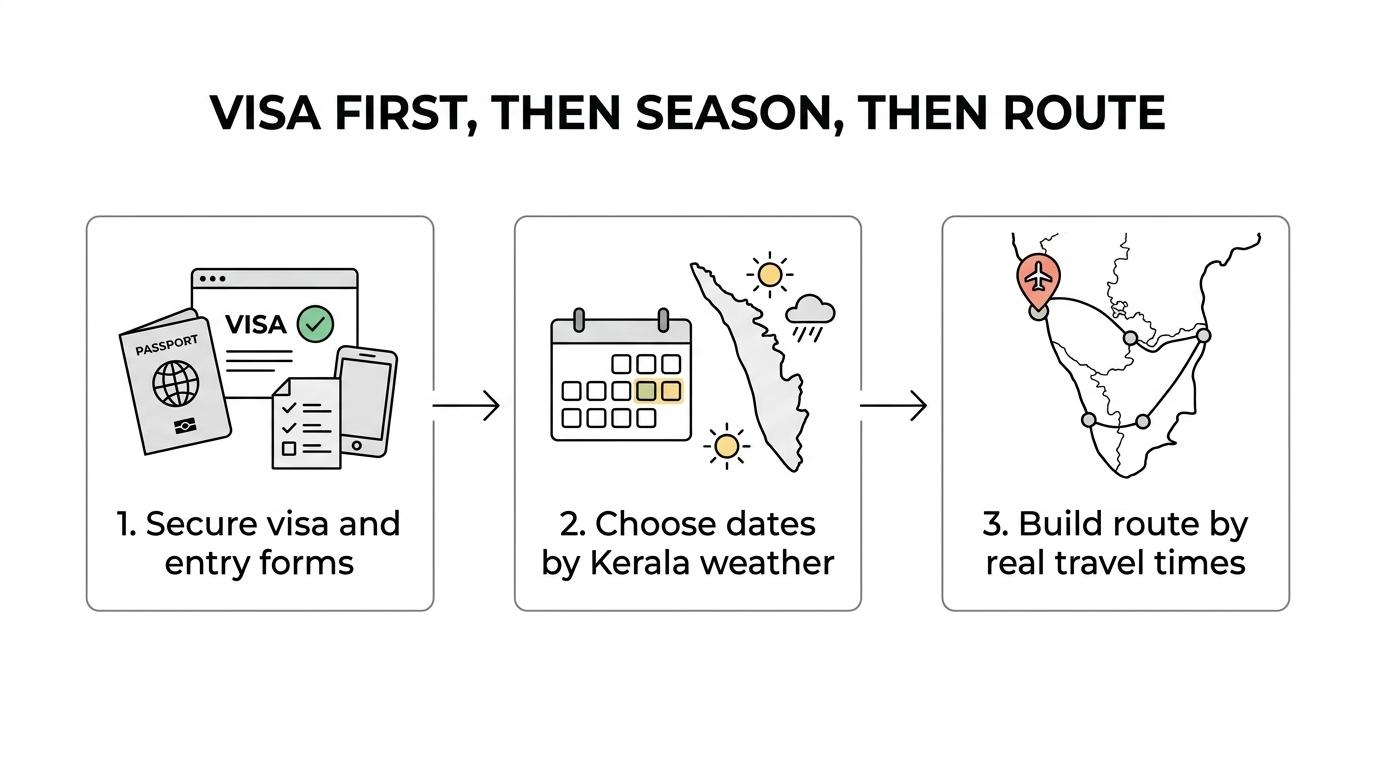
A South India holiday can feel both expansive and refreshingly clear once the planning sequence is right. For travelers flying from the United States, the smartest order is simple: sort out India entry requirements first, choose dates around Kerala’s weather patterns, and then build the route around the real distances between destinations.
That order matters because South India is not a quick hop between a few compact cities. A well-shaped trip through Kerala and Tamil Nadu often includes hill roads, coastal drives, backwater stretches, temple towns, and airport transfers that reward patience and good timing.
India entry requirements for U.S. travelers visiting South India
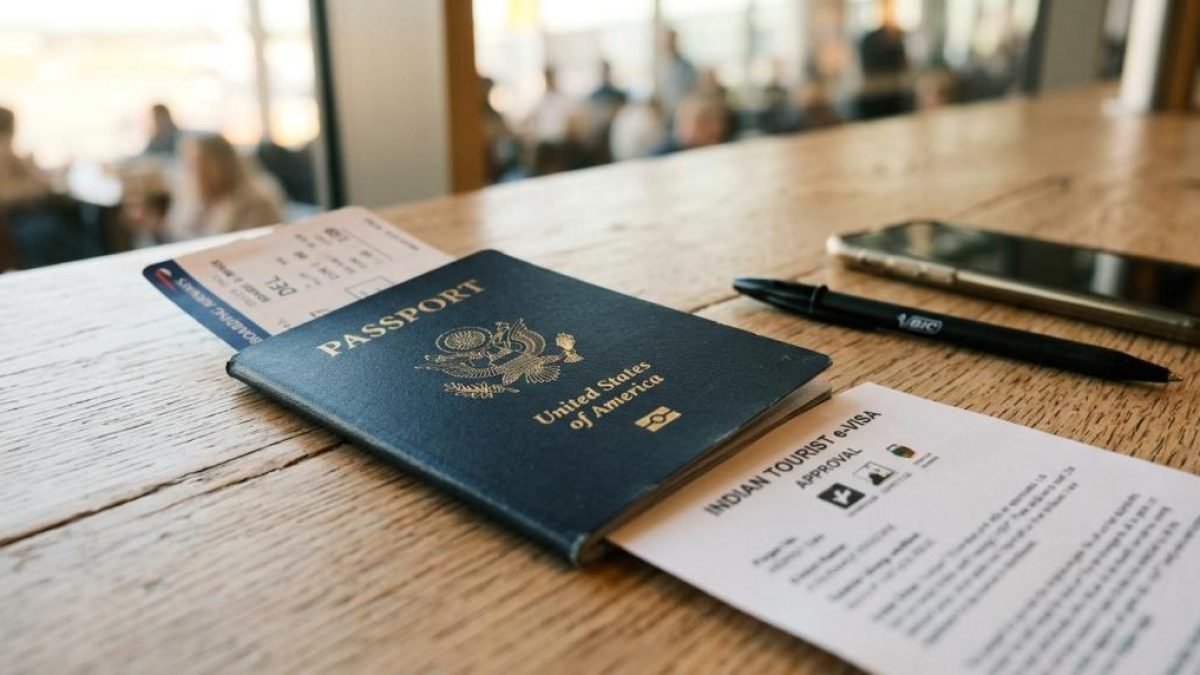
The first checkpoint is straightforward. U.S. travelers need a valid Indian visa in their passport or an approved e-Tourist visa before arrival. For short tourist visits of less than 60 days, official U.S. government guidance says travelers may apply for an Indian eVisa at least 4 days before arrival.
There is also a timing detail that catches some people late in the process. The e-Arrival form can be submitted online up to 72 hours before travel. That is easy enough to handle, but it should be placed on your calendar rather than left to memory.
Longer-validity tourist visas also have their own limits. Official Indian visa guidance states that for 1-year and 5-year tourist visas, the maximum stay during one calendar year should not exceed 180 days. Most U.S. vacationers will never get close to that threshold, though it is still useful to know if a future return trip is already on your radar.
Before flights and hotels are finalized, keep these items together in one place:
- Visa format: U.S. travelers need either a visa in the passport or an e-Tourist visa.
- Short tourist stays: Trips under 60 days may qualify for the Indian eVisa.
- Application timing: The eVisa should be filed at least 4 days before arrival.
- Arrival paperwork: The e-Arrival form can be submitted within 72 hours before travel.
- Printed copies
- Digital backups on your phone
A calm entry process sets the tone for the whole holiday. It also prevents the common problem of choosing ideal dates, only to realize that a visa step or arrival form is still pending.
Best time for South India holidays, with Kerala weather first
For many U.S. travelers, Kerala is the weather anchor of a South India itinerary. It is often the part of the trip built around houseboats, beaches, hill stations, and slower scenic days, so climate has an outsized effect on comfort.
Official Kerala tourism guidance generally points to November through February as the most pleasant travel window. Temperatures are easier, the air often feels lighter, and full-day sightseeing is usually more comfortable. If your priority is classic South India sightseeing with minimal weather friction, this is the season that usually feels most rewarding.
June to September is the monsoon season in practical planning terms, with the southwest monsoon beginning in June. Kerala also sees another rainy period tied to the northeast monsoon in October and November. Rain does not make travel impossible, but it changes the rhythm. Roads may feel slower, views can shift by the hour, and outdoor plans need a little flexibility.
| Travel window | What to expect in Kerala | Best fit for U.S. travelers |
|---|---|---|
| November to February | Pleasant, cooler, popular season | First-time visits, mixed sightseeing, families, honeymoon trips |
| March to May | Warmer and more humid, especially in lowland areas | Travelers focused on hill stations or shorter coastal stays |
| June to September | Monsoon season, lush scenery, frequent rainfall | Repeat visitors, slower itineraries, wellness-focused trips |
| October to November | Transition period with another rainy phase in parts of Kerala | Flexible travelers who want fewer crowds and do not mind weather shifts |
Kerala monsoon timing and South India trip planning
Monsoon season is not a reason to avoid South India. It is simply a reason to plan differently.
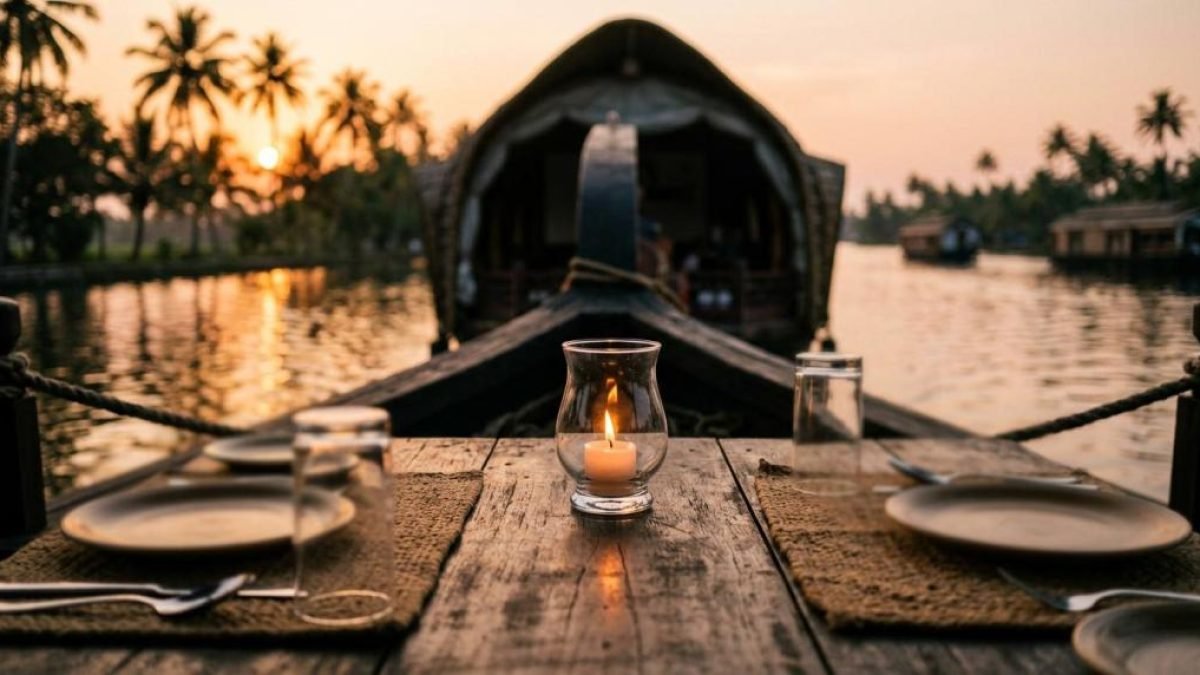
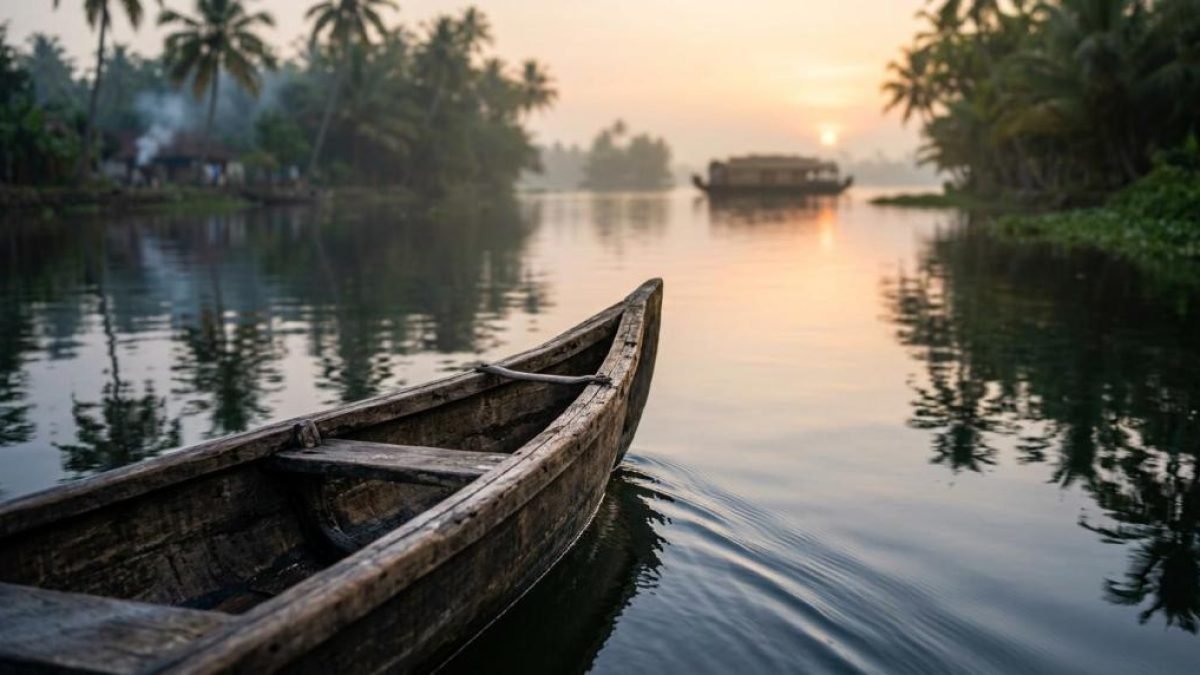
If you picture yourself drifting through the backwaters under soft light, walking tea gardens in Munnar, or linking Kerala with Tamil Nadu by road, dry-season dates usually make the whole trip easier. If you like dramatic greenery, quieter landscapes, and a gentler pace, the rainy months can be deeply appealing.
The key is honesty about your travel style. Some travelers want blue-sky reliability. Others are happy to trade that for atmosphere and lower seasonal pressure.
Why Kerala and Tamil Nadu itineraries need realistic travel times
This is the part many U.S. travelers underestimate. South India looks compact on a map, yet holiday routes here often behave more like scenic overland trips than quick city breaks.
A route that combines Kochi, Munnar, Thekkady, Alleppey, Kovalam, Madurai, or other classic stops is not built around short urban transfers. It is built around highways, winding hill roads, check-in times, meal breaks, and the simple reality that a beautiful road day still uses most of a day.
That is why many Kerala and Tamil Nadu holidays work best in private road-trip format. Couples, families, and international visitors often prefer a car and driver when covering several destinations, because it creates continuity. It also reduces the strain of switching between trains, local taxis, and regional logistics while adjusting to a new country and a major time difference.
The pace of a strong itinerary is often shaped by a few recurring factors:
- City traffic
- Hill station roads
- Coastal highway stretches
- Temple-town stops
- Hotel check-in and checkout timing
- Full-day intercity transfers
A useful planning rule is this: if you have 7 to 9 nights, resist the urge to include too many bases. Two to four core stays often work better than six rushed stops. With 10 to 14 nights, a Kerala and Tamil Nadu combination starts to breathe properly.
One extra day in the right place usually adds more value than one extra destination.
South India arrival airports and smart route design
Kerala has several strong entry points for international travelers, including Kochi International Airport, Thiruvananthapuram International Airport, and Calicut International Airport. Choosing the right one depends on your route, not just airfare.
If Kerala is the main focus, Kochi is often a practical starting point because it connects well with central Kerala circuits. Thiruvananthapuram can make sense for beach-led routes or trips that begin in the south. Calicut can be useful for northern Kerala plans. The airport should serve the itinerary, not force it.
This becomes even more important when Tamil Nadu is part of the trip. A holiday that links both states often benefits from a point-to-point design rather than a circular route that doubles back simply because the flight is cheaper.
Open-jaw flights for Kerala and Tamil Nadu holidays
An open-jaw ticket means arriving in one city and departing from another. For South India, that can save an entire transfer day.
If your holiday starts in central or northern Kerala and ends closer to southern Kerala or Tamil Nadu, look at flight combinations that support that flow. A cleaner route usually means less time in the car, fewer repeated roads, and a more balanced experience overall.
When building the route itself, these principles help:
- Start with the season: Choose dates first, especially if Kerala is central to the trip.
- Match airport to route: Let your arrival and departure cities reduce backtracking.
- Respect transfer days: A scenic drive can still be a long day.
- Protect key experiences: Houseboats, hill stations, and heritage cities all need time on the ground.
- Leave breathing room: One flexible afternoon can rescue an overpacked itinerary.
A good South India plan often feels lighter on paper than travelers first expect. That is usually a sign of quality, not missed opportunity.
Money, language, and daily comfort for U.S. travelers in South India
Once the route is fixed, the practical side becomes much easier. In Kerala, Malayalam is the main language. In Tamil Nadu, Tamil is dominant. English is widely used in hotels, airports, and most organized tourism settings, so communication is usually very manageable for U.S. visitors.
Cash still matters. The local currency is the Indian Rupee, and smaller purchases, tips, roadside stops, and local vendors may be easier to handle with cash in hand. Digital payments are widespread in India, though access and convenience vary depending on where you are and how structured your trip is.
Comfort also improves when clothing matches the setting. Kerala’s coastal regions and midlands are often warm, while the eastern high ranges can feel much cooler. That means one suitcase may need both breathable daytime wear and a light layer for places like hill stations.
A short list of practical items goes a long way:
- Indian Rupees in smaller denominations
- Light cotton clothing
- A layer for cool evenings in higher elevations
- Slip-on footwear for temple visits
- Universal power adapter
- Offline copies of bookings and ID pages
Cultural ease matters too. South India is welcoming, polished, and used to international travelers, yet it still rewards a respectful style. Modest dress at religious sites, patience in traffic, and a relaxed approach to timing will make the experience feel smoother from day one.
What a strong South India holiday often looks like for U.S. travelers
The most successful itineraries are usually not the longest ones. They are the ones built with clear priorities.
A first-time U.S. traveler might choose Kerala only, focusing on Kochi, Munnar, Thekkady, and the backwaters. Another traveler might pair Kerala with one or two Tamil Nadu stops for temples, heritage, or a stronger cultural contrast. Both approaches can work beautifully if the transfer logic is sound.

What tends to work less well is treating the region like a checklist. South India rewards presence. A slow morning on a houseboat, a full day in the hills, or an unhurried evening in a heritage district often becomes more memorable than racing through three extra locations.
For travelers planning from the United States, the cleanest formula is still the most dependable one: secure the visa path, watch Kerala’s seasonal window, and then give the route enough space to feel generous rather than crowded. When those three elements click into place, South India opens up with real ease.