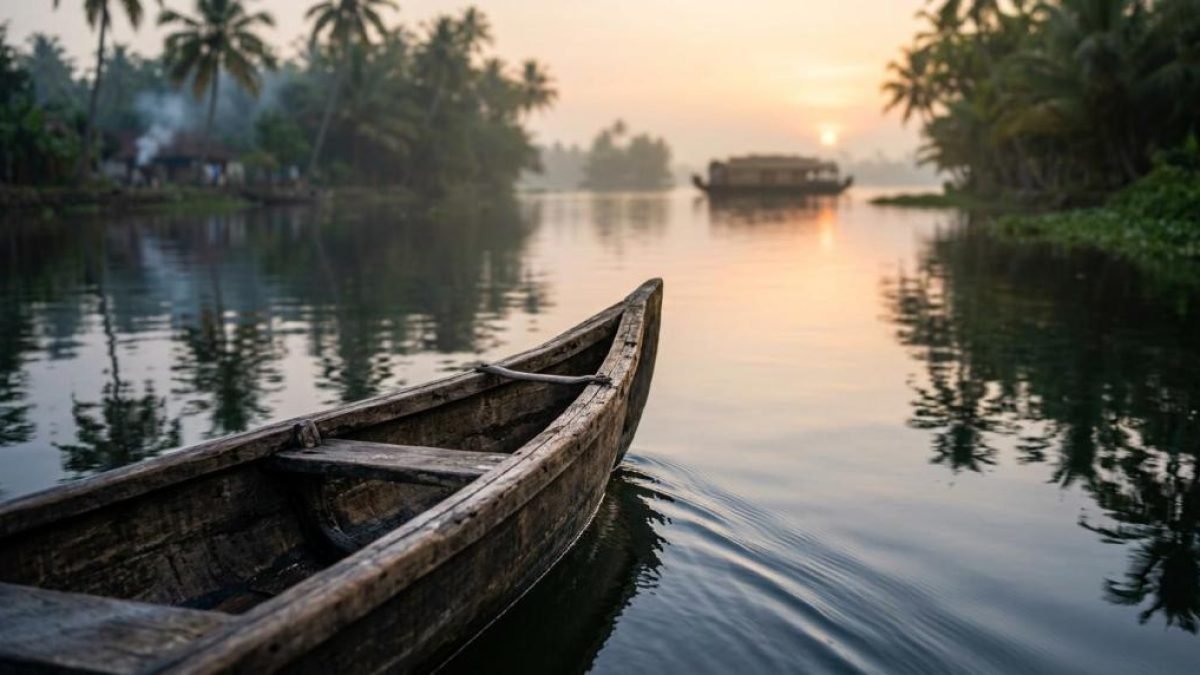
Planning a trip that keeps grandparents comfortable, gives parents breathing room, and keeps children genuinely engaged is not a small task. The destination has to offer variety without long, exhausting transfers. It also needs enough flexibility for different energy levels, food preferences, sleep schedules, and sightseeing styles.
That is exactly why Kerala stands out.
A well-planned Kerala trip can combine beaches, backwaters, hill stations, wildlife, and cultural stops within a relatively compact geography. Kerala Tourism presents the state as a place where major destinations are often connected by short drives, and that matters a great deal for families traveling across age groups. When the trip itself feels easier, everyone enjoys more of what they came for: time together.
Why Kerala trips suit multi-generational family travel
Multi-generational travel is not just a passing preference. AARP’s 2026 travel research found that family and multigenerational trips remain among the most common trip types for adults 50 and older. The reason is easy to see. These trips help families create shared memories while also making it easier to support older travelers and younger children in one plan.
Kerala fits that pattern especially well because it offers distinct experiences without forcing families into extreme transit days. You can move from the cool slopes of the Western Ghats to the backwaters, then onward to the coast, all within a single trip that still feels relaxed.
Kerala Tourism also points to another advantage: the state brings together serene beaches, emerald backwaters, lush hill stations, and wildlife in one destination. For a mixed-age family, that means fewer compromises. Grandparents may enjoy a calm houseboat cruise, parents may prefer a scenic mountain stay, and children may be thrilled by elephant sightings or beach time. A single itinerary can serve all three.
The practical side matters too. Kerala is widely recognized for strong health indicators and quality medical care, which can be reassuring when older family members are part of the trip. That sense of comfort often changes the way families travel. People are more willing to slow down, stay longer, and enjoy each stop instead of rushing through a checklist.
What different generations usually want from Kerala family travel
The smartest Kerala trips are built around shared time, not identical preferences. Every generation travels differently, and good planning respects that.
| Family group | What they often value | Kerala experiences that fit well |
|---|---|---|
| Grandparents | Short drives, scenic stays, easy sightseeing, restful afternoons | Backwaters, coastal resorts, tea garden views, cultural visits |
| Parents | Smooth logistics, safe transport, quality stays, balanced budgets | Private vehicle, verified hotels, flexible pacing, mixed destination types |
| Teens and kids | Activity, novelty, outdoor time, good food, photos | Wildlife parks, beaches, boating, spice plantations, hill viewpoints |
| Whole family together | Shared memories without stress | Houseboat overnight, sunset beach walks, Kathakali show, family meals |
This is why Kerala tends to work so well. It is not just about having many places to visit. It is about having different types of experiences close enough together that one family does not have to choose only one travel style.
What makes a Kerala itinerary comfortable for grandparents and kids
The biggest mistake in multi-generational travel is overpacking the schedule. Too many hotel changes can tire older adults and make younger children cranky. Too many early departures can wear everyone down by day three.
A stronger approach is to build a slower route with longer stays in fewer bases. That is already how many effective Kerala family itineraries are structured. One example is Troper Tours’ 11-night Kerala family holiday, which uses two-night stays in each main stop, includes only one single-night stay on the houseboat, and ends in Trivandrum instead of sending travelers back to Kochi. That kind of routing reduces backtracking and makes the trip feel lighter.
When families plan with comfort in mind, a few principles make a big difference:
- Two-night stays: enough time to settle in, rest, and enjoy a place properly
- Fewer hotel changes: less packing, less confusion, easier movement for seniors
- Private transportation: one vehicle and one trained chauffeur can keep the trip predictable
- Balanced sightseeing: one major outing a day is often enough
- Short morning drives
- Afternoon downtime
- Early dinners when needed
None of this makes the trip less exciting. It usually does the opposite. A calmer rhythm gives everyone more energy for the moments that matter.
A strong Kerala route for multi-stop family travel
One of Kerala’s best strengths is how naturally it supports a layered itinerary. You do not need to pick only mountains, only water, or only beach. You can combine them.
A classic family-friendly route often begins in Kochi, then moves to Munnar, Thekkady, Alleppey, Varkala, and Kovalam, finishing in Trivandrum. This sequence works because it creates a smooth geographic flow. Families start with culture and city access, move into the hills, continue toward wildlife and spice country, slow down in the backwaters, and finish with easy coastal relaxation.
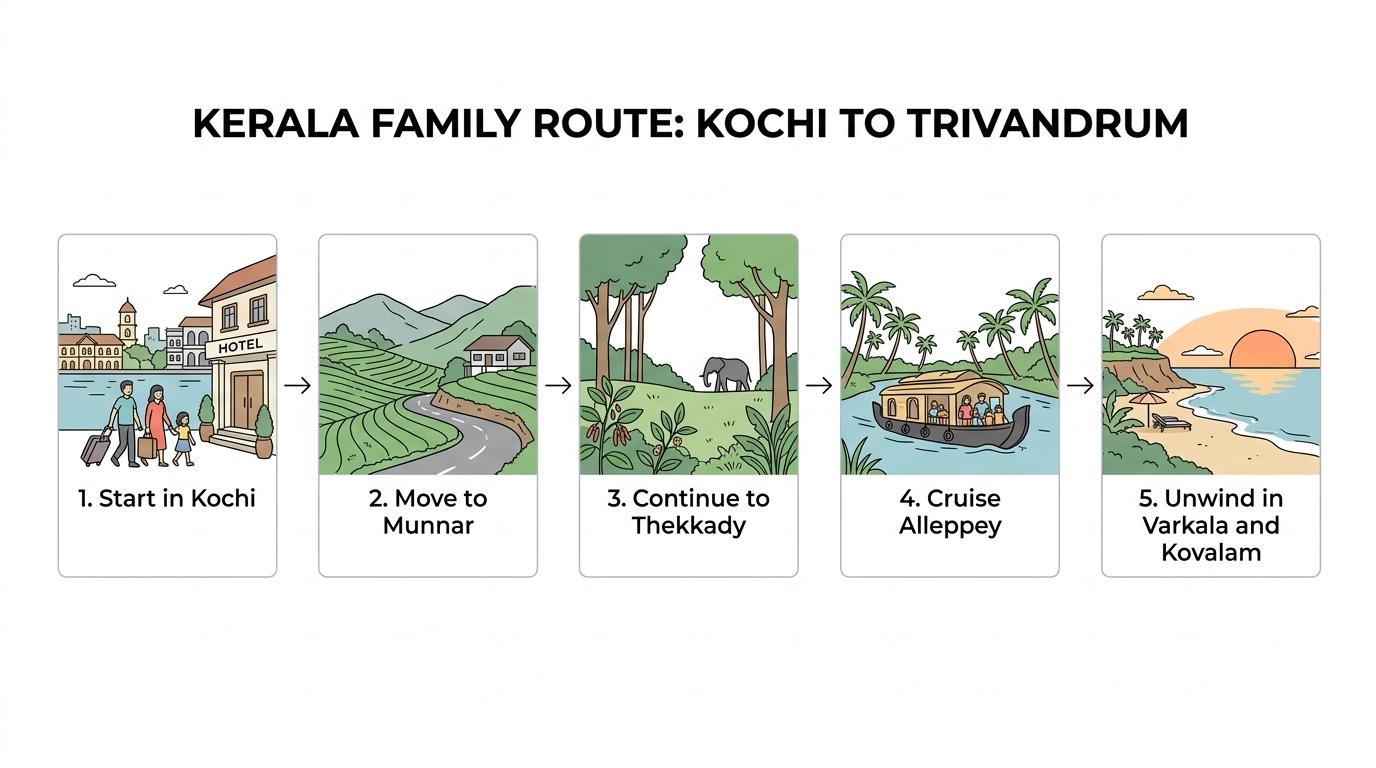
Here is what that rhythm can look like:
| Stop | Ideal stay | Why it works for multi-generational groups |
|---|---|---|
| Kochi | 1 to 2 nights | Gentle arrival, heritage sights, comfortable first base |
| Munnar | 2 nights | Cooler climate, scenic drives, tea estates, quieter pace |
| Thekkady | 2 nights | Wildlife atmosphere, spice gardens, soft adventure options |
| Alleppey | 1 night | Houseboat cruise, restful shared experience |
| Varkala | 2 nights | Clifftop views, relaxed beach setting, slower days |
| Kovalam | 2 nights | Resort comfort, beach access, easy access to Trivandrum departure |
This kind of route also supports different participation levels. Not everyone has to do every activity. Some family members can rest at the resort while others go sightseeing, then meet again for dinner or sunset.
Why two-night stays improve Kerala trips
Two-night stays may sound like a small design choice, yet they can change the entire tone of a family holiday.
With one-night stops, arrival and departure take over the day. Luggage gets repacked constantly. Children lose their routine. Seniors spend more time getting in and out of vehicles than enjoying the destination. Parents become logistics managers instead of travelers.
With two-night stays, the trip opens up. There is room for a late breakfast, an unplanned tea break, a nap before dinner, or a skipped activity without any sense of loss. Families can enjoy Kerala at a human pace.
That slower structure also helps with weather, energy, and mood. If rain changes a plan, there is still another day. If grandparents need a quiet morning, the itinerary does not collapse. If kids fall in love with a hotel pool or a beach, the family can let the moment breathe.
Best Kerala experiences for all ages
Not every famous attraction is ideal for a mixed-age group. The best choices are experiences that feel rich without being physically demanding.
A Kerala houseboat cruise is one of the strongest examples. It gives the whole family a shared setting, scenic movement without road fatigue, and time to eat, talk, play cards, take photos, and simply watch village life pass by. For many families, it becomes the emotional center of the trip.
The hill stations add a different mood. Munnar brings fresh air, layered views, and a calmer temperature that many older travelers appreciate. Tea gardens are visually striking and easy to enjoy even without intense activity. Thekkady introduces wildlife and spice plantation visits, which can feel adventurous while still being accessible.
The coast finishes the trip on a softer note. Varkala and Kovalam are especially useful for families because they support both activity and rest. Some travelers can swim or walk, others can sit with a view, and nearly everyone enjoys a relaxed seaside evening.
A few high-value experiences tend to work especially well across generations:
- Houseboat cruise: shared time, gentle movement, memorable overnight stay
- Tea estate visits: scenic and low-pressure
- Beach evenings: easy for all ages
- Cultural performances: engaging without long physical effort
- Spice garden walks
- Sunset viewpoints
Practical Kerala trip planning for large families
Good destination choice helps, but logistics decide how smooth the trip actually feels. In multi-generational travel, comfort is built through many small decisions.
Transport is one of the most important. A private air-conditioned vehicle is often the best choice for Kerala family travel because it allows flexible stops, direct hotel transfers, and a more relaxed pace. When the same driver stays with the family throughout the trip, the experience often feels more organized and reassuring.
Room selection matters just as much. Some families focus only on price and location, then realize too late that the property has many stairs, long internal walking distances, or rooms that are too scattered across the property. In a mixed-age group, convenience is part of comfort.
Before confirming a Kerala itinerary, it helps to check a few basics carefully:
- Room layout: ask whether interconnected rooms, family rooms, or nearby rooms are available
- Mobility access: check stairs, elevators, pathway gradients, and distance from lobby to room
- Meal flexibility: useful for children, seniors, and travelers with dietary restrictions
- Drive timing: shorter transfer days are often worth more than adding one extra stop
- Verified houseboat standards
- Early check-in or late check-out options
- Access to medical support if needed
These details may look minor on paper. During the trip, they shape the daily mood of the whole group.
Budgeting Kerala trips without losing comfort
Many families assume that multi-generational travel becomes too expensive once private vehicles, better hotels, and flexible routing are included. In practice, shared travel can create efficiencies.
A larger group can divide transportation costs, share family rooms or adjacent rooms, and often access better value by booking a full itinerary together. That is one reason multi-generational trips remain attractive. AARP’s research notes that these trips are also valued for helping manage costs and caregiving needs.
Value in Kerala is not only about the lowest rate. It is about paying for the right rhythm. One extra night in a destination may save the group from fatigue, missed experiences, and last-minute changes. A direct route that ends in Trivandrum instead of returning to Kochi can also save time and reduce wear on the family.
One published example from Troper Tours shows a 12-day Kerala family itinerary from ₹29,999 per adult on twin sharing, including destinations like Cochin, Munnar, Thekkady, Alleppey, Varkala, and Kovalam. Pricing will vary by season, hotel level, and group size, yet the structure itself is the real takeaway: fewer rushed stops, steady pacing, and a route designed around family comfort.
How to personalize Kerala family itineraries
The most successful Kerala trips are not identical. Two families with the same route may need very different versions of it.
One family may want longer beach time because they are traveling with toddlers. Another may prioritize cultural experiences and quieter resorts because grandparents are the focus. Some may want premium stays throughout, while others prefer to spend more on the houseboat and keep the rest moderate.
That is where a tailored itinerary becomes valuable. When the pace, accommodation level, vehicle type, and sightseeing intensity are adjusted to the family rather than the other way around, Kerala feels remarkably easy to travel.
A smart plan usually answers a few questions early:
- Who sets the pace: grandparents, kids, or a middle ground
- What matters most: scenery, rest, wildlife, beach time, or culture
- How much movement feels comfortable: daily touring versus slower base stays
- Where to finish: Kochi, Trivandrum, or a broader South India extension
Kerala rewards thoughtful planning. For multi-generational families, that means giving the trip enough space to be both joyful and manageable. When the route is well paced and the stops are chosen with care, the holiday becomes more than a collection of destinations. It becomes shared time that feels easy to remember.