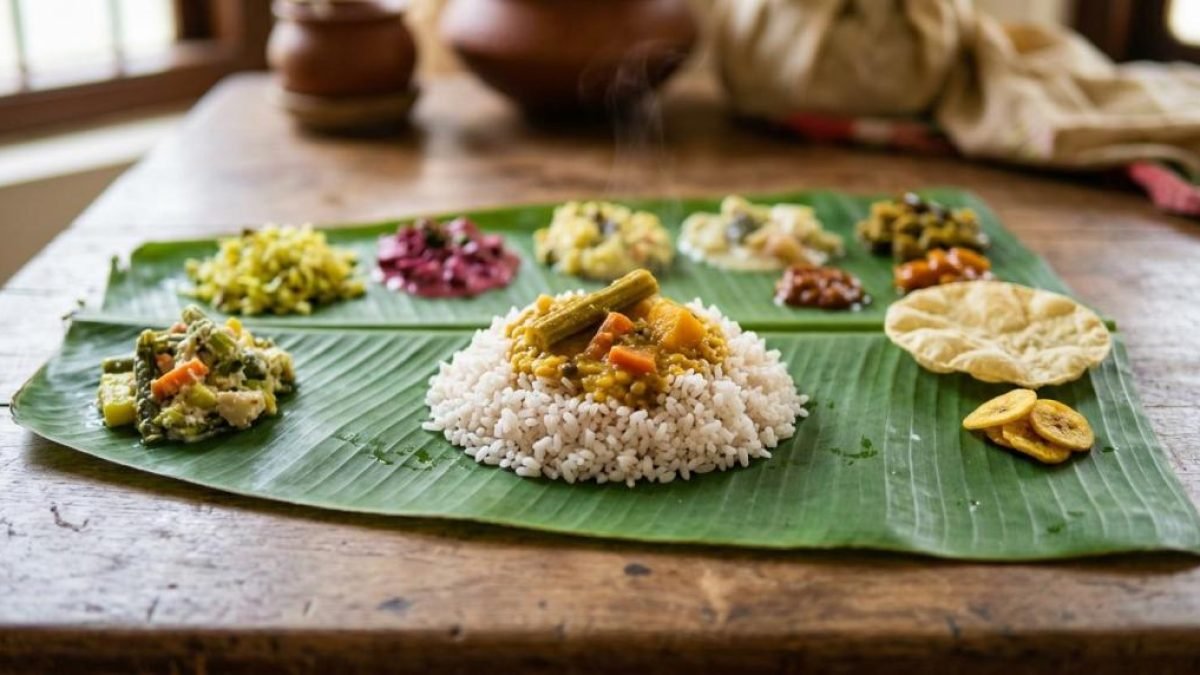
A Kerala sadya is one of those meals that changes the way a person thinks about lunch. It is generous, precise, festive, and deeply rooted in custom. On the surface, it is a vegetarian banquet served on a banana leaf. Sit down in front of one, though, and it quickly becomes clear that this is far more than a large meal.
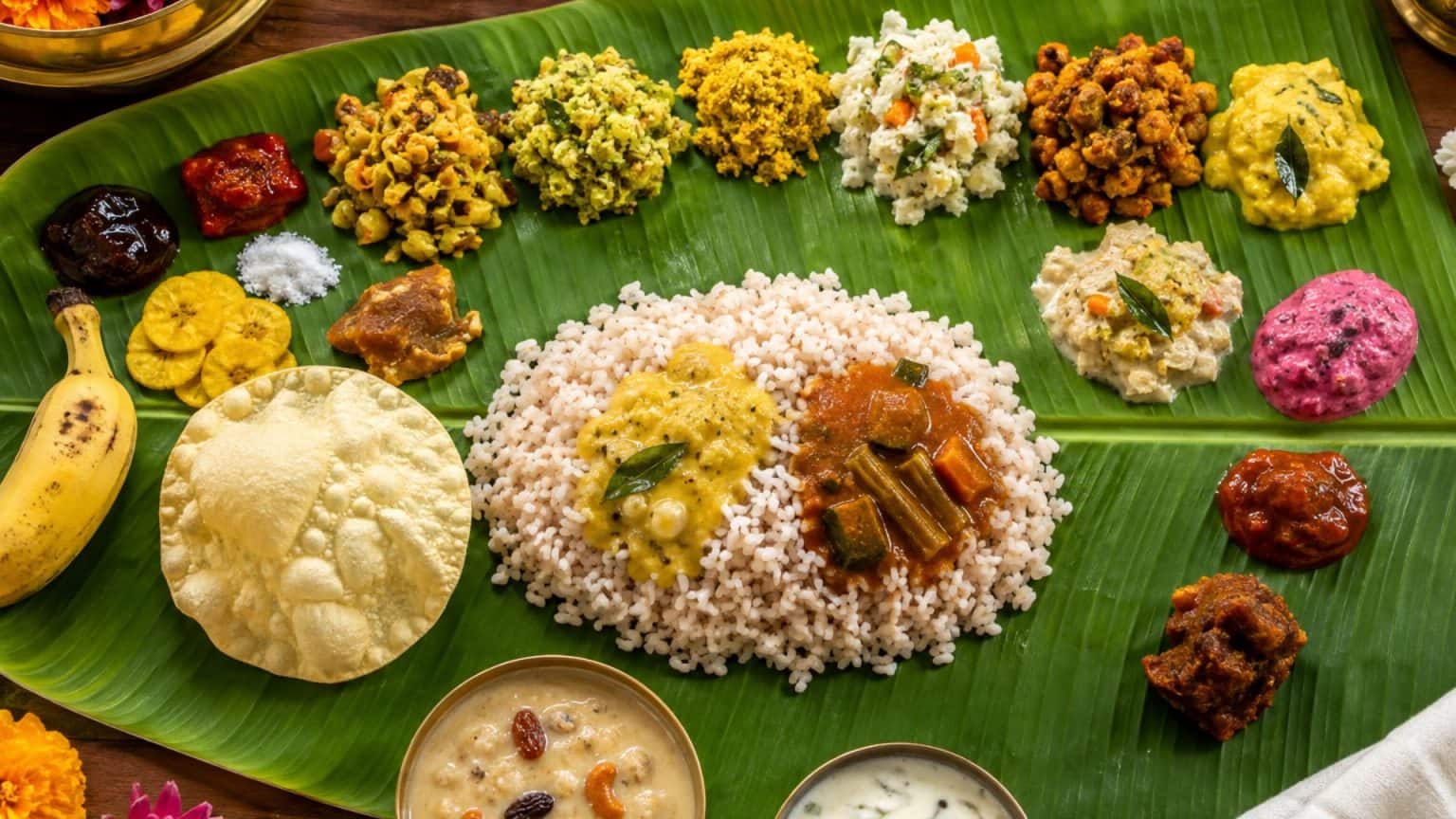 Every part of a sadya has a place, a rhythm, and a purpose. The leaf is positioned in a specific way. The dishes are arranged with intention. Rice does not arrive as a casual base for curries. It appears in stages, paired with different preparations, moving the meal forward course by course. That structure is what gives sadya its lasting appeal.
For travelers in Kerala, a well-served sadya can become one of the most memorable cultural experiences of the trip. It offers flavor, hospitality, and a living tradition on a single green leaf.
What Kerala sadya means in Kerala food culture
Sadya is a ceremonial vegetarian feast associated most strongly with Onam, Kerala’s harvest festival, celebrated with great festivity, though it is also served at weddings, temple events, family celebrations, and in traditional restaurants throughout the year. Official tourism sources in Kerala describe it as a meal that may include 20 to 28 dishes, sometimes even more depending on the occasion and the household, each one crafted following a traditional recipe.
What makes sadya special is not only the number of dishes. It is the discipline of the meal. This is not a plate filled at random. It is a carefully arranged spread where pickles, crisps, vegetable dishes, gravies, rice, and desserts appear in an established order. Even when menus vary from region to region, that sense of progression remains intact.
The feast reflects several hallmarks of Kerala cuisine at once: coconut in many forms, balanced seasoning, the interplay of sweet, sour, salty, and mild heat, and an impressive range of textures, with kalan standing out as a classic example of the creamy, tangy flavors. A single sadya may move from creamy to crunchy, sharp to soothing, festive to restorative, all without losing coherence.
A few features define the meal immediately:
- Vegetarian feast
- Banana leaf service
- Multi-course structure
- Festival association
- Communal dining atmosphere
Kerala sadya banana leaf etiquette and layout
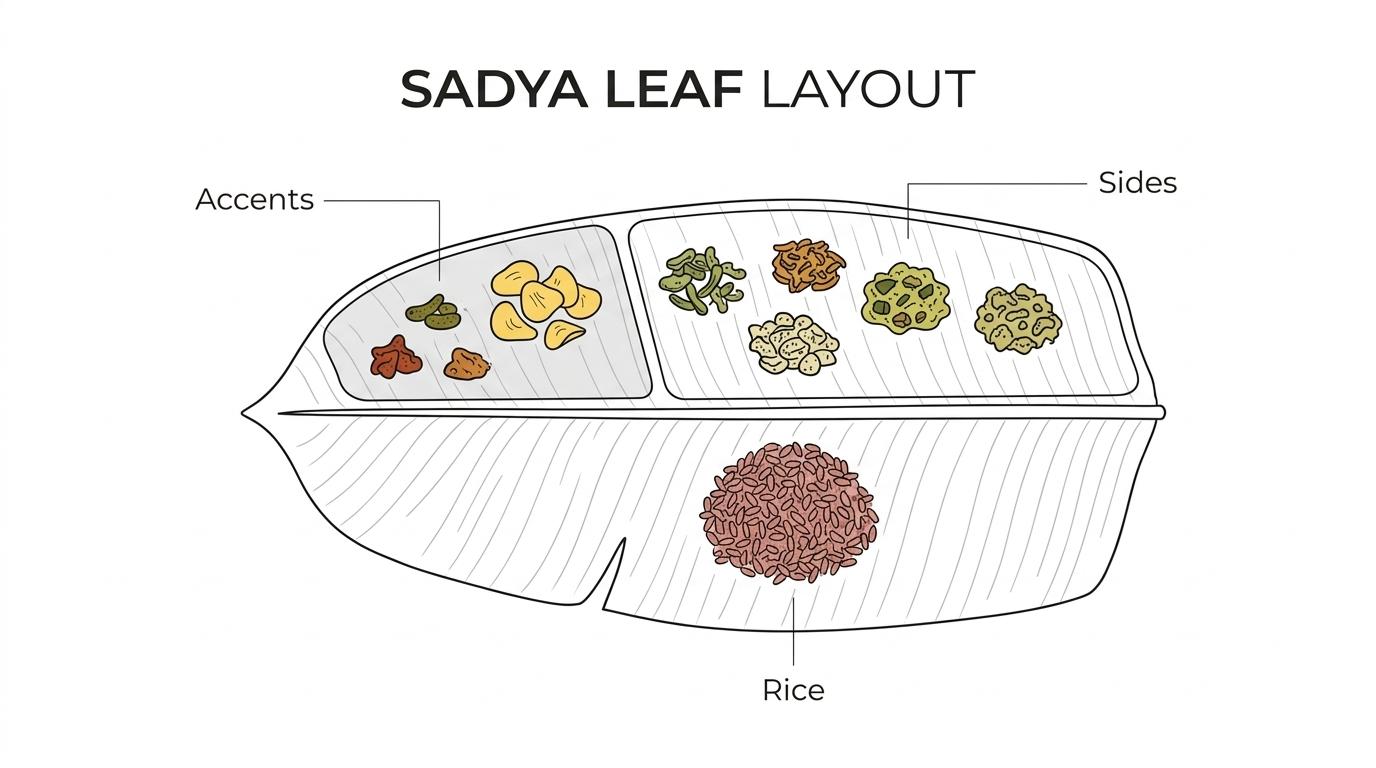
Before the first spoonful of rice is served, the banana leaf already tells a story. Traditional guidance notes that the leaf is placed with the narrow end pointing to the left of the guest. That detail may seem small, yet it reflects how codified the meal is.
The rice is usually served in the lower center area, closer to the diner. Across the upper part of the leaf, around the rib and beyond it, the accompaniments are placed in a sequence that helps the meal unfold naturally. Dry items, pickles, and small portions of side dishes occupy their own zones so they can be mixed with rice at different points.
There is also an etiquette to how one eats. Sadya is traditionally eaten with the right hand, which is part of the sensory experience. The diner mixes rice with each curry in turn, adjusting the ratio of gravy, vegetables, and condiments according to taste. That tactile connection is one reason a sadya feels so personal, even when shared in a large hall full of people.
The layout below captures the common arrangement and purpose of major elements, with aviyal being a standout side dish known for its mixed vegetables and coconut sauce.
| Leaf area | Common items | Purpose in the meal |
|---|---|---|
| Upper left | Pickles, banana chips, sharkara upperi | Sharp, sweet, salty opening accents |
| Upper middle and right | Avial, thoran, olan, pachadi, kichadi, other sides | Vegetable variety and contrast |
| Lower center | Red rice | Main base for the courses |
| Side service during meal | Parippu, ghee, sambar, rasam, moru or buttermilk | Sequential gravies and finishing liquids |
| Dessert service | Payasam | Sweet course, often one or more kinds |
Kerala sadya course order from rice to buttermilk
A traditional sadya follows a distinct flow. Kerala Tourism describes the meal as beginning with parboiled red rice, followed by parippu, then sambar. Later stages include rice again with rasam, and the meal closes with digestion-friendly items that may include kaalan and buttermilk.
This order matters because each stage resets the palate in a different way. Parippu, often paired with a little ghee, is mellow and grounding. Sambar brings warmth and body. Rasam is lighter, more aromatic, and sharper. Buttermilk or moru settles the meal and leaves a clean finish.
A simplified sequence often looks like this:
- Rice with parippu, often with ghee
- Rice with sambar
- Small combinations with side dishes and condiments
- Rice with rasam
- Finishing items, including buttermilk or moru, sometimes with kaalan
In practice, diners also move back and forth between the side dishes on the upper half of the leaf. A pinch of pickle with one bite, a spoon of avial with another, a crisp pappadam folded into rice, a chip or sweetened banana crisp between courses. Sadya is ordered, but it is never stiff.
Essential Kerala sadya dishes and what they add
Any household or restaurant may serve a slightly different version, yet several dishes appear again and again. Their consistency is part of what gives sadya its identity.
Rice, parippu, and sambar in Kerala sadya
Kerala sadya typically starts with parboiled red rice. This rice is substantial, slightly nutty, and well suited to a meal with many accompaniments. It carries gravies beautifully without becoming lost under them.
Parippu is the first major pairing. It is a cooked lentil preparation, usually mild and comforting, often enriched with a little ghee. It sets a calm opening note. Sambar follows with more complexity, bringing lentils, tamarind, vegetables, and spice into a fuller expression, while sambaram refreshes the palate with its cooling properties.
These opening courses establish the meal’s foundation:
- Red rice: The hearty central element that anchors the feast
- Parippu: A soft, warm beginning with gentle depth
- Ghee: Richness that rounds out the first course
- Sambar: A fuller, spiced gravy that broadens the palate
Avial, thoran, olan, pachadi, and kichadi on the banana leaf
The upper section of the leaf is where much of the feast’s personality resides. Avial is one of the best-known dishes, a vegetable preparation with coconut that is thick, fragrant, and satisfying. Thoran offers a drier texture, usually with finely chopped vegetables and grated coconut. Olan brings a gentler, delicate profile, often with a soft coconut milk character.
Pachadi and kichadi add contrast. Their yogurt-based style introduces tang and coolness, often paired with fruit or vegetables in a way that can feel both festive and refreshing. Set beside sharper pickles and crunchy pappadam, these dishes give sadya its remarkable range.
A well-balanced leaf moves constantly between these textures and flavors. Creamy and crisp. Mild and punchy. Earthy and bright. That interplay is one reason the meal remains compelling from first serving to last.
Pickles, chips, and pappadam in Kerala sadya
The smallest portions on the leaf often make the biggest impression. Pickles add intensity in tiny amounts. Banana chips bring a clean saltiness and crunch. Sharkara upperi, the jaggery-coated banana preparation often seen during festive meals, introduces sweetness and spice in a compact form.
Pappadam is more than a side crisp. Crushed over rice, eaten as a bite between curries, or paired with payasam in some settings, it works across the meal. Sadya has a strong sense of order, yet it also invites a certain playfulness from the diner.
Kerala sadya payasam and the sweet finish
No sadya feels complete without payasam. This is the dessert course, though even here the experience may not stop at one version. Depending on the occasion, there may be multiple payasams, each with its own character, made from ingredients like rice, lentils, jaggery, milk, or coconut milk.
What makes payasam fitting in a sadya is that it does not feel detached from the rest of the meal. It belongs to the same culinary language. Sweetness is balanced, texture matters, and the dessert carries the same sense of ritual as the savory courses before it.
After payasam, the meal often returns to lighter, settling notes with sambaram offering a refreshing finish. Rasam, kaalan in some spreads, and buttermilk or moru help close the sequence with comfort rather than heaviness. That finish is one of sadya’s most refined qualities. It leaves the diner satisfied, not dulled.
Kerala sadya during Onam and festive celebrations
Onam is the moment most closely linked with sadya in the public imagination, and for good reason. The Onam sadya is a cultural centerpiece, bringing family, memory, and celebration to the table. During this season, restaurants, homes, hotels, and community spaces across Kerala prepare special spreads that can be especially elaborate.
Yet sadya is not limited to one festival. It appears at weddings and temple gatherings because it expresses hospitality in a powerful, recognizable way. Serving a sadya says something generous. It signals care, abundance, and a desire to bring people together in a meaningful format.
That is also why many travelers remember their first sadya so vividly. It is not only about food. It is about sitting within a social tradition that Kerala continues to protect with confidence.
How travelers can enjoy an authentic Kerala sadya experience
Travelers often ask where to try a proper sadya. The answer depends on timing and travel style. During Onam, opportunities expand dramatically. Outside the festival season, many traditional restaurants still serve excellent versions, and some curated travel plans include meals that highlight local cuisine as part of a wider Kerala experience.
The best sadya experiences usually share a few qualities:
- Fresh service: Dishes arrive in rhythm, not all at once without order
- Balanced menu: Classics like parippu, sambar, avial, thoran, rasam, and payasam are present
- Proper leaf arrangement: The meal respects traditional placement and progression
- Comfortable setting: Enough time and space to enjoy the meal without rush
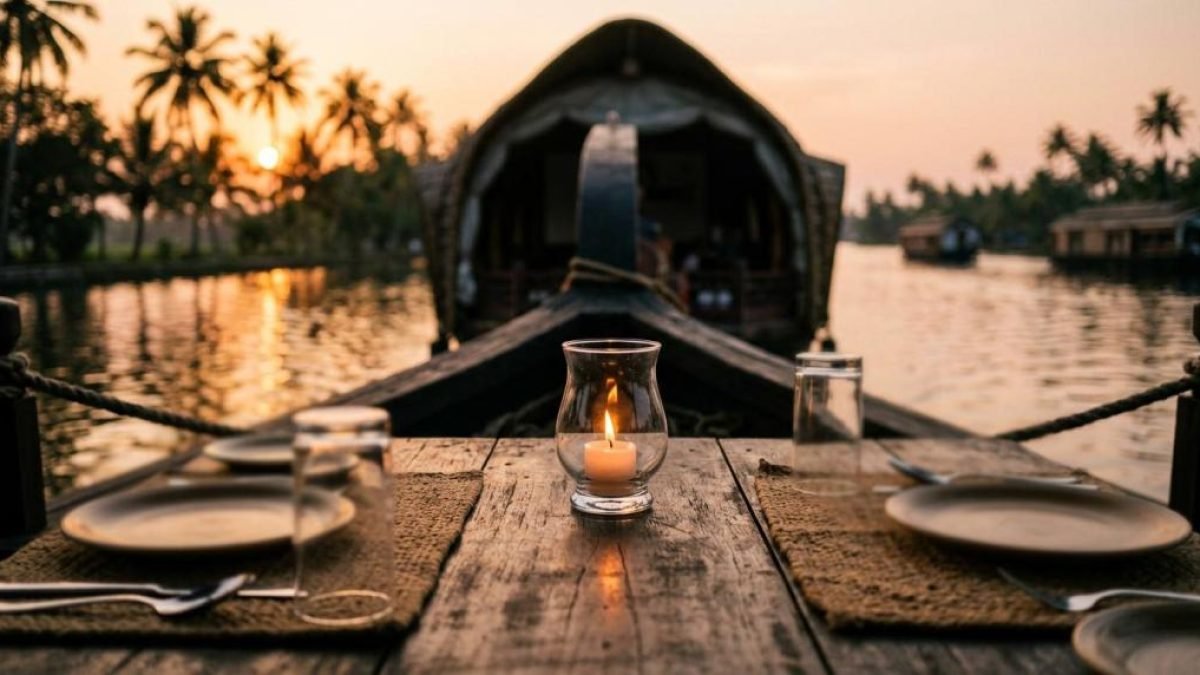
For travelers interested in food as culture, sadya pairs naturally with a wider Kerala itinerary. A day in Kochi, a festival visit, a heritage stay, a backwater trip, or a temple-town circuit all gain depth when local cuisine is treated as part of the experience rather than a stop between attractions.
There is also real value in trying sadya more than once. A festive Onam sadya, a wedding-style sadya, and a restaurant sadya may all feel different. The core structure remains, while the details shift with region, season, and the cook’s hand. That variation is part of the pleasure.
A banana leaf spread with rice, parippu, sambar, avial, thoran, pickles, pappadam, rasam, and payasam offers more than a meal plan. It presents Kerala through order, generosity, flavor, and memory, one course at a time.
Kerala Sadya FAQ
Embark on a culinary journey with Kerala sadya, the vibrant and cultural feast that is as much about tradition and hospitality as it is about flavor. Here, we answer some common questions to enhance your understanding and enjoyment of this iconic meal.
What is a Kerala sadya?
Kerala sadya is a traditional vegetarian feast served on a banana leaf, renowned for its diverse dishes and structured courses.
How many dishes are typically included in a Kerala sadya?
A sadya can include between 20 to 28 dishes, varying with the occasion and local tradition.
Why is the banana leaf significant in Kerala sadya?
The banana leaf serves as a natural, traditional plate that adds an aromatic dimension to the meal and reflects the cultural roots of the feast.
Is Kerala sadya always served during Onam?
While primarily associated with Onam, sadya is also featured at weddings, temple festivals, and in certain restaurants year-round.
Can a Kerala sadya be tasted outside of festive periods?
Yes, several traditional restaurants offer sadya throughout the year, providing an authentic taste of Kerala’s culinary heritage.
What are the main stages of a Kerala sadya?
The meal traditionally starts with rice and parippu, progresses through sambar, rasam, various side dishes, and concludes with payasam and buttermilk.
Are non-vegetarian dishes ever included in a kerala sadya?
Kerala sadya is a strictly vegetarian feast, showcasing the rich variety and depth of vegetarian cuisine.
How should I eat a Kerala sadya for the best experience?
Sadya is traditionally eaten with the right hand, which enhances the tactile engagement and allows diners to adjust flavors according to preference.