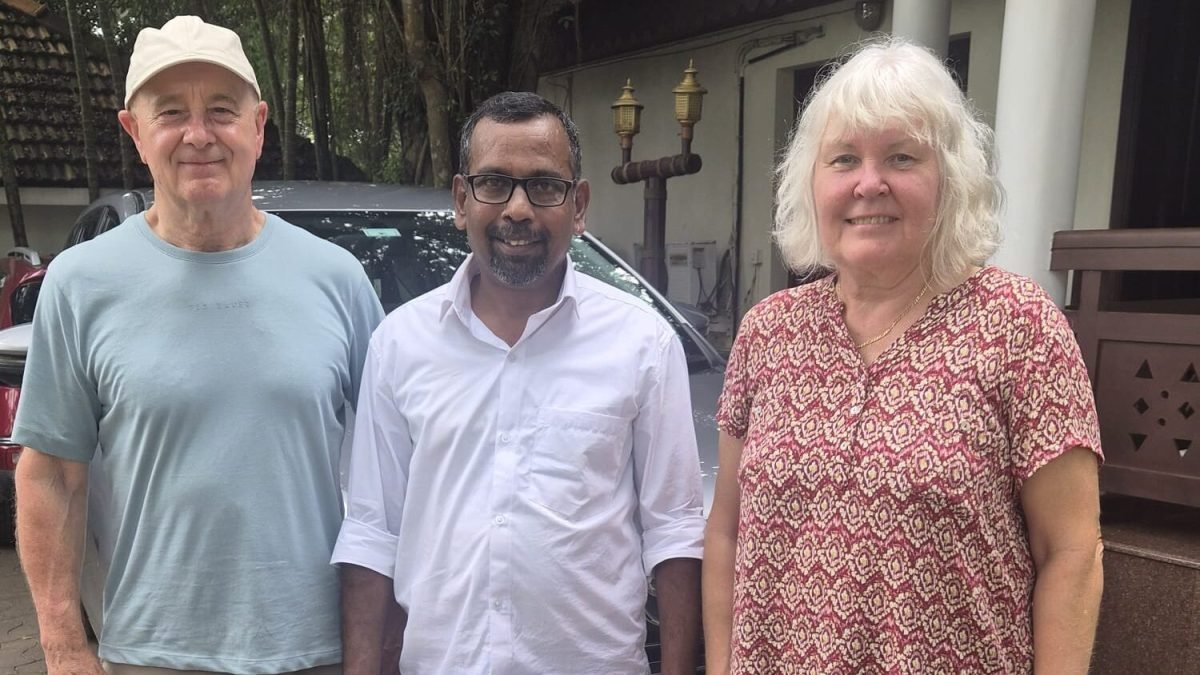
Amazing service. Communication excellent both before and during holiday.
All hotels excellent.
Sree, our driver absolutely superb.
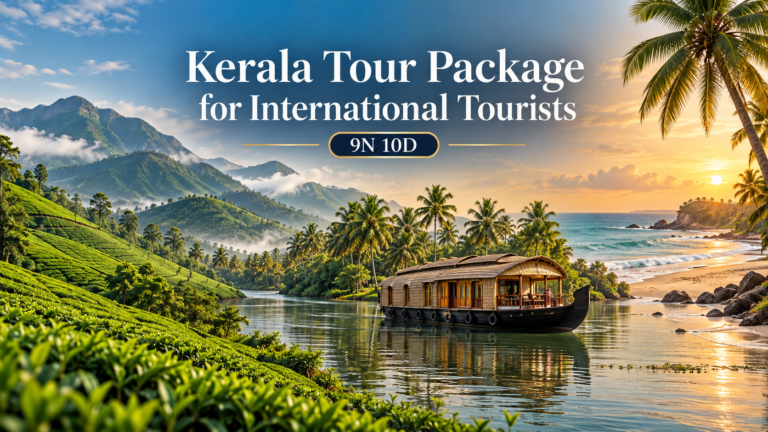
Our 10 day tour around Kerala was perfect.
Kolli Malai means “Mountain of Death”, and the name comes from the mohini of Tamil folklore said to have lured travellers to their end on these slopes. The range appears in Sangam literature from the early centuries CE, which makes it one of the oldest documented landscapes in South India — and one of the least visited today.
The road up has seventy hairpin bends, more than any other ghat in Tamil Nadu, each numbered on a painted stone. Valparai has forty. Yercaud has twenty. Seventy is a genuinely different proposition, and it is the single most common thing people remember about coming here.
What you find at the top is not a hill station. There is no colonial town, no lake promenade and no mall road. Kolli Hills is farming country — smallholdings growing pepper, jackfruit, coffee, pineapple and millet, worked largely by the Malayali tribal communities who have lived on the plateau for centuries. The villages are administrative rather than scenic, and that is precisely why the place feels unlike anywhere else in the state.
The two things everyone comes for are Agaya Gangai, a 300-foot waterfall reached by descending around 1,200 steps into a gorge, and the Arapaleeswarar Temple beside it — a Shiva temple with a long association with the Siddhar tradition and persistent local stories of a sealed passage beneath it.
The trip begins at Namakkal, which has one of the more remarkable rock formations in South India: a single monolith 65 metres high with a fort on top, and at its base an 18-foot Hanuman carved from one stone and standing entirely open to the sky. The Namagiri Thayar temple here is the one Srinivasa Ramanujan credited for his mathematical visions.
It is the most of any road in Tamil Nadu, and you should plan for it rather than be surprised by it.
For comparison: Yercaud has 20, Ooty’s Kallar road has 36, Valparai has 40. Kolli Hills has 70, each numbered on a painted stone, climbing to around 1,300 metres. The ascent takes about ninety minutes.
The road surface is decent and it is not dangerous — but the bends come almost continuously with very little straight road between them, and that is what causes trouble. Motion sickness is the single most common complaint on this route, and the descent affects people more than the climb.
Practical advice that works: sit in the front, eat something light rather than nothing, keep a window open, and tell your driver so he takes the descent slowly. If anyone in your party is badly affected, medication 45 minutes before the climb is worth it.
We stop twice on the way up, both because the views are good and because breaking the sequence helps.
This is the hardest single thing in the itinerary and you should decide honestly before you start.
The descent into the gorge is roughly 1,200 steps — around forty-five minutes going down and about ninety minutes coming back up. The steps are uneven, they are steep in stretches, and the handrail is intermittent. There is no alternative route down and no way out except back up the same steps.
It is genuinely worth it — a 300-foot fall into a gorge you cannot see from the top — but it demands reasonable fitness. We would not recommend it for anyone with knee or heart problems, for young children, or in wet conditions when the steps are slippery.
Your step-and-stamina card sets this out plainly before you travel, and there is a full alternative itinerary built around the viewpoints and the temple for anyone who decides against it. That is not a consolation prize — Selur Nadu and Seekuparai are the best views on the plateau.
No, and this is the thing most visitors misjudge.
There is no colonial hill town here. No mall road, no botanical showpiece, no boating promenade with horse rides. Kolli Hills is agricultural land at altitude — smallholdings growing pepper, jackfruit, coffee, pineapple and millet, farmed largely by the Malayali tribal communities who have lived on the plateau for generations.
Semmedu is the main settlement and it is a working village rather than a resort town. Accommodation is limited and modest. There is very little to buy and few places to eat outside your property.
What you get instead is genuine quiet, a landscape almost nobody visits, and a range that Tamil literature has been writing about since the Sangam period nearly two thousand years ago.
If you want a hill station with things to do, take Ooty or Kodaikanal. If you have done those and want somewhere that has not been arranged for visitors, this is it.
Honestly: modest, and this is the constraint of the trip.
Kolli Hills has a small number of properties — government accommodation at Semmedu, a few resort-style places and some farm stays. The upper tier is comfortable rather than luxurious, with clean rooms, hot water and simple food. Electricity is generally reliable but generators run at set hours in some properties, and mobile coverage is patchy on all networks.
Namakkal is a proper town with better hotels, and the first night there is noticeably more comfortable than the two on the plateau.
If accommodation standard matters more to you than atmosphere, we can base you at Namakkal or Salem and make Kolli Hills a long day trip. You lose the plateau evening and the dark sky, which is a real loss — but it is an honest option and some guests prefer it. Tell us at booking.
This matters more here than on most routes.
A sedan will make it, but a loaded Dzire works genuinely hard on seventy consecutive bends and the brakes take a beating on the way down.
An SUV or Innova Crysta is our recommendation for anything over two people. The extra torque and engine braking make a real difference across a climb this sustained.
A Tempo Traveller is permitted and does the route, but expect the climb to take an extra thirty to forty minutes, and the tighter bends require reversing on occasion.
Whatever you take, the important thing is a driver who knows this ghat. Seventy bends with hairpins that tighten near the top is not a road to learn on, and we assign accordingly.
October to February is the best window — comfortable days around 20–25°C, cool nights, clear views from the escarpment, and Agaya Gangai still carrying good water from the monsoon.
March to May is warm but still pleasant on the plateau, which stays well below the plains. The falls reduce considerably by April and can be thin by May.
June to September brings the southwest monsoon. The hills are spectacularly green and the falls are at full volume, but the step descent becomes genuinely dangerous when wet, mist reduces the viewpoints to nothing, and landslides occasionally close the ghat. We would rather you came in another season.
The falls are the deciding factor for most people, and we will tell you what to expect for your specific dates.
Trichy International (TRZ) at 160 km is the practical airport, roughly four hours, with domestic and some Gulf connections. Coimbatore (CJB) at 170 km and Salem Airport (SXV) at 110 km are alternatives, though Salem has limited services.
By train, Salem Junction (SA) at 110 km is the largest railhead with excellent connections from Chennai, Bangalore, Coimbatore and Madurai. Namakkal (NMKL) and Rasipuram are closer but have far fewer services.
We pick up and drop at any of these. If you are combining Kolli Hills with Yercaud — which works well, since both are Eastern Ghats ranges within two hours of each other — we route the trip through Salem and adjust accordingly.
A point worth clarifying, because the name causes confusion: the Malayali of Kolli Hills are a Tamil-speaking tribal community, unrelated to Malayalam speakers from Kerala. The name derives from malai, meaning hill — “people of the hills”.
They have farmed this plateau for centuries and remain the majority population across the range. Their agriculture is genuinely distinctive: millet cultivation on terraced slopes, alongside pepper, jackfruit, coffee and pineapple, often intercropped on the same smallholding.
The guided smallholding walk on Day 3 is with a working farmer rather than a demonstration plot, and it is one of the more memorable hours of the trip for most guests. Kolli Hills millet has attracted attention in recent years for its role in traditional food-security systems.
Please ask before photographing people, as you would anywhere
Worth the night, and we build it in for two reasons.
The first is practical: the ghat is best climbed in daylight with a fresh driver, and arriving at Trichy and going straight up makes for a very long day.
The second is that Namakkal is genuinely interesting. The fort sits on a single monolithic rock 65 metres high — one of the largest such formations in South India — with Nayak-period ramparts around the summit. At its base, the Anjaneyar Temple holds an 18-foot Hanuman carved from a single stone and standing entirely open to the sky, with no roof above it, facing the Narasimha temple across the road. The arrangement is unusual and the scale is striking.
The Namagiri Thayar Temple is the one Srinivasa Ramanujan credited with his mathematical insight — he said the goddess revealed formulae to him in dreams, and he consulted her before travelling to Cambridge.
None of it takes long, but skipping it to save two hours would be the wrong economy.
Partly the road, partly the absence of a tourism industry, and partly reputation.
Kolli Malai means “Mountain of Death” — the name comes from the mohini of Tamil folklore said to have lured travellers off the slopes. That association, plus the seventy bends, has kept the range off most itineraries for a long time.
There is also no infrastructure pushing visitors here. No colonial hill town was built, no railway reaches it, and the plateau economy is farming rather than tourism. Nobody markets it.
The result is a range documented in Sangam literature nearly two thousand years ago that receives a fraction of Ooty’s traffic. For travellers who have done the standard Tamil Nadu circuit and want somewhere genuinely untouristed, that is the entire appeal — and it will not stay this way indefinitely.
Planning a holiday in Kerala, Tamil Nadu or Karnataka? Instantly estimate your tour cost based on your travel dates, destinations, hotel category, vehicle, houseboat, activities and more. Download your trip estimate and plan your South India holiday with confidence.
Our prices vary based on season, dates, group size and custom add‑ons. Every quote is tailored for your exact travel plan.
This page shows a sample itinerary to give you a clear idea of the route, inclusions and timings. Every itinerary is fully customisable to match your dates, hotel preferences and interests. Once you share your travel details we will prepare a personalised itinerary and an itemised quote.
Amazing service. Communication excellent both before and during holiday.
All hotels excellent.
Sree, our driver absolutely superb.
Our 10 day tour around Kerala was perfect.
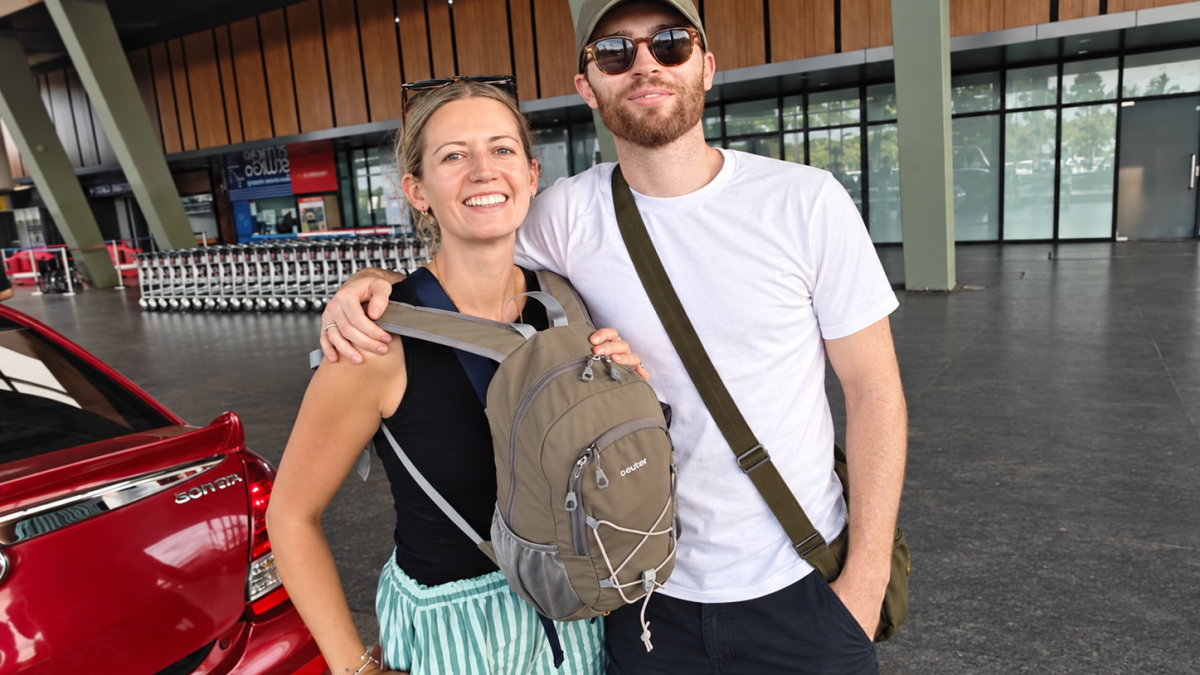
Our 5-day Kerala trip with Troper Tours was a lovely experience from the moment we arrived until the final day. My friend and I travelled from the UK and everything was organised smoothly, which made the journey comfortable and easy. We enjoyed the changing scenery, local food, tea hills, backwaters and the relaxed pace of the trip. One of our favourite moments was reaching Munnar, where we could enjoy the cool weather, plantations and peaceful mountain views. The vehicle was comfortable, our driver was punctual and helpful, and the team was always easy to contact whenever we needed anything. What we appreciated most was that the trip never felt rushed or overly planned. We had enough time to enjoy Munnar, Thekkady, Alleppey and Trivandrum properly. Troper Tours took good care of us throughout the five days. A memorable Kerala holiday, and we would happily recommend them to other travellers visiting from the UK.
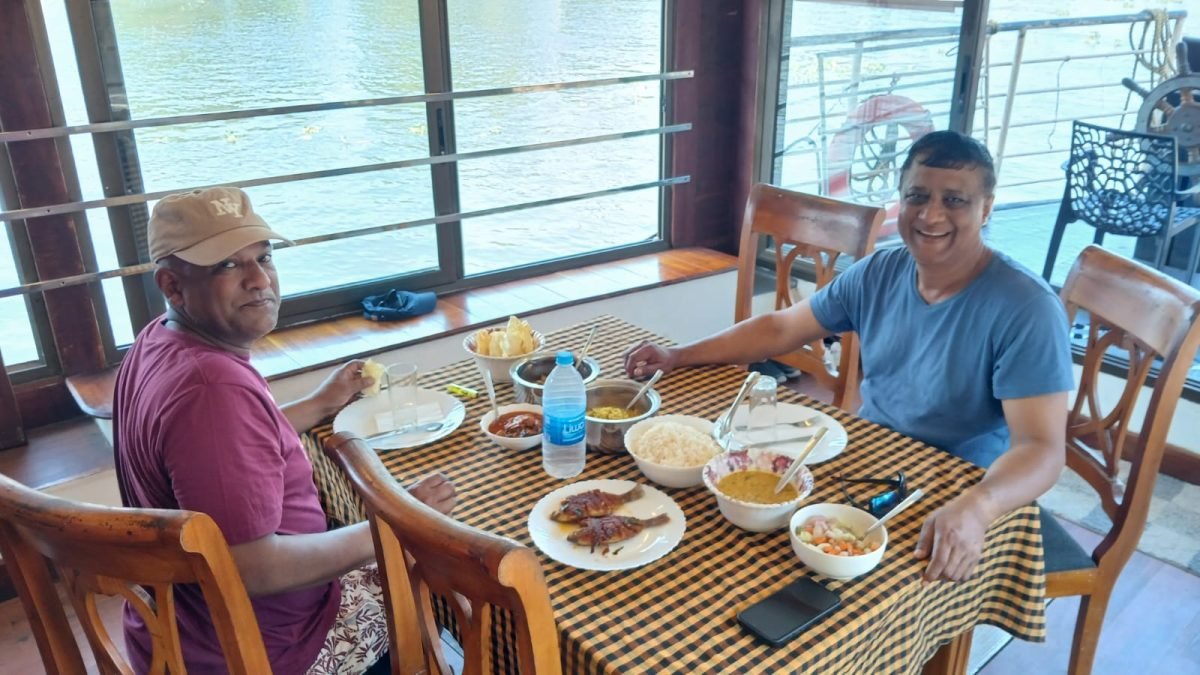
Our 6-day Kerala trip with Troper Tours was a wonderful experience from beginning to end. My brother and I travelled from Australia and everything was arranged very smoothly, which made the journey comfortable and stress free. We enjoyed the changing scenery, local food, backwaters and the relaxed pace of the trip. One of our favourite moments was the houseboat experience, where we could simply sit together, enjoy a nice meal and watch the peaceful water and village life around us. The vehicle was comfortable, our driver was punctual and helpful, and the team was always easy to contact whenever we needed anything. What we appreciated most was that the trip never felt rushed or overly planned. We had enough time to enjoy each place properly. Troper Tours took very good care of us throughout the six days. A memorable Kerala holiday, and we would happily recommend them to other travellers coming from Australia.