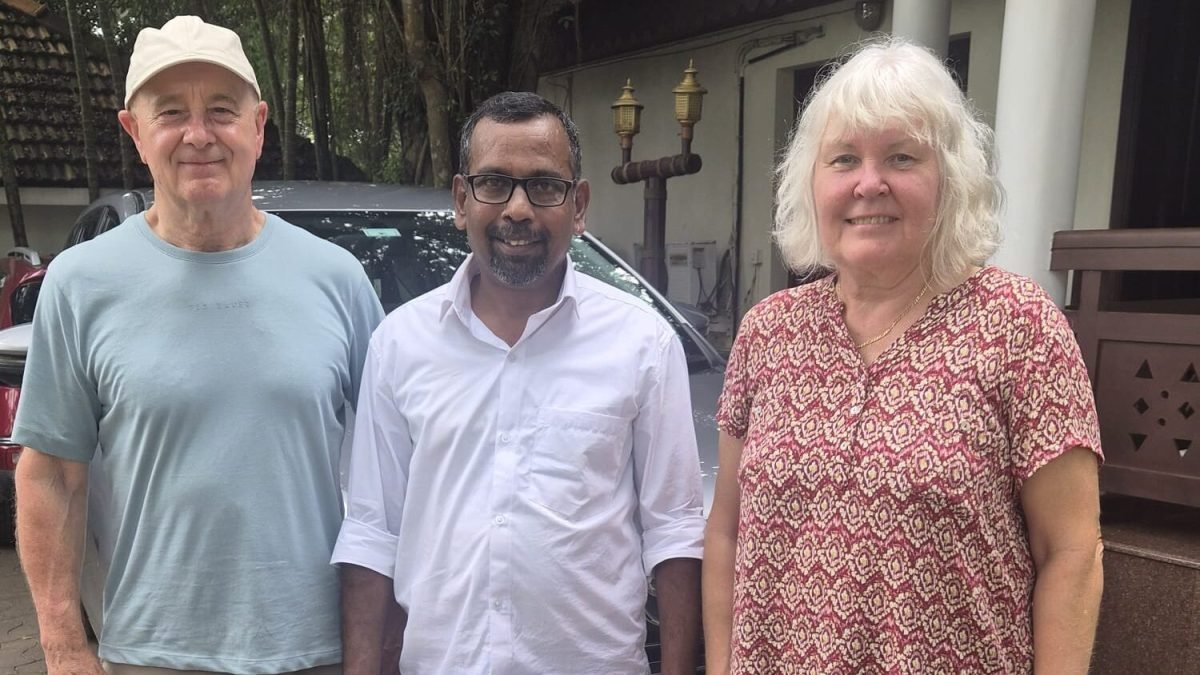
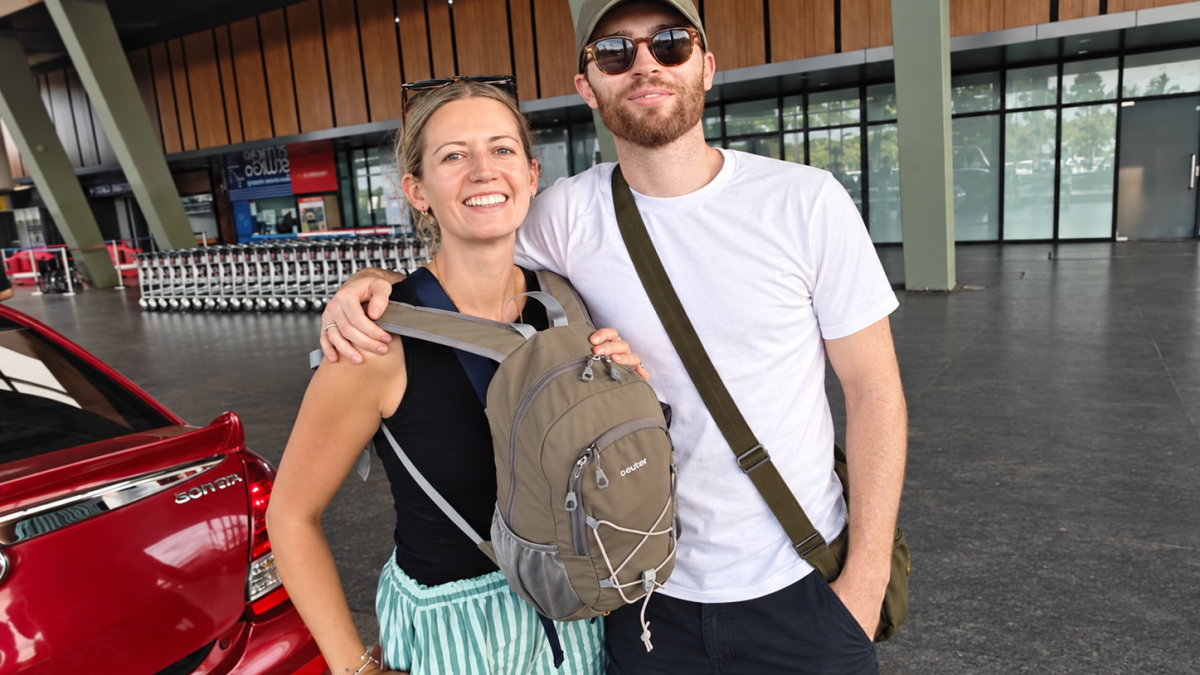
Amazing service. Communication excellent both before and during holiday.
All hotels excellent.
Sree, our driver absolutely superb.
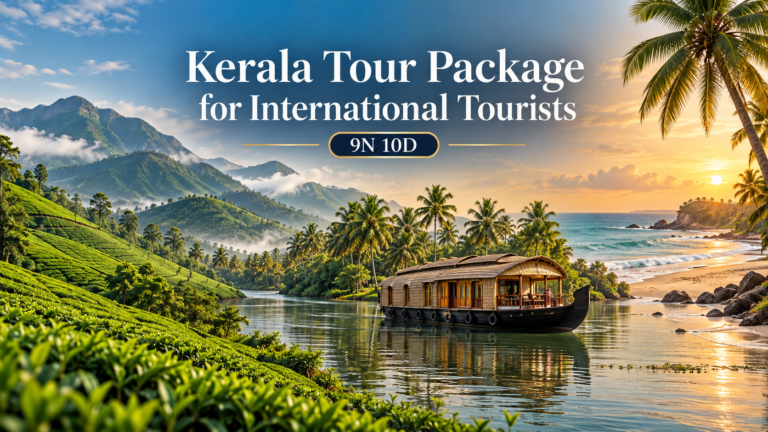
Our 10 day tour around Kerala was perfect.
The Nattukottai Chettiars were bankers and traders whose business ran from Burma to Ceylon to Vietnam, and between roughly 1850 and 1930 they brought the proceeds home to a dry patch of southern Tamil Nadu and built. Not one or two houses — thousands, across 74 villages, using Burmese teak for the pillars, Italian marble for the floors, Belgian glass for the windows and English steel for the beams.
Most are empty now. The families that built them dispersed generations ago, and a Chettinad mansion is a difficult thing to maintain — some have 60 rooms arranged around successive courtyards, built to house an entire extended family through a wedding. A few have been restored as heritage hotels. Others are shuttered, opened for visitors by a caretaker with a key. A significant number have been sold for their materials, which is why the antique trade here deals in teak pillars rather than trinkets.
The food is the other reason to come. Chettiar cuisine is the most spice-complex cooking in South India — the result of a trading community that had direct access to whatever it wanted from three countries — and it is properly eaten in a mansion dining hall rather than a restaurant.
This trip also takes in Sittanavasal, a Jain cave temple whose 7th-century murals are the finest early paintings in India after Ajanta, and two of the region’s great rock-cut temples at Pillaiyarpatti and Kundrakudi.
Five days, one small region, and a kind of architecture that exists nowhere else in the world.
Inside, and this is the part most visitors get wrong.
The mansions are privately owned — by families, trusts, or individuals who inherited a share. There is no ticket office. Access works through relationships with caretakers and owners, and a visitor arriving alone in Kanadukathan will photograph a lot of locked doors.
Your package includes three mansion interiors: one still lived in by a Chettiar family, one opened by a caretaker, and one restored as a heritage property. We arrange these in advance and pay the access fees.
One honest caveat: a privately owned house can close at short notice — a family function, a bereavement, a caretaker away. When that happens we substitute another, which is why we work with more houses than we visit. Your mansion access card lists what is confirmed for your dates.
It is a handmade floor tile produced in one cluster of villages and nowhere else in the world, and yes — it is the most memorable hour of the trip for a lot of guests.
Each tile is made individually. Coloured cement is poured by hand onto a patterned glass plate, backed with sand and cement, cured in water for days, then polished. No mould presses them, no kiln fires them. The pattern comes off the glass, which is why the surface has a depth that machine tiles do not.
You watch one being made start to finish. Most people then want to buy some — tiles can be ordered and shipped, though freight is not included and international shipping is expensive and slow. Ask the workshop directly rather than through us; we take no commission on it.
It is the most complex cooking in South India rather than simply the hottest, and the distinction matters.
Chettiar cuisine uses spices that the rest of Tamil Nadu barely touches — star anise, stone flower (kalpasi), maratti moggu, black stone flower — because a trading community with routes to Burma and South-East Asia had access to them. The heat comes from dried red chilli, and yes, a properly made Chettinad chicken is hot.
It can absolutely be toned down. Tell us at booking and the mansion kitchen adjusts. Vegetarian Chettinad cooking is excellent and often overlooked — the kootu, poriyal and vathal kuzhambu are the everyday food of the community, not a compromise.
The cooking session on Day 4 is where this makes sense: you grind the masala yourself and understand why it tastes the way it does.
In our view, yes — this is one of the few destinations where the accommodation is part of the experience.
Budget and mid-range options are conventional hotels in Karaikudi town, perfectly comfortable and about ten minutes from Kanadukathan. The heritage tier is different: restored mansions operating as hotels, where you sleep in a room off a teak-pillared courtyard in a house built in 1910.
A handful of these exist, they are small, and they book out well ahead — particularly November to February. That is the constraint that decides your dates on this trip, not flights.
If budget is the priority, stay in town and visit mansions by day; you lose the atmosphere but not the sights. We will name the exact property in your quote before you pay.
Trichy International (TRZ) at 90 km is the practical choice — roughly two and a half hours, with domestic connections and some Gulf routes. Madurai (IXM) at 95 km is equally close and often has better fares.
By train, Karaikudi Junction (KKDI) is in the middle of the region, with services from Chennai Egmore, Trichy and Rameswaram. Chettinad station and Kanadukathan station also exist, though with fewer services.
We pick up and drop at any of these. If you are combining Chettinad with Madurai or Rameswaram — which is the natural extension — we drop at Madurai instead of Trichy at no change to the itinerary.
A sedan is fine for two or three people. The roads across Chettinad are flat and reasonably surfaced, and there are no ghat sections anywhere in this itinerary.
An SUV or Innova Crysta is the better choice for four or more, mainly for luggage and because some of the approach lanes into the mansion villages are narrow enough that a larger vehicle waits while another passes.
A Tempo Traveller works for groups but is genuinely awkward in Kanadukathan and Athangudi, where the lanes were laid out for bullock carts. Expect to walk the last hundred metres to some houses.
Total driving on this trip is modest — around 320 km over five days, the lightest of any itinerary we run in Tamil Nadu.
November to February is comfortable — days around 28–32°C and pleasant evenings. This is the season, and heritage properties book out.
March to June is genuinely hot. Chettinad sits on a dry plain and April and May routinely exceed 40°C. The mansions themselves stay surprisingly cool — thick walls, high ceilings and courtyards that were designed for exactly this — but the drives between villages are uncomfortable. We would not recommend these months to a first-time visitor to India.
July to September is dry and quiet, with rates at their lowest. October to December brings the northeast monsoon, though Chettinad is inland and sees far less of it than the coast.
If you want the region at its liveliest, the Chettiar wedding season falls in the cooler months and the villages come alive.
Yes, though manage your expectations about condition.
Sittanavasal is a Jain rock-cut monastery from around the 7th century, and its ceiling murals — a lotus pond with elephants, buffalo, fish and dancers — are the most significant early paintings in India after Ajanta. They were painted in a fresco-secco technique using natural pigments.
What survives is fragmentary. Vandalism and time have taken a good deal, and the remaining panels are protected behind a barrier with limited lighting. You are seeing pieces of something extraordinary rather than an intact ceiling.
Above the cave, the Ezhadipattam stone beds where monks slept are carved directly into the rock with pillow ridges at one end — seventeen of them. That part is intact and, for many visitors, as affecting as the paintings.
The ASI charges a camera fee separately.
For older travellers, yes — this is one of the gentlest itineraries in Tamil Nadu. Short drives, flat terrain, no ghat roads, and the mansions are single-storey with level courtyards. The exceptions are Kundrakudi, which has a stepped hill approach, and Sittanavasal, which involves a climb of around 100 steps. We substitute or shorten both where needed.
For children, it depends on the child. There is no beach, no wildlife and no hill station here — it is architecture, food and history. The Athangudi tile workshop is usually the winner, because they can watch something being made and often get to try. The terracotta horses at Kothamangalam are the other reliable hit.
If you are travelling with children under ten, tell us and we will weight the days toward the workshop and the villages rather than the museum.
Because Chettinad is usually done as a half-day stop between Madurai and Thanjavur, and that gets you one mansion and a photograph.
The region is 74 villages. The mansions differ village to village — Kanadukathan is the showpiece, Devakottai is later and larger, Kothamangalam has the horses. The tile workshop takes an hour to understand properly. A Chettiar meal cooked in a house kitchen is not a thing you rush, and the cooking session is a morning.
There is also the fact that access takes time to arrange. Getting into three private houses is not something that can be done by turning up, and the value of five days is partly that we can move a visit when a family closes their doors.
If you genuinely only have two days, we will build that instead and tell you what you are giving up — but this region rewards the extra time more than almost anywhere in the state.
Planning a holiday in Kerala, Tamil Nadu or Karnataka? Instantly estimate your tour cost based on your travel dates, destinations, hotel category, vehicle, houseboat, activities and more. Download your trip estimate and plan your South India holiday with confidence.
Our prices vary based on season, dates, group size and custom add‑ons. Every quote is tailored for your exact travel plan.
This page shows a sample itinerary to give you a clear idea of the route, inclusions and timings. Every itinerary is fully customisable to match your dates, hotel preferences and interests. Once you share your travel details we will prepare a personalised itinerary and an itemised quote.
Amazing service. Communication excellent both before and during holiday.
All hotels excellent.
Sree, our driver absolutely superb.
Our 10 day tour around Kerala was perfect.
Our 5-day Kerala trip with Troper Tours was a lovely experience from the moment we arrived until the final day. My friend and I travelled from the UK and everything was organised smoothly, which made the journey comfortable and easy. We enjoyed the changing scenery, local food, tea hills, backwaters and the relaxed pace of the trip. One of our favourite moments was reaching Munnar, where we could enjoy the cool weather, plantations and peaceful mountain views. The vehicle was comfortable, our driver was punctual and helpful, and the team was always easy to contact whenever we needed anything. What we appreciated most was that the trip never felt rushed or overly planned. We had enough time to enjoy Munnar, Thekkady, Alleppey and Trivandrum properly. Troper Tours took good care of us throughout the five days. A memorable Kerala holiday, and we would happily recommend them to other travellers visiting from the UK.
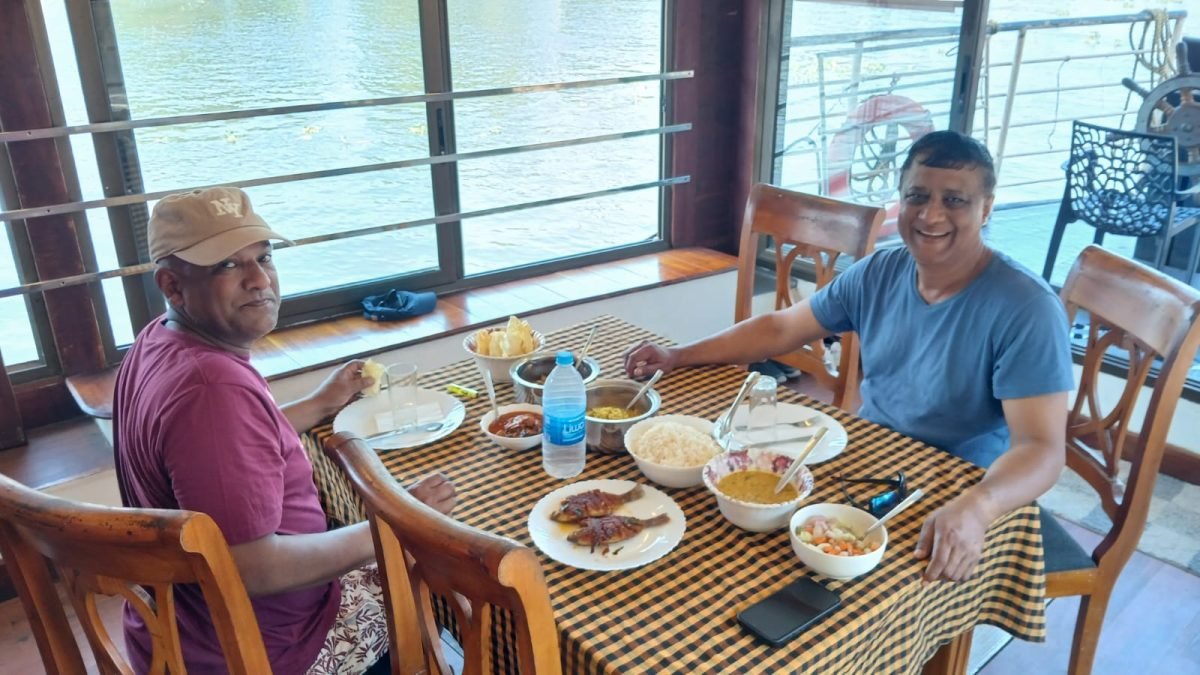
Our 6-day Kerala trip with Troper Tours was a wonderful experience from beginning to end. My brother and I travelled from Australia and everything was arranged very smoothly, which made the journey comfortable and stress free. We enjoyed the changing scenery, local food, backwaters and the relaxed pace of the trip. One of our favourite moments was the houseboat experience, where we could simply sit together, enjoy a nice meal and watch the peaceful water and village life around us. The vehicle was comfortable, our driver was punctual and helpful, and the team was always easy to contact whenever we needed anything. What we appreciated most was that the trip never felt rushed or overly planned. We had enough time to enjoy each place properly. Troper Tours took very good care of us throughout the six days. A memorable Kerala holiday, and we would happily recommend them to other travellers coming from Australia.