
Gavi has a rare position in Kerala tourism. It is talked about with the excitement of a forest escape, yet it is not meant to function like a free-flowing hill station or a casual roadside stop. That distinction matters.
For travelers who want more than scenery, Gavi eco-tourism offers something stronger: a sustainable and protected landscape, a managed visitor model, and a travel experience shaped by conservation rather than volume.
Why Gavi eco-tourism stands apart in Kerala
Many places in Kerala are loved for their beauty. Gavi is different because its identity is tied to an official eco-tourism framework. Kerala Tourism presents Gavi as one of the state’s leading eco-tourism centers and describes it as a pristine forest region in Pathanamthitta, with hills, valleys, tropical forests, grasslands, sholas, boating opportunities, waterfalls, and cardamom plantations.
That official framing changes how the destination should be read. Gavi is not simply a scenic viewpoint wrapped in green branding. It is promoted as a nature-based zone where access, movement, and activities are shaped by ecological priorities.
This is why Gavi often feels more purposeful than polished.
Travelers expecting a conventional sightseeing circuit may find that refreshing. Those looking for a quiet forest atmosphere, regulated entry, and a sense that the place still belongs first to wildlife are usually the ones who appreciate it most.
How Gavi eco-tourism is officially managed
The management structure behind Gavi is one of the clearest signs that this is a serious eco-tourism project rather than a loosely marketed forest trip. The Kerala Forest Department’s ecotourism booking system lists Gavi-Kakki under Pathanamthitta, placing it among the state’s official forest eco-tourism centers.
Kerala Forest Development Corporation, or KFDC, adds another layer of detail. Its Gavi Division covers 1,039.604 hectares and includes the subunits Gavi, Pamba, and Gavi and Kochupamba ecotourism. According to KFDC, these subunits fall under the forest range of Goodirikkal and adjoin the Periyar Tiger Reserve.
That connection to the Periyar Tiger Reserve is significant. It places Gavi within a larger protected landscape rather than treating it as an isolated attraction. The emphasis is not just on bringing visitors in, but on doing so within a forest governance structure.
Community participation is also built into the model. KFDC states that the Eco-Development Committees in the Gavi Division are recognized by the Periyar Foundation. In practical terms, this signals that the local tourism structure has conservation and community elements working together, which is central to the eco-tourism idea in Kerala.

What makes Gavi eco-tourism different from a regular forest outing
A quick comparison helps explain why Gavi often feels unlike more open-access nature destinations.
| Element | Gavi eco-tourism reality | What it means for visitors |
|---|---|---|
| Official identity | Recognized by Kerala Tourism as a leading eco-tourism center | Expect a nature-first destination, not a high-volume leisure zone |
| Booking structure | Listed through official forest ecotourism channels as Gavi-Kakki | Entry and activities may be controlled, limited, or timed |
| Protected setting | Linked to the Periyar Tiger Reserve and Goodirikkal forest range | Wildlife, habitat protection, and regulated movement shape the experience |
| Community role | Eco-Development Committees are part of the framework | Tourism is tied to local participation, not only outside operators |
| Landscape character | Forests, sholas, grasslands, waterfalls, and plantations | The draw is ecological variety, not urban-style entertainment |
That table points to a simple truth: Gavi works best when approached with the right expectations.
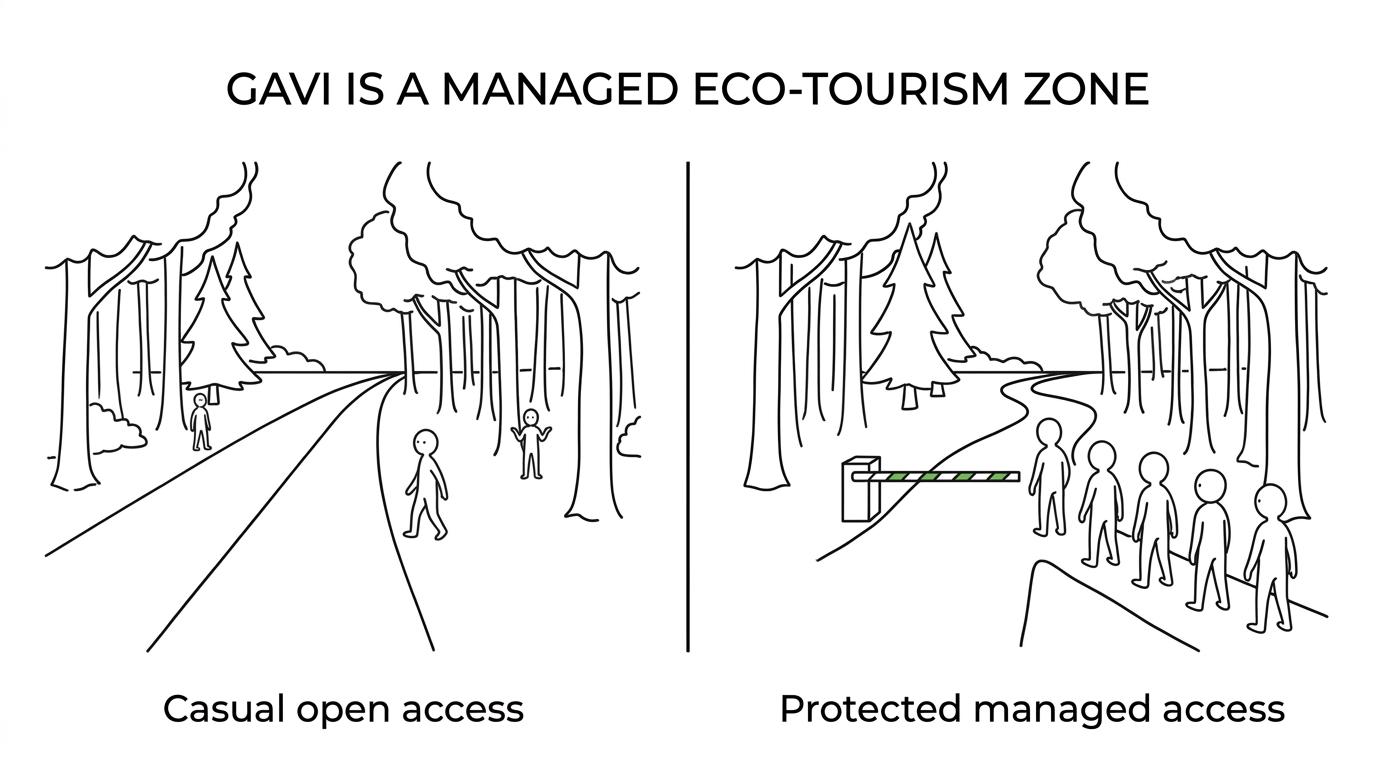
It is less about “covering” a place and more about spending time in a protected environment that still retains boundaries.
What travelers can expect in the Gavi landscape
The appeal of Gavi comes from eco-friendly travel activities like trekking and texture rather than spectacle alone. Kerala Tourism’s description captures this well: hills and valleys sit alongside tropical forests, open grasslands, shola patches, waterfalls, and cardamom plantations. That variety gives the area a layered visual character.
One hour can feel close, enclosed, and forested. The next can open into broader views and softer terrain. This shifting geography is part of what makes Gavi memorable.
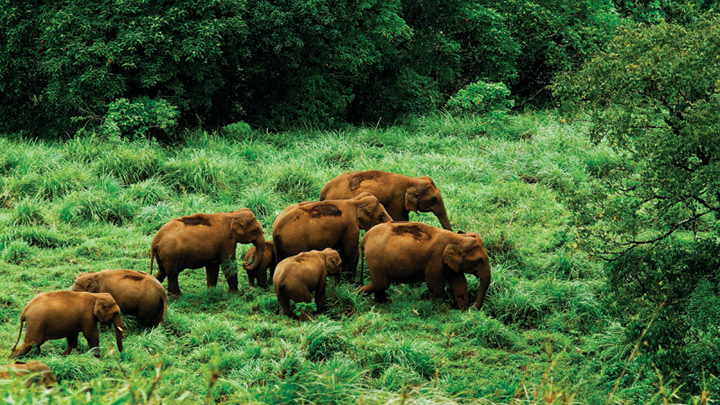
Wildlife interest adds another dimension, though responsible expectations are important. A protected forest is not a theme park, and wildlife sightings are never guaranteed. The reward is the habitat itself, with its silence, moisture, canopy cover, and sense of scale.
Travelers often value Gavi most when they are comfortable with slower observation.
After all, eco-tourism works best when the destination does not perform on command.
Why access to Gavi feels controlled
Some visitors are surprised that Gavi is not as casually accessible as many other Kerala destinations. That is actually part of its strength. Places with ecological sensitivity often require managed entry, limited activity zones, and advance planning.
In Gavi’s case, the official forest-department listing and the KFDC structure support that controlled approach. Rather than encouraging unrestricted movement, the system channels visitors through approved formats. This protects the landscape and helps keep tourism pressure within reasonable limits.
A few practical realities follow from that setup:
- Limited daily access
- Forest-based timing rules
- Activity restrictions
- Seasonal variation
- Greater value in advance planning
None of this makes Gavi difficult in a negative sense. It simply means the trip benefits from intention.
For travelers building a longer Kerala holiday, that often means placing Gavi within a customized route instead of treating it as an improvised detour.
Best itinerary choices for Gavi eco-tourism in Kerala
Because Gavi is in Pathanamthitta district and connected to a protected forest system, it usually works best as part of a broader South Kerala or central Kerala circuit. Travelers commonly pair nature-heavy routes with places that offer a different rhythm, which makes the overall trip more balanced.
A well-built itinerary often combines forest, hills, backwaters, and coast, integrating sustainable practices, and may include opportunities for boating in the serene waters. Gavi can serve as the deep-green, conservation-focused chapter within that larger story.
When planning, these route ideas tend to work well:
- Gavi with Thekkady: good for travelers who want forest landscapes and wildlife themes in the same trip
- Gavi with Kumarakom or Alleppey: a strong contrast between inland forest and Kerala’s backwater calm
- Gavi with Munnar: useful for visitors who want plantations and highland scenery alongside denser forest
- Gavi in a custom South Kerala circuit: practical when private transfers, timed entries, and verified stays are important
For travelers using a Kerala specialist, this is where personalized planning has real value. Gavi’s controlled access, longer road transfers, and official eco-tourism structure fit best with itineraries that are paced carefully and supported with reliable transportation and clear day-by-day coordination.
That is especially true for couples, families, and international visitors who prefer comfort without losing the authenticity of the forest experience.
Responsible travel habits that suit Gavi
Eco-tourism only works when visitor behavior matches the setting. Gavi rewards travelers who are alert, quiet, and willing to give the place space.
That does not require hardship or rigid minimalism. It just calls for a little discipline and respect.
A few habits make a noticeable difference:
- Keep noise low: forests are lived-in habitats, not open entertainment spaces
- Follow designated access rules: regulated zones exist to protect both wildlife and visitors
- Carry back waste: even small litter loads weaken the eco-tourism promise
- Dress for terrain and weather: muted, practical clothing suits the environment better than resort styling
- Leave timing flexible: nature rarely follows a scripted sightseeing pace
These choices improve the trip itself. They also support the wider purpose behind Gavi’s model, which is to keep tourism compatible with conservation rather than in conflict with it.
Who will enjoy Gavi eco-tourism most
Gavi is not for every traveler, and that is perfectly fine. People looking for nightlife, shopping streets, or a packed menu of easy attractions may feel underwhelmed. The destination asks for patience and a real interest in landscape.
It tends to suit travelers who like protected areas, birding , forest drives, and quieter forms of sightseeing. Photographers often appreciate the layered terrain and changing light. Couples who prefer calm over crowds can find Gavi deeply rewarding. Families with older children usually enjoy it more than families seeking highly active entertainment throughout the day.
In many ways, Gavi appeals to travelers who want Kerala to feel wilder.
That is a valuable niche, and Kerala is stronger as a tourism destination because it has places like this.
How to place Gavi within a higher-comfort Kerala holiday
There is a common myth that eco-tourism and comfort do not belong together. In practice, the better question is balance. A forest destination can still be part of a well-organized, premium holiday if the travel design is thoughtful.
That means choosing the right sequencing, allowing realistic road time, and avoiding the urge to overload the itinerary. It also means using dependable transfers and stays that support rest before and after a more nature-intensive day.
For many travelers, the most satisfying formula looks like this:
- Begin with a city or arrival hub such as Kochi or Thiruvananthapuram.
- Move into hill or forest country with enough time to settle in.
- Include Gavi as a planned eco-tourism segment, not a rushed add-on.
- Follow it with a slower destination like the backwaters or coast.
This style of planning respects what Gavi is. It does not try to force the forest into a mass-tourism template.
And that may be the most compelling part of Gavi eco-tourism in Kerala. It still feels like a place shaped by policy, protection, and participation, not just by visitor demand. For travelers who value that difference, Gavi offers one of the state’s most distinctive nature experiences.