Kerala is stepping into a larger role in global medical travel, and its latest focus is clear: Arab travelers, especially from the Gulf and wider West Asian region. This is not just a tourism campaign. It is a coordinated push to connect healthcare, Ayurveda, premium hospitality, and family-friendly travel into one strong proposition.
That move makes sense.
Arab visitors already represent one of Kerala’s most valuable international markets. They tend to stay longer, spend more, and often travel with relatives. When a destination can offer advanced treatment, recovery-friendly settings, halal-friendly hospitality, and trusted local coordination, it becomes far more than a place to visit. It becomes a place people choose for care.
Kerala’s ambition is bigger than a short-term spike in arrivals. State officials have spoken about building a global medical value travel hub by 2030, with training, regulation, classification, and service standards at the center of that effort. For a region like South India, where culture, climate, and wellness traditions already attract overseas guests, that creates real momentum.
Why Arab travelers are central to Kerala medical tourism growth
Recent data shows why Kerala is placing this market front and center. According to Kerala Tourism Statistics 2025, Oman, Saudi Arabia, and the United Arab Emirates ranked among the state’s leading foreign source markets. That is a powerful base for a medical tourism strategy, because it proves Kerala is not trying to create demand from scratch. The demand is already there.
A growing number of travelers from the Gulf know Kerala well through business links, family networks, education, and long-standing cultural ties across the Arabian Sea. That familiarity lowers the barrier to medical travel. Trust matters in healthcare, and destinations with cultural comfort often have a major advantage.
Recent reporting has also indicated that Kerala plans to reserve 20 percent of its tourism promotion budget to attract Arab travelers. That kind of dedicated allocation signals intent. It tells hospitals, hotels, wellness centers, and travel companies that the state sees this market as a priority.
| Source market | Foreign tourist visits to Kerala in 2025 | Why it matters |
|---|---|---|
| Oman | 65,132 | Strong existing demand and repeat potential |
| Saudi Arabia | 31,593 | High-value market with family travel strength |
| United Arab Emirates | 26,255 | Easy regional access and broad travel interest |
Kerala recorded 821,999 foreign tourist visits in 2025, with foreign travel receipts estimated at ₹7,382.02 crore. When three Gulf markets contribute this strongly to overall arrivals, it becomes easy to see why healthcare, wellness, and luxury recovery travel are being packaged together for Arab audiences.
Kerala medical value travel infrastructure is becoming more organized
Kerala already has many of the building blocks needed for medical value travel. The state has a strong healthcare reputation, a large pool of doctors and nurses, and a hospital ecosystem that serves both domestic and international patients. KPMG has noted that Kerala led NITI Aayog’s Health Index for four consecutive years from 2017 to 2020, which gives the state a credible public-health foundation.
The current push is about turning those strengths into a better structured international offering.
Officials have emphasized regulation, classification, and standardization. That may sound technical, but it is exactly what international patients look for. Clear quality markers, predictable service processes, and ethical treatment standards reduce uncertainty for patients and their families.
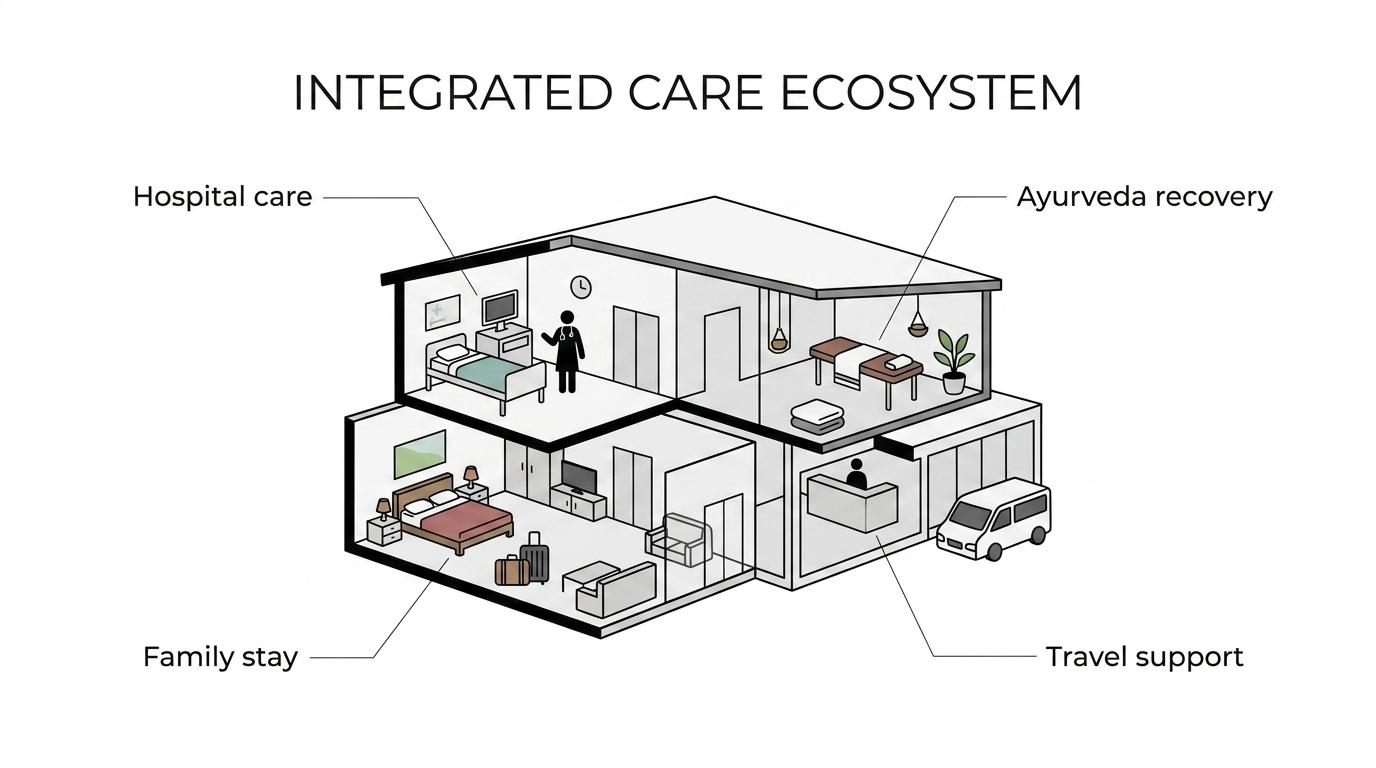
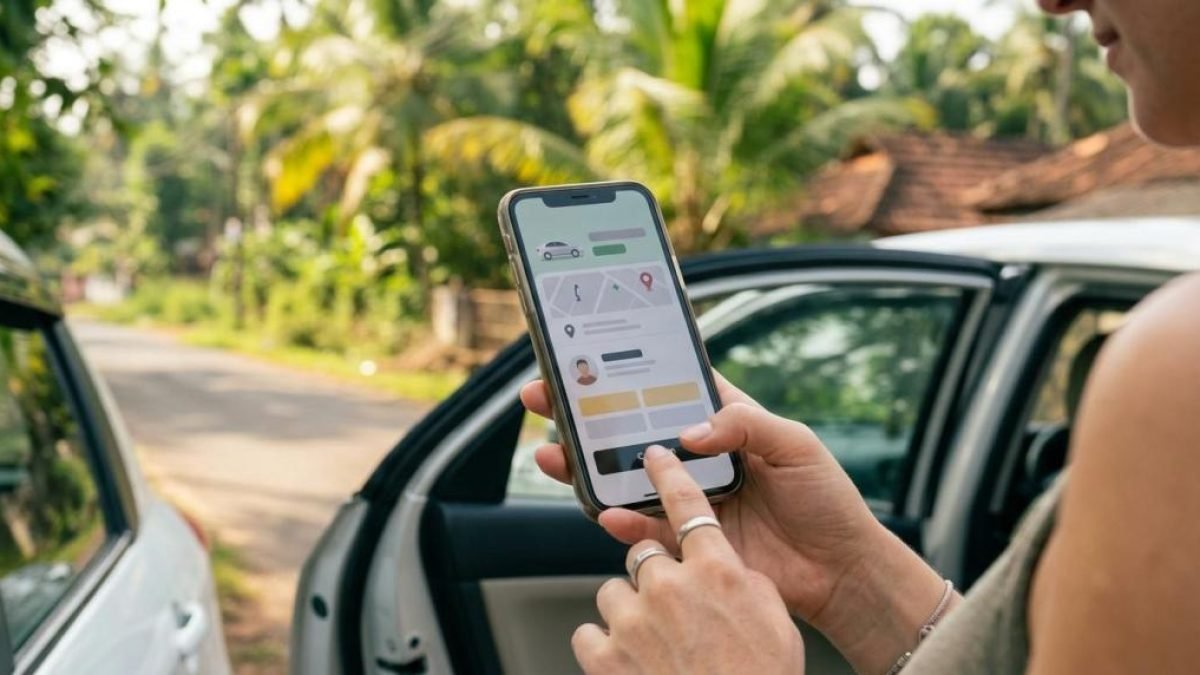
Kerala Medical Value Travel Society already points toward the kind of support system international patients need, including medical visa guidance, airport transfer help, accommodation assistance, and 24/7 travel support. When these pieces are coordinated well, the experience becomes easier for overseas guests who may already be managing stress around treatment.
A well-built medical travel system usually depends on more than hospital excellence alone. It also needs support around the treatment itself.
- Visa access: India’s medical visa pathways and the Ayush Visa create dedicated routes for treatment and Ayurveda-based care
- Patient support: airport pickups, hospital coordination, translators, and accommodation support matter almost as much as the clinical process
- Quality assurance: regulation and classification help buyers compare hospitals, recovery stays, and wellness centers with greater confidence
- Training: a dedicated program for service providers can improve communication, cultural sensitivity, and case handling
This is where Kerala’s proposed collaboration with the Kerala Institute of Travel and Tourism Studies could become highly useful. Medical tourism is not simply healthcare sold internationally. It is a service chain. Every link matters.
Ayurveda and post-treatment wellness strengthen Kerala’s appeal
Kerala’s medical pitch is stronger because it does not stop at hospitals. The state is globally associated with Ayurveda, rejuvenation therapies, and slow, restorative stays in natural settings. That gives it a distinctive position compared with destinations that focus only on surgery or diagnostics.
For many Arab travelers, especially those planning longer visits with family, recovery conditions matter. A calm backwater retreat, a hill station climate, a premium beachside stay, or an Ayurveda-led wellness extension can all support the emotional side of treatment and healing.
Kerala Tourism has long described the state as a leading destination for Ayurveda treatment, supported by Ayurvedic hospitals, resorts with in-house centers, and traditional therapy spaces. Paired with modern medicine, that creates a two-track offering: clinical care where needed, and wellness-led recovery where appropriate.
This combination is one of Kerala’s biggest advantages.
Indo-Arab Connect 2026 gives Kerala direct access to Arab travel buyers
One of the strongest signals in this strategy is the scale of market outreach. Indo-Arab Connect 2026 in Kochi is designed to bring Arab travel buyers face to face with Kerala’s tourism, healthcare, and wellness ecosystem. More than 175 Arab travel agents and tour operators from 11 countries are expected to participate, along with more than 100 Indian exhibitors from hospitals, resorts, hotels, and Ayurveda centers.
That matters because medical tourism often grows through trusted intermediaries. Families usually do not book complex treatment travel the same way they book a short holiday. They want guidance, reassurance, and local coordination before they commit.
The summit’s business-to-business format helps create those relationships. It gives hospital representatives, facilitators, hospitality brands, and regional tourism bodies a direct chance to explain what Kerala can offer and how it compares with competing destinations.
The familiarization tour planned after the summit is also smart. Delegates are expected to visit Kochi, Munnar, Kumarakom, Alappuzha, Kovalam, and Wayanad over nine days. Seeing the product on the ground often changes how a destination is sold. A brochure can describe recovery-friendly travel. A firsthand visit makes it believable.
A few signals from this event stand out:
- 175+ Arab buyers from 11 countries
- 100+ exhibitors across healthcare and hospitality
- B2B meetings focused on conversion, not just visibility
- A nine-day route showing both treatment hubs and leisure destinations
Organizers have said they aim to attract nearly 300,000 additional visitors from Arab countries and generate more than ₹250 billion in tourism-related revenue over the next five years. Those are ambitious numbers, yet they fit the scale of the opportunity if medical travel, wellness, and premium family holidays are marketed together.
What Arab medical travelers and families often expect in Kerala
Medical travel decisions are rarely based on price alone. High-spending visitors from the Gulf usually compare the full experience: treatment quality, privacy, comfort, food, family accommodation, language support, and safety.
Kerala has some natural strengths here. The state already receives significant Gulf traffic. It has residents and service professionals familiar with Arab visitor preferences. It also has a hospitality sector that knows how to serve long-stay guests across luxury hotels, serviced villas, resorts, and houseboats.
Still, expectations are rising. A successful medical tourism push will depend on consistent delivery, not isolated excellence.
Travel planners, hospitals, and hotels serving this market should pay close attention to service details.
- Privacy: discreet admissions, premium rooms, and quiet recovery environments
- Family comfort: larger rooms, nearby suites, child-friendly options, and flexible meal arrangements
- Language access: Arabic-speaking support staff or interpreter access can build immediate trust
- Food preferences: halal dining and clear menu communication are basic expectations
- Spiritual needs: prayer-friendly spaces and respectful scheduling can make a real difference
- Transport reliability: trained chauffeurs and comfortable transfers matter during treatment travel
When these elements are handled well, a destination feels prepared. When they are inconsistent, even excellent clinical care may not be enough to create repeat demand.
What this medical tourism push means for South India travel businesses
Kerala’s strategy will not benefit hospitals alone. Hotels, resorts, transport companies, interpreters, wellness centers, and specialized tour planners all stand to gain if the state increases arrivals from the Arab world.
There is also an important seasonal angle. Industry voices have pointed out that the June to September period is especially significant for Arab travel to Kerala. That helps support occupancy and tourism-linked employment during a period that can be softer for domestic leisure travel. Medical and wellness travel can stabilize business across seasons, which is valuable for high-quality hospitality operators.
For travel professionals in Kerala and Tamil Nadu, this creates room for more specialized products. A patient may need treatment in Kochi, a recovery stay in Kumarakom, and a family excursion to Munnar once the clinical schedule allows. Another traveler may combine Ayurveda with a wider South India itinerary that includes temple heritage, hill stations, or coastal luxury.
The businesses best placed to benefit are usually the ones that can coordinate multiple moving parts with clarity.
- Hospitals: international patient desks, transparent treatment pathways, and partner networks
- Hotels and resorts: recovery-friendly rooms, diet flexibility, and family-stay packages
- Tour operators: customized itineraries built around treatment schedules and comfort needs
- Transport providers: punctual, clean, medically aware transfer services
This is where local expertise becomes especially valuable. Medical travelers and their families do not want fragmented planning. They want one coordinated experience that respects time, comfort, and clinical priorities.
Kerala medical tourism outlook through 2030
Kerala’s direction is becoming easier to read. The state is not positioning itself only as a hospital destination, and not only as a wellness escape. It is combining both into a stronger, more differentiated offer for Arab travelers.
That strategy is well grounded in real market behavior. Gulf travelers are already arriving in meaningful numbers. Kerala already has hospital capacity, Ayurveda recognition, family-friendly tourism assets, and cultural familiarity with Arab guests. With better training, clearer standards, stronger international marketing, and tighter coordination between healthcare and hospitality, the state can claim a bigger share of medical value travel over the next several years.
For travelers, that means more choice and better support. For the industry, it signals a new phase where healthcare, wellness, and premium tourism in South India are increasingly linked, and Kerala is working hard to lead that shift.