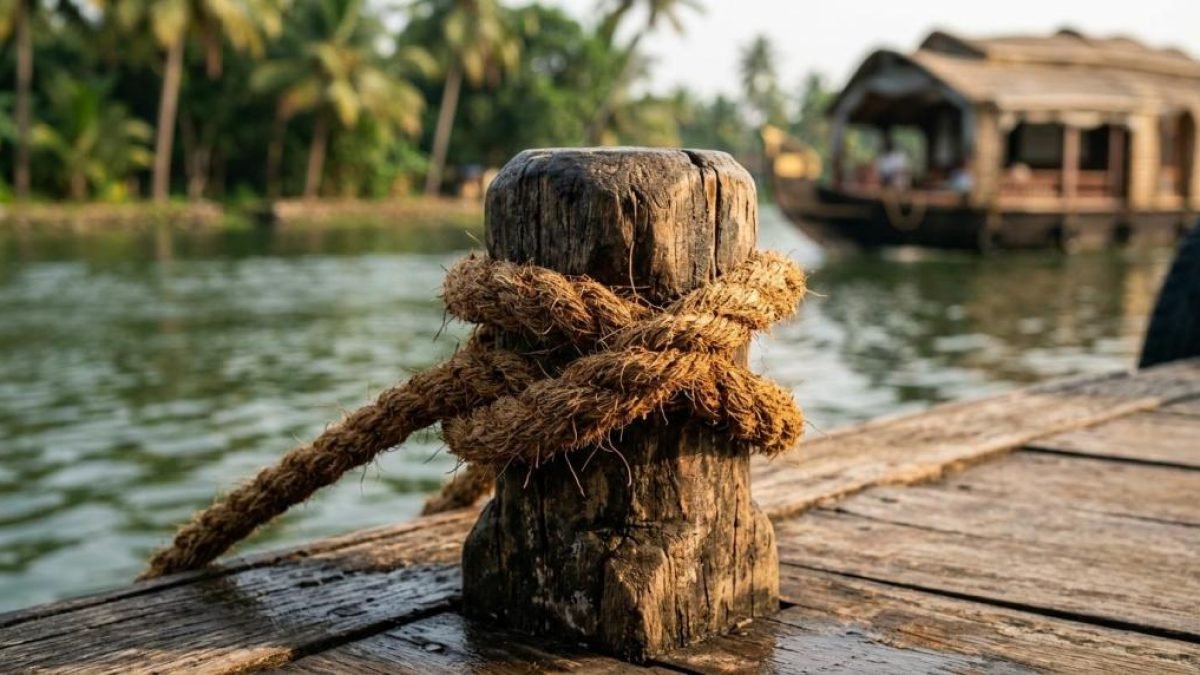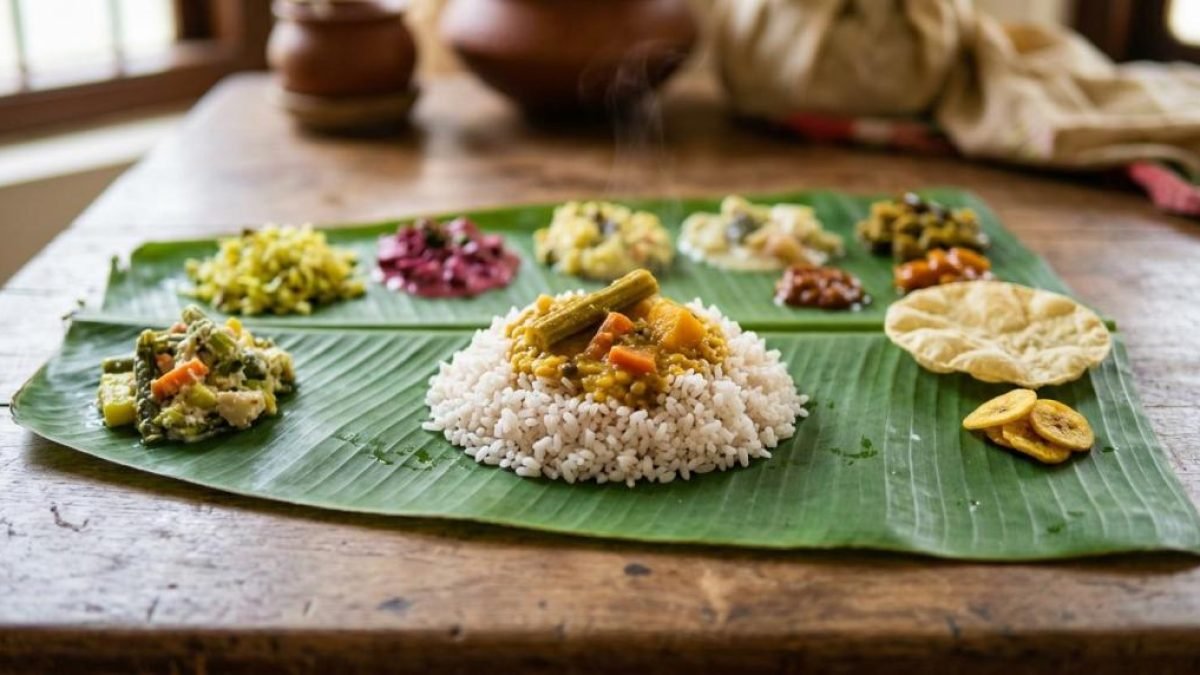
Fort Kochi is one of those rare places where walking feels like the right way to read a city. The streets are compact, the sea keeps appearing between buildings, and layers of history sit close enough together that a few unhurried hours can cover a remarkable amount of ground.
This pocket of Kochi is widely recognized by official tourism sources as a historic neighborhood shaped by trade, faith, and colonial influence. Portuguese, Dutch, British, Jewish, and Kerala stories meet here in old churches, waterfront landmarks, market streets, and long-standing local life. If you want Kochi to feel vivid rather than rushed, start on foot.
Why Fort Kochi is ideal for walking
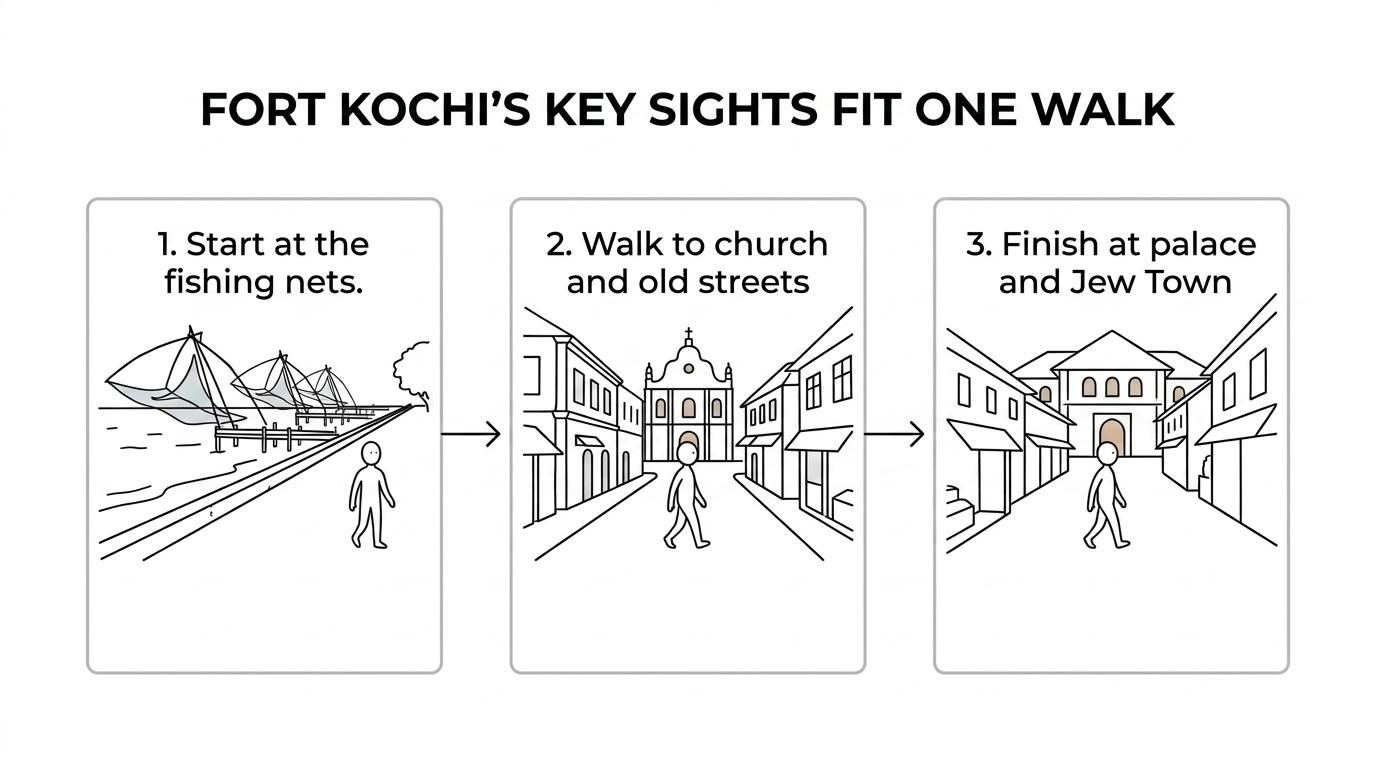
Fort Kochi works so well as a walking destination because its key sights are clustered rather than scattered. The Chinese fishing nets, St. Francis Church, beach promenade, colonial streets, Mattancherry Palace, and Jew Town can fit into a single half-day or full-day plan, depending on your pace.
Official tourism material presents Fort Kochi as a heritage quarter with colonial-era architecture and waterfront views packed into a relatively small area. That changes the mood of the visit. You are not moving from one isolated attraction to another. You are passing through a living neighborhood where the route itself matters.
The walk is also gentle in character. There are no dramatic climbs, and much of the appeal comes from atmosphere: old facades, church towers, courtyards, fishing activity, small shops, spice-scented streets, and the Arabian Sea opening beside the road.
A camera helps, but time helps more.
Suggested Fort Kochi walking route and timing
A simple route starts at the waterfront near the Chinese fishing nets, moves inward to St. Francis Church and nearby heritage streets, then continues by auto-rickshaw or a longer walk toward Mattancherry Palace and Jew Town. Strong walkers can link most of it on foot. Travelers who prefer a lighter pace often walk Fort Kochi first and use a short ride for the Mattancherry stretch.
| Stop | What to see | Time to spend | Useful note |
|---|---|---|---|
| Chinese Fishing Nets and Vasco da Gama Square | Fort Kochi’s best-known waterfront image, working fishing nets, beachside views | 30 to 45 minutes | Early morning and sunset are usually the most rewarding times |
| St. Francis Church | Historic church dated to 1503, linked to Vasco da Gama | 20 to 30 minutes | Kerala Tourism lists visiting hours, so check the latest before you go |
| Fort Kochi heritage streets | Colonial buildings, quiet lanes, street life, cafes, local shops | 45 to 60 minutes | Best enjoyed slowly without a tight schedule |
| Indo-Portuguese Museum or Maritime Museum | Optional museum stop near the heritage zone | 30 to 60 minutes | Good add-on for travelers who want more historical context |
| Mattancherry Palace | Palace built by the Portuguese around 1545 and later renovated by the Dutch | 45 to 60 minutes | Kerala Tourism lists it open daily except Fridays from 10:00 AM to 5:00 PM |
| Jew Town | Old trading quarter, antique shops, spice warehouses, layered community history | 30 to 45 minutes | Works well as the final segment of the route |
Chinese Fishing Nets and Fort Kochi waterfront walk
Many walks begin at the Chinese fishing nets because they are both scenic and historically meaningful. Official sources describe them as one of Fort Kochi’s hallmark sights, believed to have been introduced between 1350 and 1450 AD. Even today, they remain tied to traditional fishing methods used by local fishermen.
The best-known viewing stretch is along Vasco da Gama Square and the narrow walkway by Fort Kochi beach. This is where the area feels most cinematic: the timber structures, the counterweights, the sea breeze, the vendors, and the changing sky all work together. In the early morning, the light is soft and the shoreline feels calm. By sunset, the promenade is more animated and social.
Do not hurry past this opening section. Stand still for a few minutes and watch how the nets rise and fall. Fort Kochi often gives its best impressions in moments like that.
St. Francis Church and Fort Kochi heritage landmarks
From the waterfront, the walk inland brings you toward one of the most important church landmarks in India. Kerala Tourism identifies St. Francis Church as the oldest European church in the country. The present site is dated to 1503, which gives the building a rare place in the history of European contact on the Malabar Coast.
The church is also linked to Vasco da Gama, whose remains were first buried here in 1524 before being moved to Lisbon later. Even travelers who are not especially drawn to religious architecture often find this stop compelling because the building carries both global history and local memory.
Kerala Tourism lists visiting hours as Monday to Friday 9:00 AM to 5:00 PM, Saturday 9:00 AM to 1:00 PM, and Sunday 1:00 PM to 5:00 PM. Hours can change, so a same-day check is wise.
After the church, keep walking through the surrounding streets rather than moving straight to the next landmark. The district rewards patience.
You will pass old compounds, weathered walls, tiled roofs, and a street pattern that still reflects the area’s layered colonial past. If museums are part of your ideal walking day, the Indo-Portuguese Museum and Maritime Museum are nearby options that add depth without demanding a major detour.
Mattancherry Palace and Jew Town on foot or with a short ride
A Fort Kochi walk becomes richer when it continues toward Mattancherry. Some visitors walk the full stretch, while others take a short auto-rickshaw ride to save energy for the palace and market lanes. Either option works well.
Mattancherry Palace is one of the area’s major historic anchors. Kerala Tourism dates it to around 1545 C.E., noting that it was built by the Portuguese as a gift to King Veera Kerala Verma of the Kochi dynasty. The Dutch later renovated it, which is why it is also known as the Dutch Palace. That mixed identity captures the wider story of Kochi itself: power changed hands, but each period left visible marks.
Kerala Tourism lists the palace as open daily except Fridays from 10:00 AM to 5:00 PM. That timing matters when you plan your walking order. If the palace is a priority, start early enough to reach Mattancherry well before closing.
From the palace, Jew Town adds a different mood. The pace slows, the architecture shifts again, and trade history becomes tangible in shopfronts, old warehouses, and spice-linked commerce. The area has long held a special place in Kochi’s cultural fabric, and even a short walk here makes the wider district feel more connected.
This is where many visitors realize that Fort Kochi is not just a seaside quarter. It is part of a larger historic network.
Practical tips for a Fort Kochi heritage walk
A good Fort Kochi walk is more about rhythm than distance. Heat, museum timings, and pauses for tea or photography can shape the day more than the map itself. Comfortable footwear, a flexible attitude, and a little historical context will improve the experience right away.
- Start early: Morning light is better for photography, and the streets feel cooler and quieter.
- Dress for the climate: Lightweight clothing, sun protection, and water are smart year-round choices.
- Check site timings: St. Francis Church and Mattancherry Palace have set visiting hours.
- Keep cash handy: Small shops, local snacks, and short auto-rickshaw rides are easier with cash.
- Leave room for pauses: Fort Kochi works best when you stop often rather than aiming for speed.
- Compact walking shoes
- Refillable water bottle
- Hat or umbrella
- Phone with offline map
- Respectful clothing for religious sites
Best time of day for a Fort Kochi walking tour
The district changes character with the clock. Morning suits travelers who want cooler weather and softer light. Late afternoon into sunset suits those who want the waterfront at its most lively, especially near the Chinese fishing nets.
- Early morning calm
- Stronger midday heat
- Late afternoon shade
- Sunset waterfront views
- Pleasant evening atmosphere
Season matters too. Kochi can be humid, and monsoon months bring beauty along with sudden rain. Many travelers find the most comfortable walking months between late autumn and early spring, though Fort Kochi is a year-round destination with the right timing and clothing.
When a guided Fort Kochi walking experience makes sense
Independent walkers can enjoy Fort Kochi very easily, especially if they like slow neighborhood wandering. Still, a guided walk can add real value when history is the main goal. Many streets look charming on their own, yet their full meaning often depends on context: who built what, how trade shaped the quarter, why certain communities settled here, and how the architecture changed over time.
A guided format is also useful for travelers with limited time. Instead of piecing together timings, transport, and entry hours on the go, you can move through the district with a clearer structure and still keep the day relaxed.
- History-focused travelers: Better context at churches, palaces, and old trading streets
- Families: Less time spent on logistics and more time spent at the actual sights
- Luxury travelers: Easy pairing with private transfers, curated stays, and timed visits
- First-time visitors to Kochi: A clear introduction to the city’s heritage core
For longer Kerala itineraries, Fort Kochi often works especially well on the first or last day in Kochi. It is accessible, visually strong, and compact enough to feel satisfying without becoming tiring. Some premium South India itineraries include it as a heritage walk paired with a sunset waterfront segment, which is a very natural fit for the area.
Pairing a Fort Kochi walk with a wider Kochi day
If you have a full day in Kochi, Fort Kochi can anchor the schedule while still leaving room for more. A common structure is simple: morning walk in Fort Kochi, midday palace and Jew Town, then a relaxed meal or sunset return to the waterfront. That creates variety without losing focus.
Travelers planning a customized Kerala holiday often combine this heritage district with private airport transfers, boutique stays in Fort Kochi, and a wider route through Kerala or Tamil Nadu. That approach works especially well for couples, families, and international visitors who want the cultural side of Kochi presented in a calm, well-paced way.
Fort Kochi does not need much to impress. A few hours, a walkable map, and the willingness to slow down are usually enough.