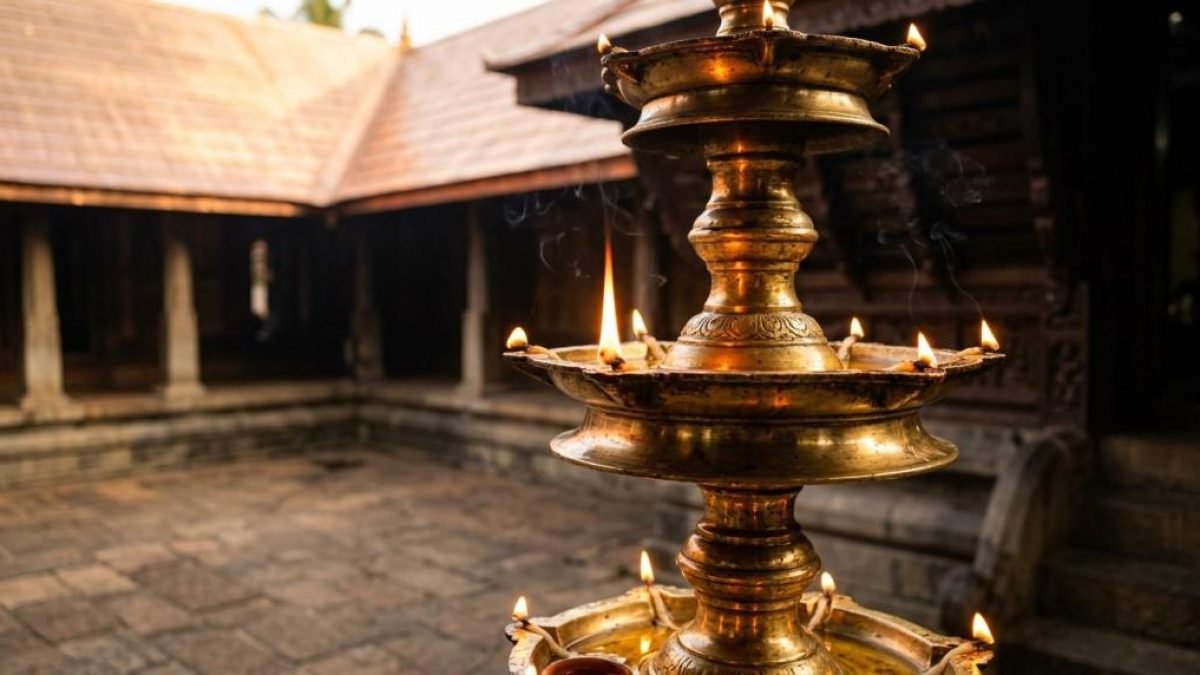
Kerala’s temples do not overwhelm the visitor with sheer scale alone. Their power often comes from proportion, rhythm, material, and ritual order. A temple courtyard, a copper-clad roof catching the morning light, the fragrance of oil lamps, and the discipline of movement around the sanctum together create an experience that feels deeply rooted in place.
For travelers, this means a visit to these temples in Kerala is never only about sightseeing. It is also about reading architecture as a living form of worship and stepping respectfully into a space governed by long-standing customs. The more clearly you recognize the design language and etiquette, the richer the visit becomes.
Core features of Kerala temple architecture
Kerala temple architecture has a distinct identity within [Indian sacred architecture](https://tropertours.in/tamil-nadu-temple-circuit-guide-your-complete-spiritual-travel-plan-for-2026/). While many temple traditions across India celebrate soaring stone towers, Kerala developed a form shaped by climate, ritual practice, timber craftsmanship, and local building knowledge. The result is a temple style that feels grounded, elegant, and highly responsive to the environment.
A common feature is the sanctum-centered layout. The innermost shrine, often called the sreekovil or garbhagriha, forms the spiritual and spatial core. Around it, additional structures organize movement, prayer, and temple ceremony. Rather than pushing all visual drama outward, Kerala temples often concentrate intensity close to the sanctum through layered roofs, carved woodwork, lamp columns, mural surfaces, and ceremonial halls.
The architectural language is also practical, showcasing the distinctive architecture of Kerala temples. Heavy monsoon rains shaped the widespread use of sloping roofs, deep eaves, timber framing, and durable metal cladding. This functional response never feels plain. In Kerala, utility and beauty tend to work together.
Why Kerala temple roofs, woodwork, and courtyards look different
The first visual clue is usually the roof. Kerala temples often feature pyramidal or conical roofing, frequently finished with copper plating on prominent upper sections. This is not decorative excess. Sloping forms help shed rain quickly, while copper adds resilience and a glowing ceremonial finish.
Wood is another defining material. Temple ceilings, beams, brackets, pillars, and mandapas often carry intricate carvings, sometimes depicting deities, mythological scenes, planetary motifs, or floral patterns. In a region where timber craftsmanship reached remarkable sophistication, temples became one of its finest expressions.
Open and enclosed courts shape how the temple is approached. The chuttambalam, a surrounding hall or enclosure, and the nalambalam, the cloister-like structure around the sanctum, guide movement while preserving ritual order. Lamp columns, gateways, subsidiary shrines, and halls for performance or assembly complete the composition.
At the core of a temple lies the ‘sreekovil’, the innermost sanctum where the deity resides. This sacred chamber is the spiritual heart of the temple, a place of profound sanctity that symbolizes the divine presence. The sreekovil is typically small and dimly lit, emphasizing a sense of intimacy and reverence. It is often crafted with exquisite detailing and ornamentation that reflects the grandeur of the spiritual world. This sacred space is where devotees offer their prayers and where the rituals are most intensely concentrated, making it a pivotal component of the temple design.
After a few visits, certain recurring features become easier to identify:
- Sreekovil: the sanctum at the spiritual center
- Nalambalam: the structure surrounding the sanctum
- Chuttambalam: the temple enclosure or circumambulatory hall
- Deepastambam: the lamp pillar, often placed prominently in the courtyard
- Koothambalam: a temple theater hall associated with ritual performance
Kerala temple layout and the meaning of sacred movement
Kerala temples are designed for movement with purpose. This is one reason they feel so composed. The path from gateway to courtyard to sanctum is not random circulation. It reflects ritual progression.
Many temples face east, welcoming the first light of day. A visitor may pass through a gateway, encounter a lamp pillar or deepastambam, move into the enclosed court, and then approach the sreekovil or sanctum indirectly rather than in one uninterrupted line. This measured sequence slows the mind and emphasizes the sanctity of the inner core.
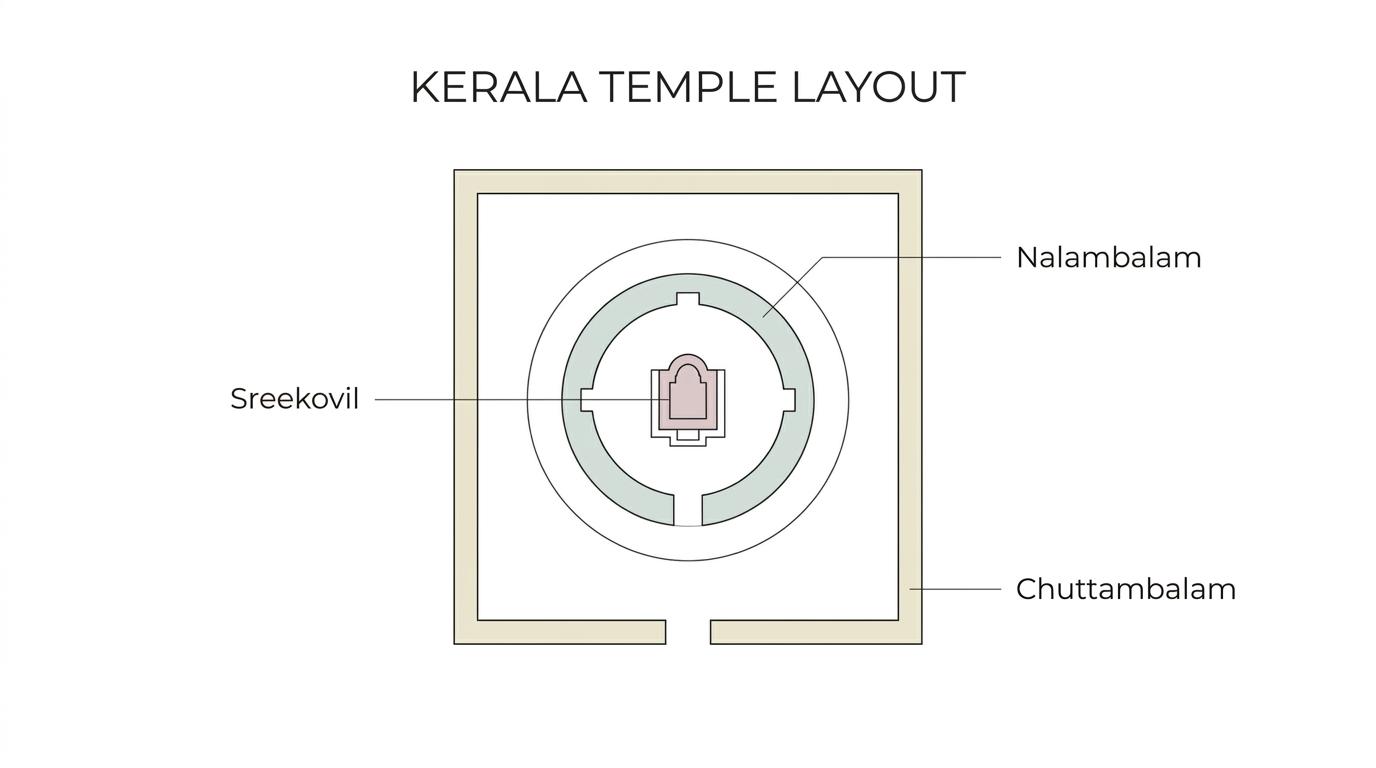
Circumambulation, often referred to as pradhakshinam, is another key part of the spatial experience. Walking around the sanctum clockwise is both a ritual act and an architectural one. The temple plan supports this movement through carefully proportioned pathways and layered enclosures.
This is why Kerala temple architecture feels so closely tied to etiquette. The building is not just seen. It is used according to sacred order.
Notable Kerala temple examples that show the style clearly
A few famous temples help illustrate the range within the tradition. Each one carries familiar Kerala elements while expressing them in a distinct way.
Koodalmanikyam Temple at Irinjalakuda is often cited as a classic Kerala-style temple, reflecting the unique architecture of regional temples. Its circular sanctum and copper-plated roof capture two signature features of the regional style. The temple is also known for its koothambalam, mural-bearing entrance areas, richly worked wood and stone surfaces, and its sreekovil.
Guruvayur Temple presents another strong example of the traditional Kerala temple complex. Here, the relationship between the sanctum and surrounding structures, including the nalambalam, becomes especially legible. The presence of eastern and western gopurams shows that Kerala temples can integrate gateway architecture while still preserving a distinctly local overall form.
Janardhana Temple in Varkala is noted for a circular sanctum topped by a conical copper-sheeted dome, along with a square mandapa whose ceiling holds wooden carvings of the Navagrahas. Madhur Temple, in the northern part of the state, is admired for tiered roofing and detailed wooden carvings on the namaskara mandapam, including scenes from the Ramayana.
The table below offers a quick visual guide.
| Temple | Architectural highlight | Key material or decorative feature |
|---|---|---|
| Koodalmanikyam Temple | Circular sanctum | Copper-plated roof, murals, wood and stone carvings |
| Guruvayur Temple | Traditional Kerala complex layout | Nalambalam, deepastambam, east-facing plan |
| Janardhana Temple | Circular sanctum with conical dome | Copper-sheet roofing, carved wooden ceiling |
| Madhur Temple | Multi-tiered dome and mandapam | Copper plates, tiles, carved wooden beams and pillars |
Vastu, climate, and ritual in Kerala temple design
Kerala temple architecture is often described as a meeting point of aesthetics, ritual logic, and environmental adaptation. That balance is one reason the style has endured so well. A temple must serve worship first, but it must also respond to heat, humidity, rain, ventilation, and locally available materials.
Traditional planning principles linked to Vastu Shastra influence orientation, proportion, and placement. Yet Kerala’s builders did not simply apply abstract rules. They shaped them around regional conditions. The broad rooflines, layered plinths, shaded corridors, and use of timber reveal a building culture that paid close attention to weather as much as symbolism.
This local intelligence gives Kerala temples their calm confidence. Nothing feels arbitrary. A lamp column is where ritual needs it. A sloping roof is where the monsoon demands it. A painted wall or carved ceiling appears where worshippers will encounter it at the right pace and distance.
Kerala temple dress code and visitor etiquette
Temple etiquette in Kerala is serious, and rules often vary from one shrine to another. Some practices are nearly universal, while others depend on the temple’s own customs. Visitors should always treat posted instructions and local guidance as the final word.

Dress is one of the most visible expectations. Many temples prefer or require conservative traditional clothing. Men may be expected to wear a dhoti, and in some temples they may need to remove shirts when entering certain areas. Women are often expected to wear sarees, churidars, long skirts with blouses, or similarly modest attire. Shorts, sleeveless tops, and tight western wear may not be accepted.
Preparation matters too. Cleanliness is part of temple decorum, not an optional extra. Official visitor guidance commonly advises bathing before the visit, wearing fresh clothes, and avoiding non-vegetarian food on the day of worship.
A practical checklist helps:
- Dress: modest, temple-appropriate clothing that covers shoulders and legs
- Footwear: remove shoes only in the designated area
- Cleanliness: arrive bathed and in fresh clothes when possible
- Food habits: avoid non-vegetarian food before the visit if the temple expects it
- Behavior: keep voices low and movements respectful
Temple behavior inside Kerala temple complexes
Once inside, good etiquette is mostly about restraint and observation. Watch how local devotees move, where they pause, and which spaces are clearly restricted. If a queue forms for darshan, follow it patiently. If a corridor is being used for a ritual, stand aside without blocking the view or circulation.
Circumambulation is typically done clockwise. This is one of the most common ritual patterns in temple movement, and many visitors find that simply following the established flow prevents awkward mistakes. Photography rules vary sharply. Some temples may allow exterior photography only, while others may prohibit cameras or phones inside the complex. Always ask or check signs before taking a picture.
Offerings and prasadam also follow local practice. Do not touch ritual objects, lamps, or vessels unless specifically invited to do so. Receive prasadam with care and avoid treating temple food casually. In sacred spaces, ordinary tourist habits can feel jarring if not tempered by attentiveness.
A few habits make a strong difference:
- Move quietly
- Follow the clockwise circulation
- Stand back during rituals
- Ask before photographing
- Respect restricted zones
Temple-specific customs every visitor should check in advance
Even experienced travelers can be caught off guard by temple-specific rules in Kerala. What is acceptable at one temple may not be acceptable at another. Dress requirements, queue systems, opening hours, and access rules can all shift based on the shrine and the timing of rituals or festivals.
This matters even more during major festival periods, when crowds increase and ceremonial schedules become tighter. Arriving with the right clothing and a flexible attitude saves time and prevents disappointment. If your itinerary includes well-known temples, it is wise to verify current norms shortly before the visit.
A few details are especially worth confirming before you go:
- Entry timing: morning and evening darshan windows may be limited
- Dress rules: some temples rent or sell dhotis near the entrance, others may not
- Phone policy: mobile devices may need to be left outside
- Festival days: crowd levels and ritual access can change quickly
Why architecture and etiquette belong together in Kerala temple visits
Kerala temple architecture, particularly the design centered around the sreekovil, is not a backdrop for worship. It is part of worship. The sanctum-centered plan, the sequencing of courts, the lamp pillars, the roofing forms, the murals, and the carved timber all support a ritual world that values order, purity, rhythm, and attention.
That is why visitor etiquette cannot be separated from design. Modest dress suits the sacred setting. Cleanliness reflects the temple’s ritual discipline. Clockwise movement corresponds to the spatial logic of the complex. Silence allows the place to function as intended.
For travelers moving through Kerala, temple visits often become some of the most memorable parts of the trip because they offer both beauty and structure. When approached with care, even a short visit can reveal how architecture, climate, craftsmanship, and devotion have shaped one of South India’s most distinctive sacred traditions.