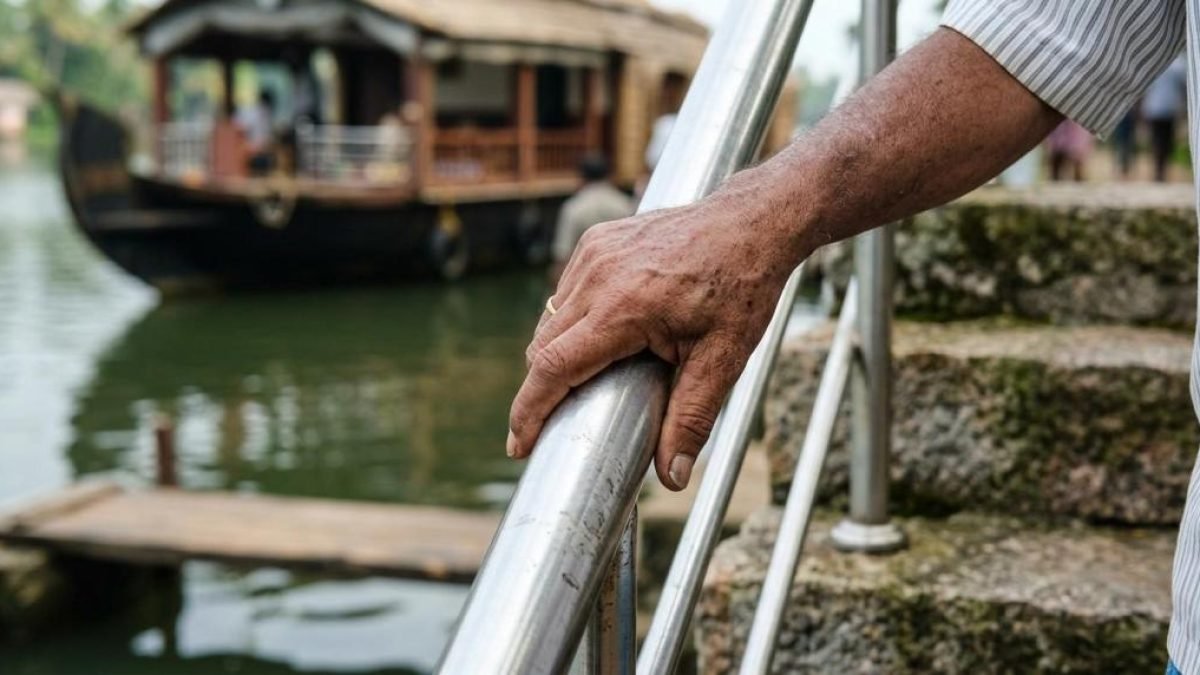
Kannur holds a rare position in Kerala travel. It is a coastal district with beaches and fort walls facing the Arabian Sea, yet its strongest pull is cultural rather than scenic. Travelers come here for Theyyam, the ritual performance tradition that is deeply rooted in North Malabar and especially associated with Kannur.
This is not a staged cultural show in the usual sense. Theyyam lives in temple courtyards and village shrines, often in the early hours, with percussion, fire, chants, color, and intense public devotion shaping the atmosphere. That is what makes Kannur memorable. You are not only watching a performance. You are stepping into a living tradition.
For anyone planning a Kerala trip with real depth, Kannur, historically known as Cannanore, including the town of Thalassery, offers a compelling mix of ritual heritage, coastal landscapes, and local craft.
Why Kannur is the center of Theyyam in North Malabar
Official tourism sources place Theyyam mainly in North Malabar, with Kannur and the historical region of Kolathunadu and nearby northern districts at the heart of the tradition. Kannur is often described as the cultural heartbeat of this region, and that reputation is easy to understand once you see how closely ritual life and local identity remain connected.
The main Theyyam season generally runs from December to April. During these months, village shrines and temple precincts host performances that follow established community calendars. Travelers who plan carefully during this window can often combine several Theyyam visits in and around Kannur with time at the coast and nearby heritage sites.
Kannur stands out because the cultural experience does not end with the ritual calendar; for instance, sites like Muzhappilangad Beach and St. Angelo Fort provide unique explorations, with the beach offering an opportunity to drive along the longest drive-in beach in Asia. The district is also known for handloom weaving, major trade connections in spices and textiles, colonial-era influences, and a shoreline marked by wide beaches and old fortifications.
After a few days here, the appeal becomes clear:
- Theyyam-centered cultural travel
- Beaches with a quieter North Kerala feel
- Forts and layered local history
- Handloom traditions and craft identity
- Strong sense of place
- Kannur, a captivating city in North Kerala, serves as a perfect gateway into these cultural and historical experiences. Known for its rich traditions and vibrant arts, Kannur hosts numerous Theyyam performances that offer a front-row seat to this living tradition. Visiting Kannur means immersing oneself in a breathtaking fusion of past and present, where age-old rituals come alive with grandeur in temple courtyards and community spaces.
What Theyyam in Kannur looks and sounds like
Theyyam is often described as a ritual art form, though that phrase only captures part of its power. It brings together dance, music, mime, costume, devotion, and inherited community memory. The performer appears not merely as an artist but as a ritual figure who, within the tradition, embodies a deity or ancestral presence for the gathered community.
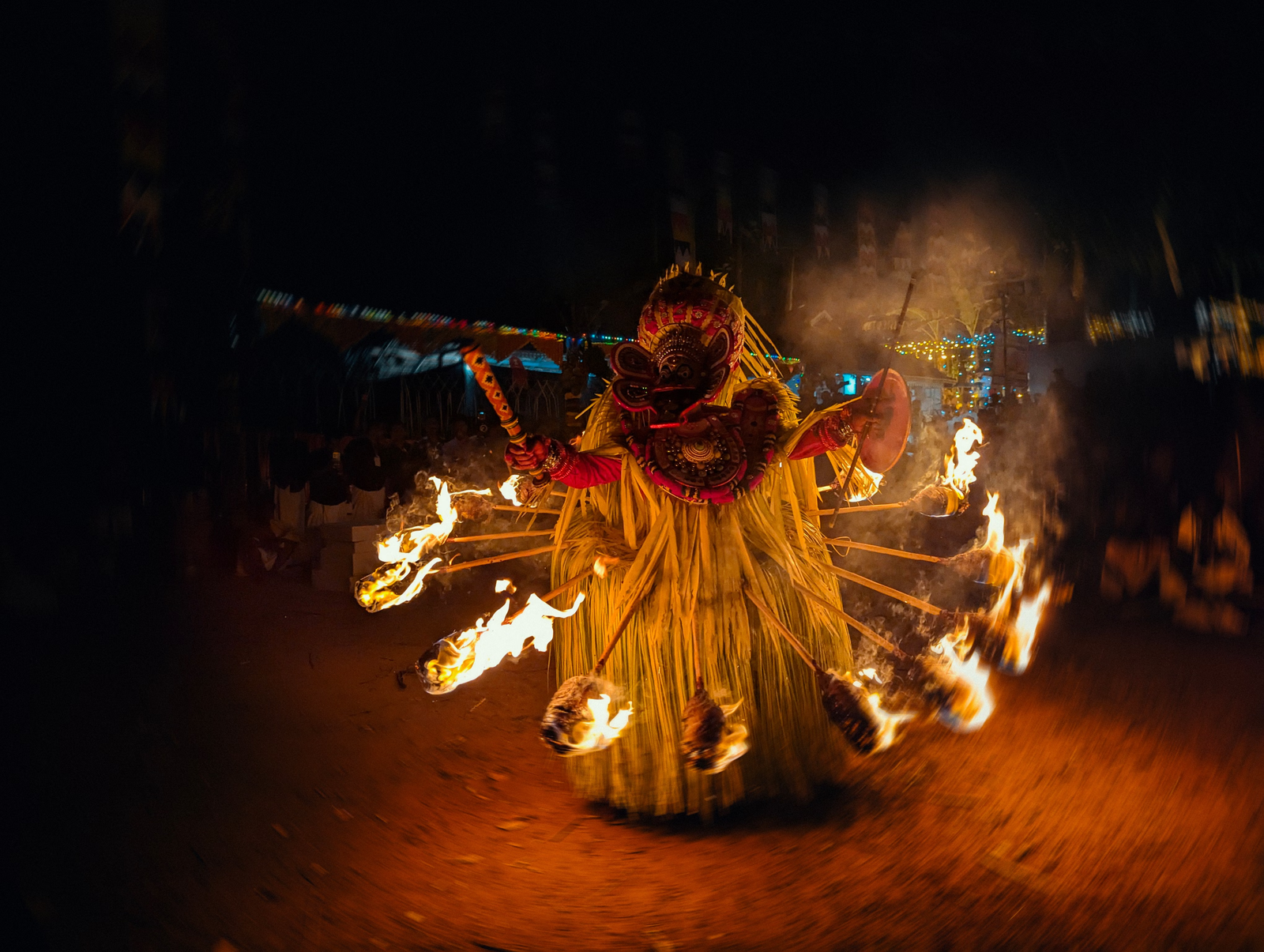
Sound shapes the experience from the first moments. Drums drive the rhythm, conches cut through the air, and traditional instruments create a dense sonic setting that feels ceremonial rather than theatrical. The pace may build gradually, then turn urgent and dramatic.

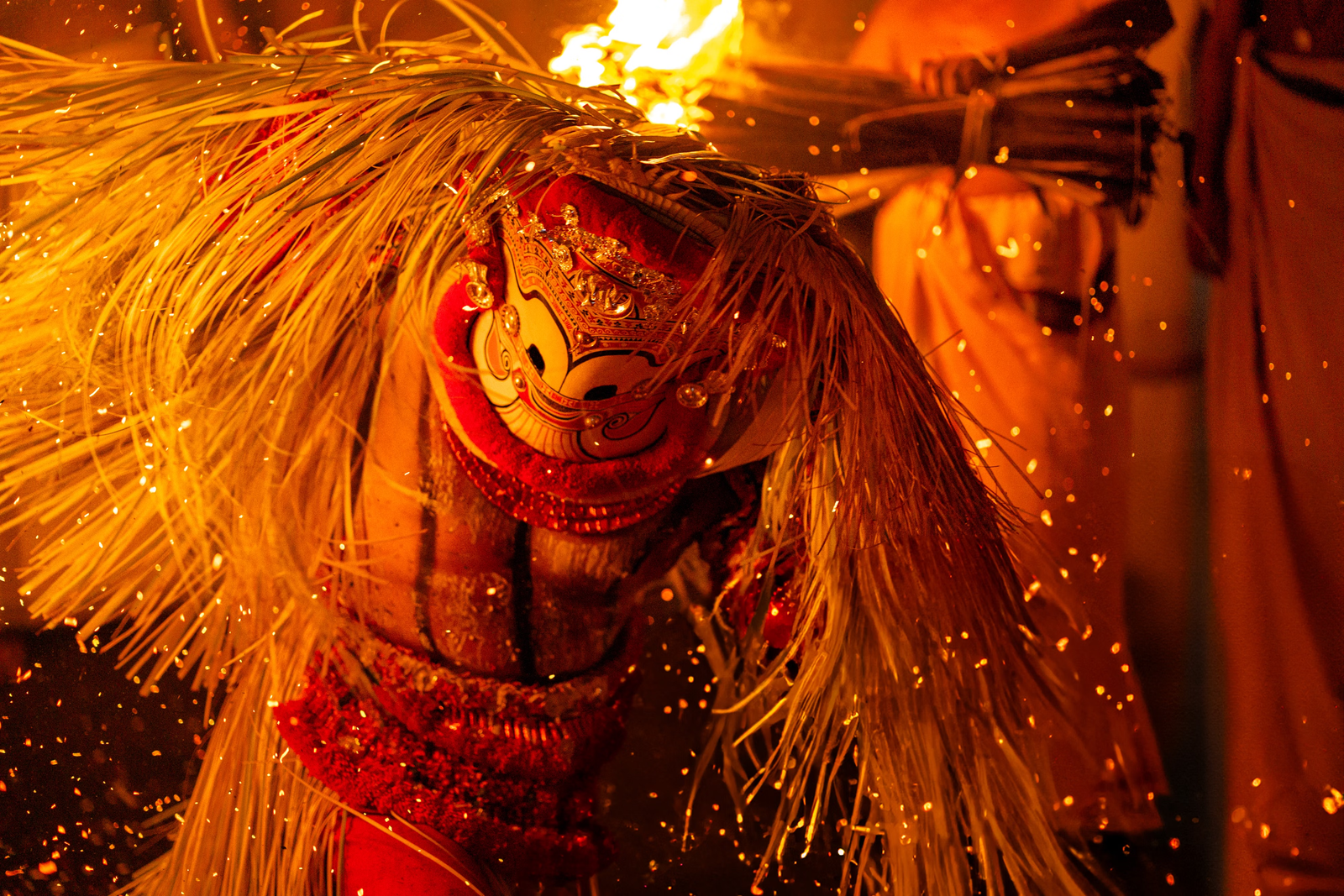
Visual detail matters just as much. Elaborate face painting, vivid textiles, ornaments, and towering headdresses known as mudi give Theyyam its striking image. In many performances, the preparation itself is part of the story. Before the full ritual unfolds, there may be invocatory singing associated with thottam, where the lore and lineage of the deity are recited.
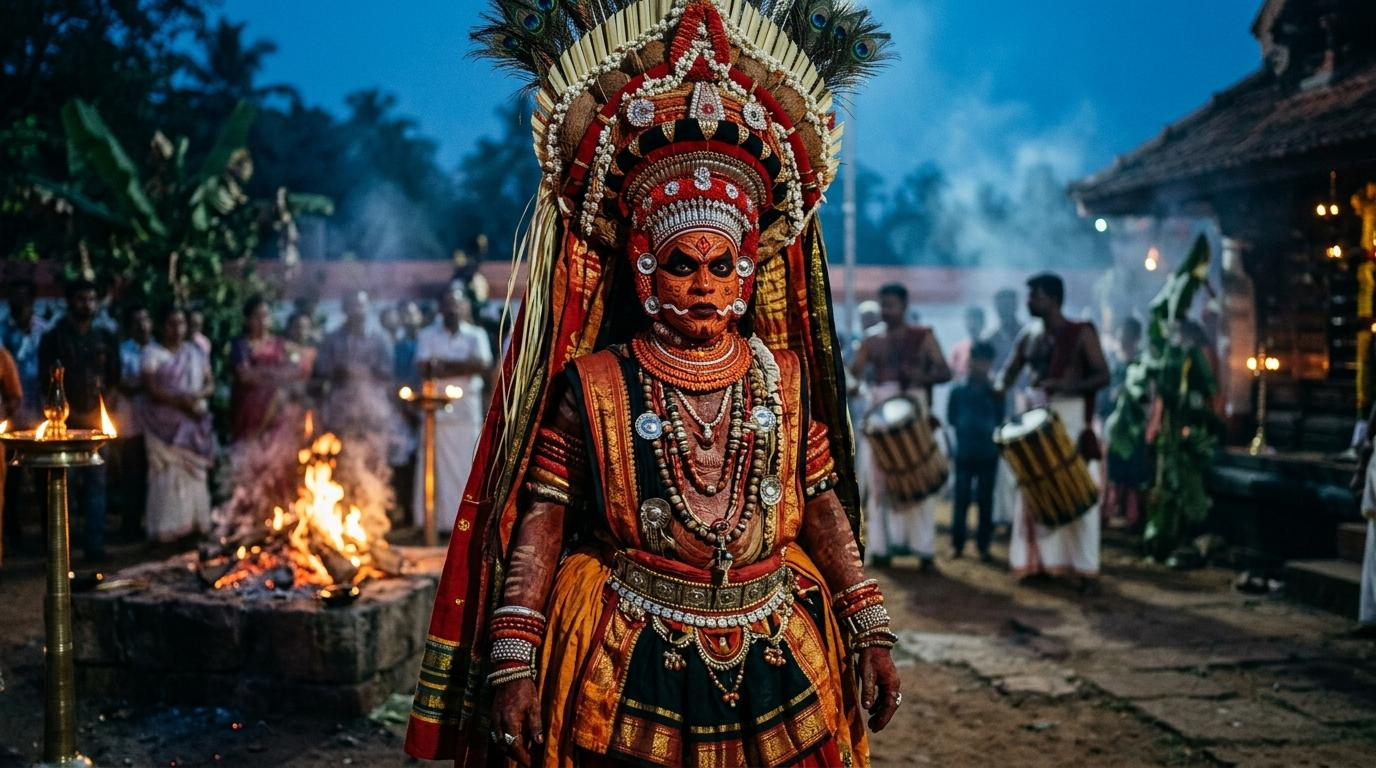
A single performance can feel intimate and immense at the same time.
Official sources note that around 400 forms of Theyyam are prevalent in the region. That does not mean a visitor will see hundreds of variants on one trip, of course, but it does point to the breadth of the tradition. Different shrines, communities, and ritual contexts bring different forms, costumes, songs, and meanings.
Kannur is notable for its deep connection to the Theyyam tradition, often regarded as the heartland of this vibrant cultural expression. Visitors to the district can witness an authentic blend of intricate rituals and rich storytelling passed down through generations. The unique location of Kannur within Kerala offers not just a spiritual experience but also a gateway to understanding the broader history of the region. Travelers are encouraged to explore Kannur’s blend of the traditional and the contemporary to fully appreciate its contribution to India’s cultural tapestry.
Best time to visit Kannur for Theyyam season
If Theyyam is your main reason for going, the strongest planning window is December through April. That is the period most consistently identified by official Kerala tourism bodies for performances in North Malabar, especially Kannur.
This timing also works well for broader sightseeing. The weather is generally more comfortable for coastal travel, road transfers, and early morning temple visits. It is easier to combine ritual viewing with relaxed daytime excursions to beaches, weaving centers, and fort areas.
Some itineraries may mention an extended seasonal feel on either side of the core months, depending on local calendars. Even so, travelers who want the most reliable chance of seeing Theyyam should build the trip around the December to April stretch.
| Period | What to expect in Kannur | Best for |
|---|---|---|
| December to January | Active ritual calendar, pleasant travel conditions, high cultural interest | First-time Theyyam travelers |
| February to March | Strong season continuity, easier pairing with sightseeing | Culture and coast combinations |
| April | Late-season viewing in some locations, warmer days | Focused short trips |
| Outside main season | Beaches, forts, handloom, local heritage remain rewarding | General Kannur travel |
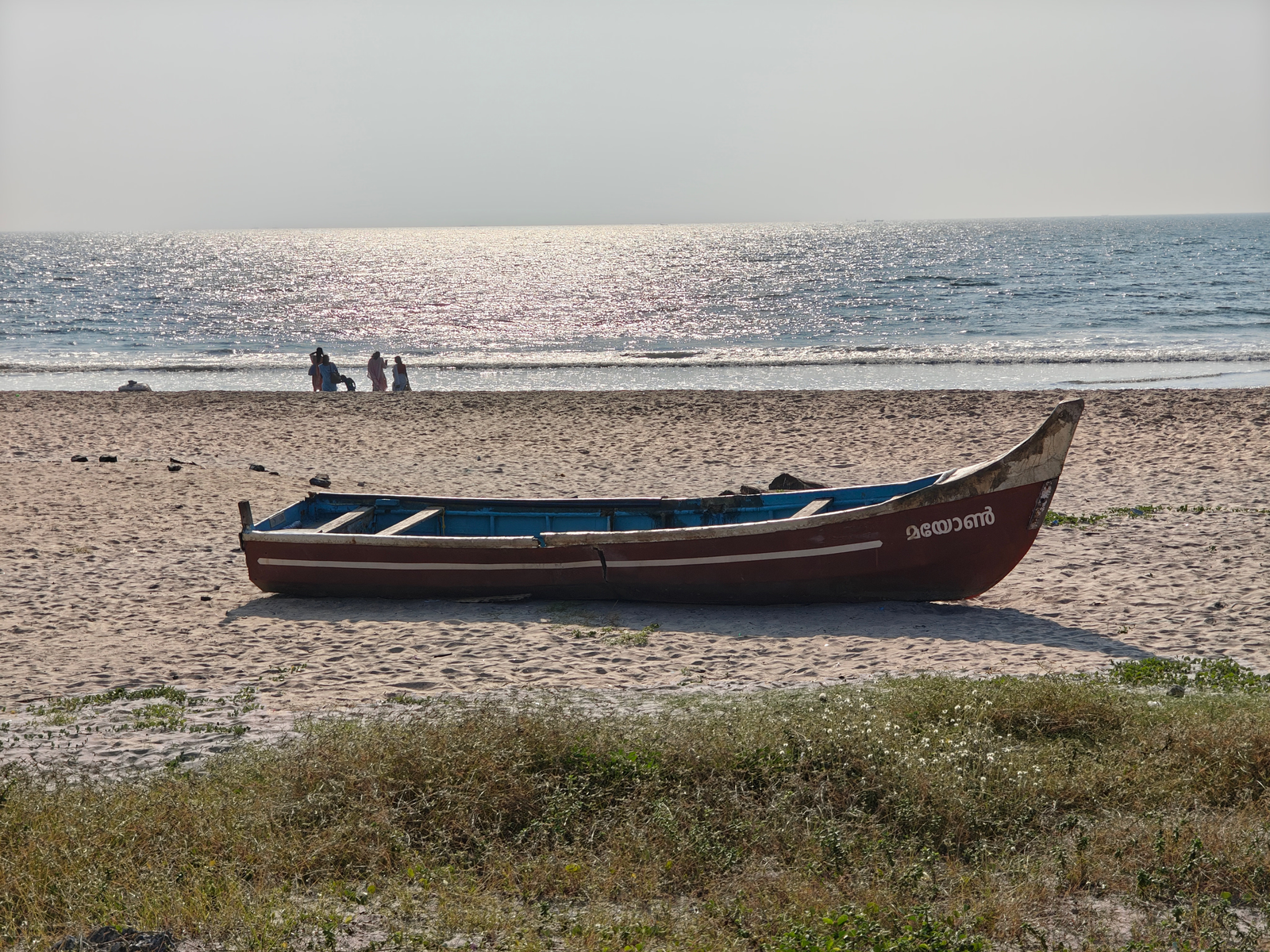
Beaches, forts, and handloom heritage in Kannur
Kannur rewards travelers who want more than a single-event visit. The district is known for beaches like Muzhappilangad, and that matters because Theyyam experiences often happen at very specific hours. You may spend the dawn at a shrine and the late afternoon by the sea, which gives the trip a satisfying rhythm.
The shoreline here feels more grounded and less hurried than many better-known beach circuits. Long sandy stretches, sea-facing roads, and open skies make space for quiet time between cultural visits. That contrast works well. After the intensity of ritual sound and movement, the coast offers calm.
Historic fort sites, including St. Angelo Fort, add another layer. Kannur’s past includes major trade routes and a layered maritime story, along with Portuguese, Dutch, and British influence. Fort walls and colonial traces help place the district within a wider Indian Ocean story, one shaped by commerce, politics, and maritime contact.
Then there is the handloom legacy, which is central to Kannur’s identity. The district is often called the Land of Looms and Lores, and the phrase fits. Weaving is not a decorative side note here in Thalassery. It is part of the region’s economic memory and cultural texture, much like Theyyam itself.
A well-shaped Kannur itinerary often blends these elements:
- Theyyam viewing: Village shrines, temple precincts, ritual mornings
- Coastal time: Beaches, sunset walks, open shoreline
- Historic interest: Fort areas and old trade-era echoes
- Local craft: Handloom heritage and textile identity
Respectful travel tips for a Theyyam visit in Kannur
Theyyam draws visitors to Kannur because it is visually arresting, but respectful travel begins by recognizing that it is a sacred community practice. Etiquette matters. The tone of your visit should match the setting.
Dress modestly, arrive on time, and expect local rhythms rather than tourist pacing. Schedules may shift. Crowds may gather suddenly. Some spaces may allow close viewing, while others may call for distance and restraint.
Photography is one of the most common concerns. In some places it is accepted; in others, restrictions or sensitivities apply. A simple ask before filming or moving close to the ritual area goes a long way. It also helps to travel with a local guide or planner who understands shrine customs and temple timing.
A few habits make the experience smoother and more meaningful:
- Arrive early: Rituals often begin before sunrise or build over several stages
- Watch the community first: Local behavior offers the best cue for where to stand and when to move
- Keep expectations flexible: This is a living ritual calendar, not a fixed auditorium program
- Carry water
- Wear easy footwear
- Choose quiet observation over constant phone use
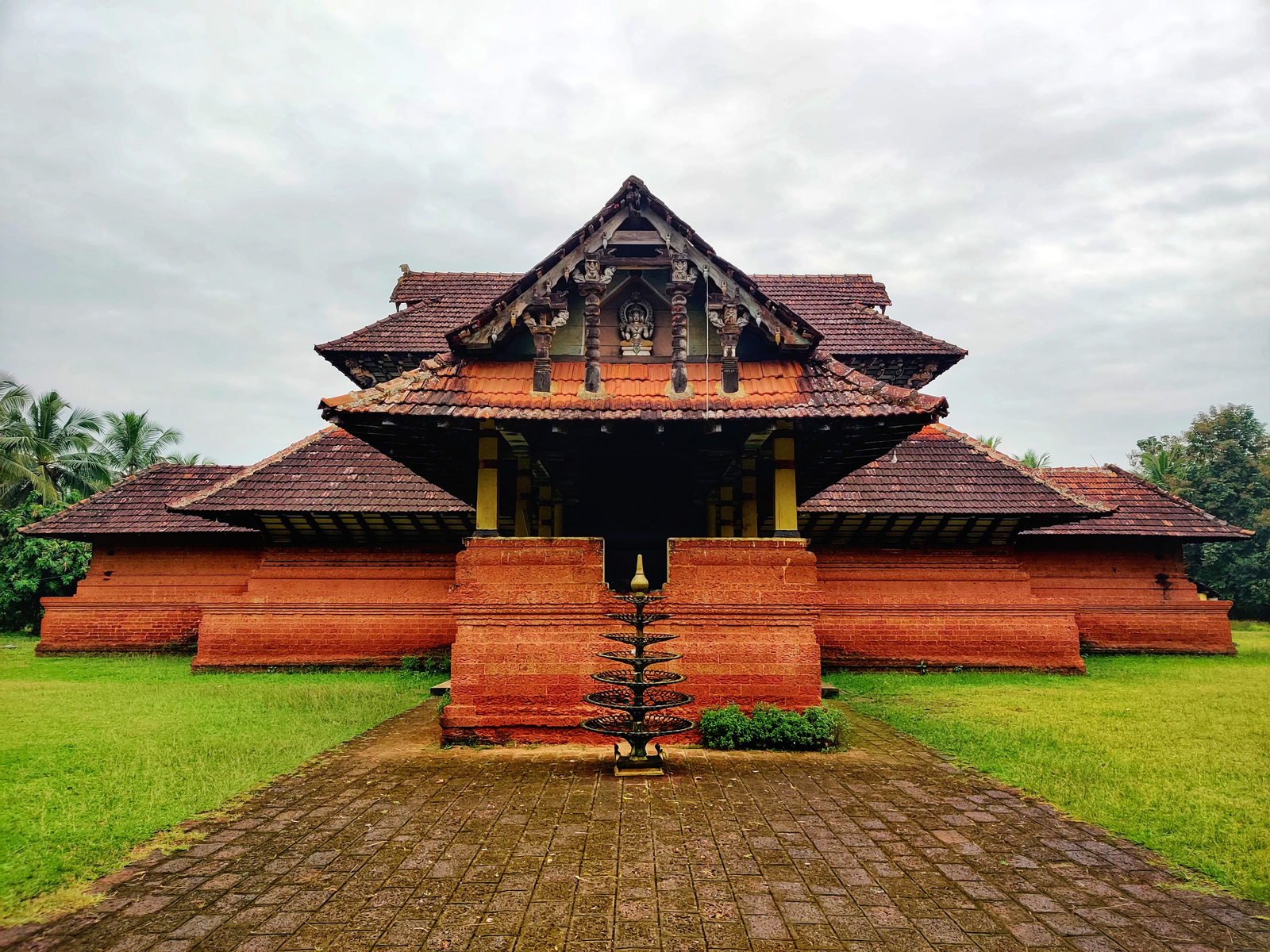
Kannur culture beyond the performance
It would be easy to reduce Kannur to a single famous tradition, but that would miss the point. Theyyam is powerful partly because it comes from a place with strong local memory, skilled craft traditions, and everyday cultural continuity.
Handloom is one of the clearest examples. Textiles connect Kannur to labor, trade, domestic life, and design. Travelers interested in material culture often find this side of the district just as rewarding as the ritual calendar, especially when the trip includes visits shaped around local knowledge rather than generic shopping stops.
Food and daily life add another dimension. Coastal Kerala has a distinct rhythm, and North Malabar carries its own flavor in both cuisine and social atmosphere. The best trips allow time for unhurried meals, roadside glimpses of ordinary life, and short conversations that place the big cultural symbols in a human setting.
That is when Kannur becomes more than a destination on a map.
A short Kannur itinerary around Theyyam and the coast
A brief stay can still feel full if it is planned with care. The key is not to crowd the schedule. Theyyam often asks for early starts and patient attention, so the rest of the day should breathe.
The region of Kannur in Kerala is renowned for its Theyyam performances, which are a vibrant and integral part of the local culture. Often hosted in village temples, these rituals combine dance, music, and elaborate costumes, offering a window into ancient traditions that have been preserved over the centuries. Visitors to Kannur have the unique opportunity to witness this cultural marvel, and the experience is often enriched by the historical and natural beauty of the area, making it a must-visit for cultural enthusiasts.
Here is a simple way to shape a short visit:
- Day 1: Arrive in Kannur, settle in, and spend the evening at the beach or near a fort area.
- Day 2: Attend an early morning Theyyam performance, rest later in the morning, then visit a handloom-focused area or coastal viewpoint in the afternoon.
- Day 3: Keep a second ritual visit if the calendar allows, or use the day for heritage sightseeing and onward travel.
Travelers with more time can pair Kannur with other parts of North Kerala, or continue south through Kerala’s backwaters and hill regions. Yet Kannur does not need to be treated as a stopover. It has enough cultural weight to stand on its own, especially during the Theyyam season.
For travelers seeking Kerala at its most rooted, Kannur district offers something rare: a place where ritual, craft, history, and coastline still belong to one another.
Kannur, the heartland of Theyyam in North Malabar, promises an unparalleled cultural voyage through its vibrant ritual traditions, stunning coastal landscapes, and historic depth, blending ancient customs with contemporary charm.
Kannur, situated along the Arabian Sea’s enchanting coastline, is a tapestry of cultural richness and spiritual legacy. At the heart of this alluring destination lies Theyyam, a tradition pulsating with life and vibrancy.
Experiencing Theyyam is akin to stepping into a living masterpiece of cultural heritage. It is an invitation into a world where ritual and artistry collide, creating a profound communal event.
Beyond Theyyam, Kannur is a haven for those seeking a deeper connection with Kerala’s distinctive offerings. Its serene beaches and historic forts provide solitude and intrigue against the rhythmic backdrop of the Indian Ocean.
Visitors to Kannur can revel in the dynamic interplay of modernity and tradition, an exploration enriched by the district’s renowned handloom craftsmanship. Whether wandering through the bustling markets or watching the sunrise over the Arabian waters, every moment in Kannur is an opportunity to witness history gently unfolding into the present. For those who choose to embark on this journey, Kannur promises an experience as stirring and timeless as the tides that grace its shores.
FAQ about Kannur and Theyyam Country
Dive into the cultural heartland of North Malabar with Kannur, a place where tradition and modernity beautifully intertwine. This FAQ addresses common inquiries about visiting Kannur and experiencing Theyyam.
What is Theyyam?
Theyyam is a vibrant ritual art form native to North Malabar, combining dance, music, and elaborate costumes as performers embody deities or ancestral spirits.
When is the best time to visit Kannur for Theyyam?
The ideal time to experience Theyyam in Kannur is from December to April, during peak performance season.
Can I see Theyyam throughout the year?
While December to April is the main season, some Theyyam performances occur outside these months based on local shrine calendars.
What are other attractions in Kannur?
Kannur boasts serene beaches, historic forts, and a rich handloom tradition, offering a well-rounded cultural experience.
How should I dress for a Theyyam performance?
Dress modestly in respect for the sacred nature of Theyyam and the community setting.
Can I take photos during Theyyam?
Photography is often allowed, but always seek permission first, as each venue might have its own rules.
Is a guide necessary for a Theyyam visit?
A local guide is highly recommended to help navigate shrine customs and offer insights into the performances.
What makes Kannur unique compared to other Kerala destinations?
Kannur uniquely blends cultural tapestry with scenic beauty, offering a profound connection to Kerala’s traditions and landscapes.