Booking a Kerala holiday should feel exciting, not uncertain. Yet many travelers only notice warning signs after money has been sent, plans are locked in, or promised services start to shift. A polished website, a friendly WhatsApp number, and a low package rate can create a false sense of security very quickly.
The safer approach is simple: slow down, verify the operator, and treat missing details as a serious signal, not a minor inconvenience. If you want a useful benchmark, even a quick look at an established travel company should show clear services, destination focus, contact information, and real trip-planning depth rather than vague promises.
Why Kerala tour operator verification matters
Kerala remains one of India’s most sought-after destinations for backwaters, hill stations, wildlife, beaches, Ayurveda, and culture. That popularity also attracts weak operators and outright frauds. Some are merely disorganized. Others are built to collect payments and disappear.
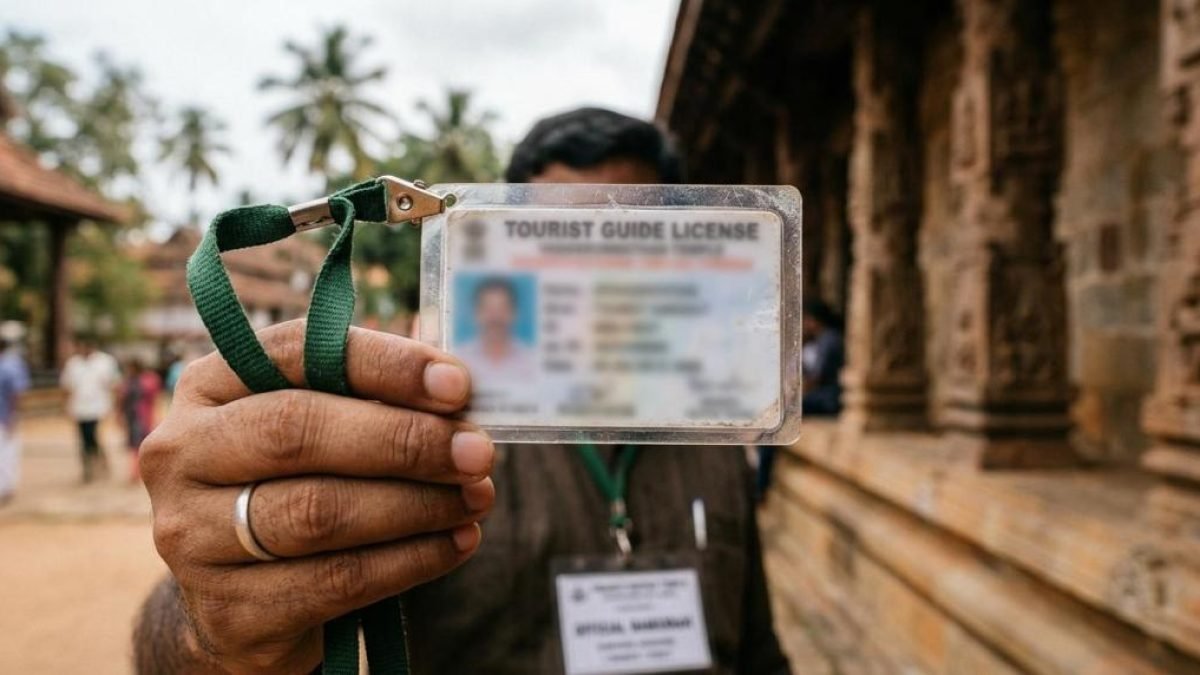
Kerala Tourism’s accreditation framework exists for a reason. Its stated aim is to encourage discipline, quality, competence, and trust in tour operations. That means accreditation is not just a badge for marketing. It is one of the clearest public signals that a business has gone through a formal review process.
There is another reason to verify early. Government advisories on booking fraud have warned that fake travel sellers may use professional-looking websites, social media pages, and WhatsApp accounts to appear legitimate. In many cases, the traveler only realizes something is wrong after payment, when confirmation never arrives or phone numbers stop working.
A reliable Kerala tour operator should be easy to identify, easy to contact, and easy to verify before the first payment is made.
After that basic principle, the warning signs become much easier to spot.
| Red flag | Why it is risky | Safer move |
|---|---|---|
| No verifiable accreditation or approval status | The operator may not meet Kerala Tourism standards | Check official Kerala Tourism approval listings |
| Prices far below market level | Low quotes often hide substitutions, exclusions, or fraud | Ask for a line-by-line cost breakup |
| Pressure to pay quickly | Urgency is often used to stop verification | Pause and confirm business identity first |
| Only WhatsApp communication | Easy to disappear, hard to document formally | Ask for email confirmations and company details |
| Vague itinerary wording | Opens the door to downgraded hotels or missing services | Request named hotels, room category, transfer type, and inclusions |
| Old recognition badges | Kerala Tourism recognition requires renewal | Verify that approval is current, not expired |
Early Kerala tour operator red flags on websites and social media
Many unreliable operators look convincing at first glance. The website may be attractive, the photos may be excellent, and the package names may sound premium. That alone means very little.
A stronger check is consistency. Does the business name match across the website, payment account, invoices, and social media pages? Is there a physical office address? Are there working landline or office numbers? Does the company email use its own domain, or is everything being run through free email accounts and personal mobile numbers?
A common pattern in travel scams is visual polish with weak business identity. The website looks real, but the company behind it is strangely hard to pin down.
Watch for signs like these:
- incomplete company address
- no GST or registration details where you would expect them
- only mobile or WhatsApp contact
- copied hotel images with no source or context
- package descriptions with very little destination detail
- social media pages full of promotions but almost no service information
Reviews need careful reading as well. A page with only five-star praise posted within a short time window deserves a second look. Real businesses usually have a more natural review pattern, including detailed comments about transport, hotels, guide quality, or how problems were handled during the trip.
Payment and itinerary red flags before you book
A weak quote often reveals more than a weak website. If an operator cannot explain exactly what is included, what is excluded, and when each payment is due, the risk rises quickly.
The most common problem is not always total fraud. Sometimes it is bait pricing. The first quote looks attractive, then better hotels suddenly cost extra, airport transfers are “not part of the package,” the houseboat is “subject to change,” or holiday surcharges appear later. What looked affordable becomes uncertain and expensive.
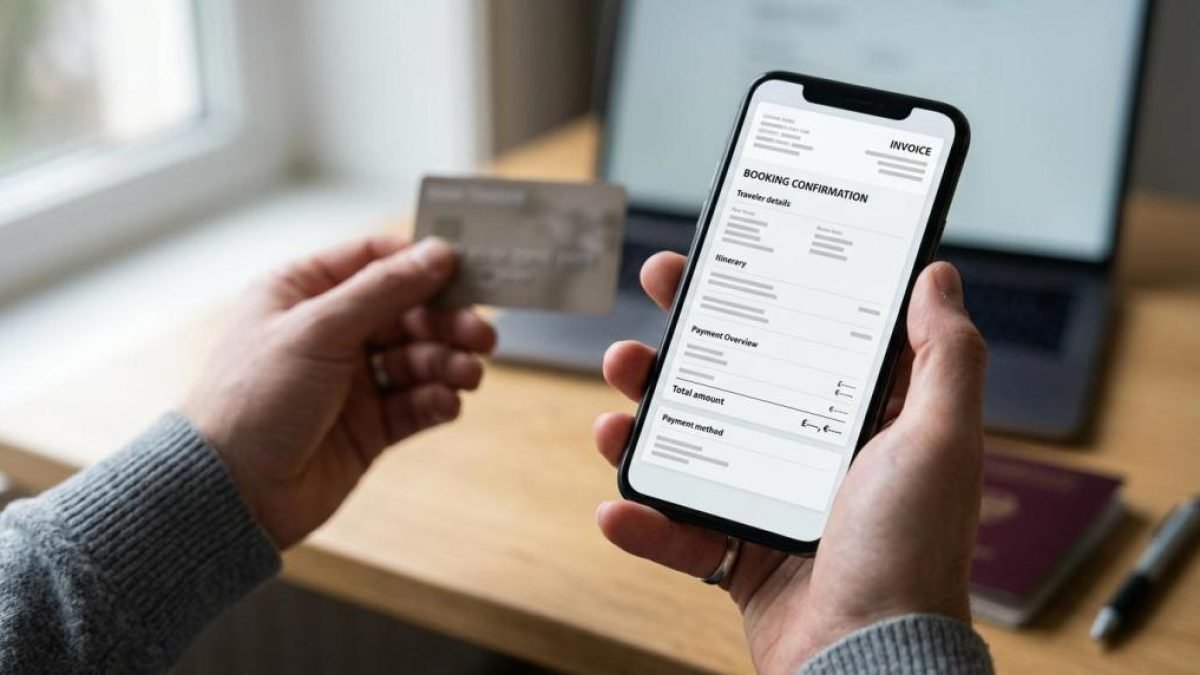
Ask for the full itinerary in writing before paying a deposit. That document should name destinations, number of nights, transfer type, hotel category, meal plan, sightseeing coverage, and major exclusions. If the operator keeps saying “don’t worry, everything will be managed,” but refuses to document the details, that is a red flag.
This is where experienced travelers often separate confident operators from risky ones. A reliable company is usually comfortable putting specifics on paper because it has supplier relationships, confirmed planning processes, and clear service terms.
Look closely at the payment request.
- Immediate full payment: A strong pressure tactic when verification has not happened yet
- Personal bank account: A warning sign if the operator claims to be an established company
- No invoice before payment: Poor controls and weak accountability
- No cancellation terms: Trouble later if dates shift or services fail
- Verbal hotel promises: Easy to change after money is received
- No receipt or booking acknowledgment: A serious sign to stop the process
How to check Kerala Tourism accreditation and business legitimacy
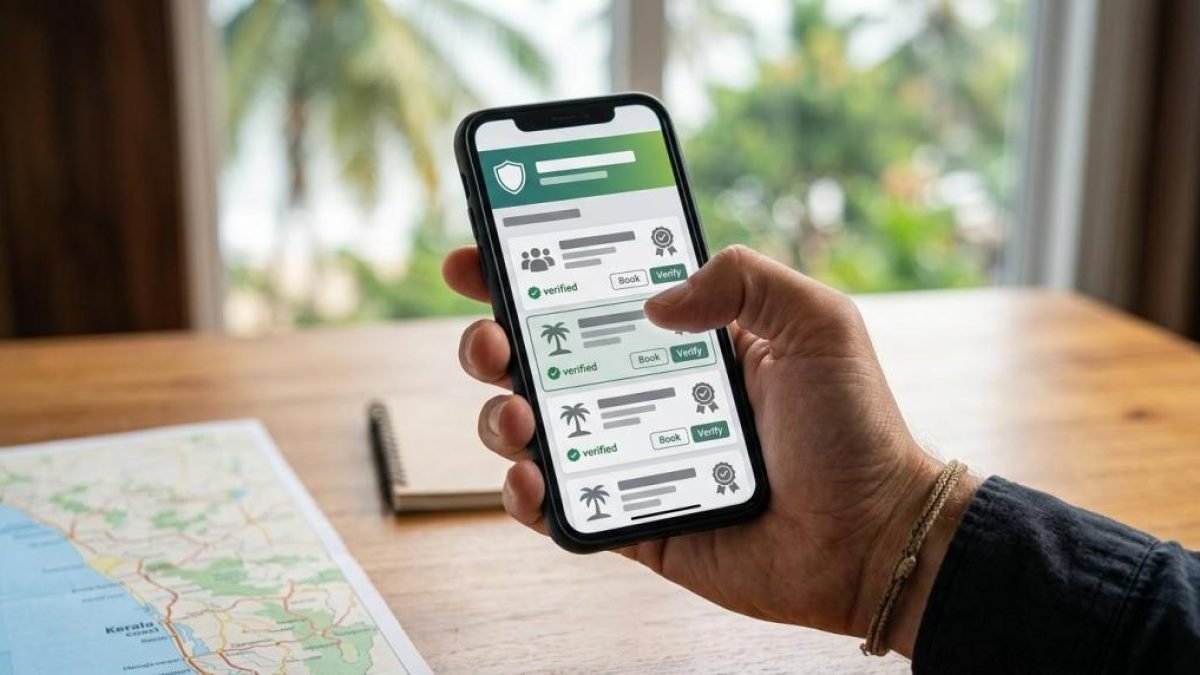
The fastest trust check is official verification. Kerala Tourism maintains channels where travelers can view accredited or approved tour operators. That matters because Kerala Tourism states that recognized operators are meant to meet standards tied to service quality and disciplined operations.
Just as useful, Kerala Tourism recognition is not permanent. The approval period is limited and must be renewed after expiry. So an old certificate image on a website is not enough. A business may have been approved once and not be current now.
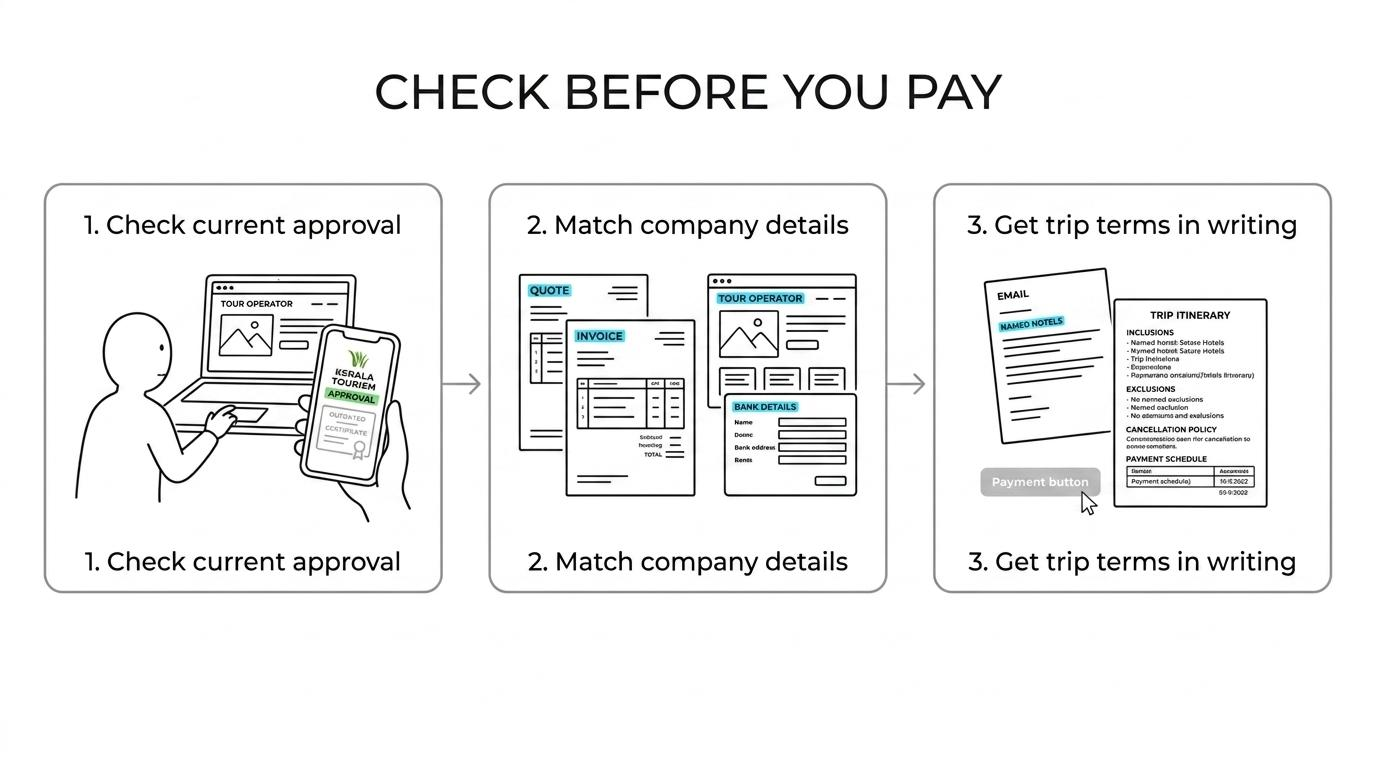
Use a short verification routine before paying anything:
- Check approval status: Search official Kerala Tourism tour operator listings or accreditation records
- Check recognition date: Confirm the approval is current and within the renewal period
- Check business identity: Match the company name on the quote, invoice, bank account, and website
- Check association signals: If membership in IATO or another trade body is claimed, confirm it independently
- Check written documentation: Ask for itinerary, inclusions, exclusions, cancellation policy, and payment schedule by email
Independent verification is where weak operators often fall apart. They may dodge the exact business name, avoid sharing a formal invoice, or send account details that do not match the company identity. Those are not small gaps. They are direct warnings.
Questions that reveal an unreliable Kerala tour operator
Good questions do more than gather information. They test how the operator thinks, how organized the business is, and whether the team is used to serving informed travelers.
Ask the same questions you would ask any high-value service provider. Clear answers should come quickly. Evasive answers usually mean poor systems or poor intent.
- Can you share your current Kerala Tourism approval status or accreditation details?
- Which hotels are included, and what exact room category is quoted?
- Are transfers private or shared, and what vehicle type will be used?
- Is the houseboat or resort already tied to a named supplier?
- What is excluded from the package price?
- What is the cancellation and refund policy?
- Who handles on-trip support if there is a change or disruption?
- Will I receive a formal invoice and written confirmation before payment?
The content of the answer matters, but so does the style of the answer. Reliable operators tend to respond with structure. Risky ones often reply with persuasion.
Here is the difference in practice:
- “We will send the hotel list, payment plan, and cancellation terms by email today” is a healthy sign.
- “Just pay now, all details will be arranged later” is not.
Service quality red flags after the first conversation
Some warning signs only appear after the first call or message exchange. A business may sound friendly yet remain oddly unwilling to become concrete.
Pay attention to pace. If replies are very fast when asking for payment but slow when asking for documents, that imbalance tells you something. The same goes for operators who answer easy questions but avoid specifics about hotel names, local transport standards, or who will support the trip during travel days.
Another strong signal is destination depth. Kerala planning requires practical knowledge. Travel time between Munnar, Thekkady, Alleppey, Kovalam, and Wayanad matters. Monsoon conditions matter. If an operator creates an itinerary that looks impressive but ignores road realities, rest time, or local logistics, the issue may be lack of expertise rather than dishonesty, but it still puts the trip at risk.
You should also watch for overpromising. No operator can guarantee perfect weather, zero traffic, constant room upgrades, or unrestricted wildlife sightings. Credible planners speak with confidence, but they stay realistic.
What is the weakness of Kerala?
Kerala, while known for its breathtaking landscapes, unique cultural heritage, and invigorating natural beauty, faces certain challenges that can affect both residents and visitors.
Despite its renowned tourism appeal, Kerala confronts infrastructural constraints that can hamper travel experience. Roads in key tourist areas might not always support the volume of traffic anticipated during peak seasons, leading to congestion and delays. This can invariably affect the overall logistics of a well-planned itinerary, placing stress on travel schedules.
Moreover, Kerala experiences high monsoon rainfall, which can impact travel plans. The heavy rain, though a natural marvel, can occasionally lead to waterlogging and disrupt transport, necessitating adaptability in plans and potentially limiting access to certain attractions
What a reliable Kerala tour operator should provide
A dependable operator is usually transparent long before the trip starts. The proposal reads clearly. The pricing feels structured. The communication leaves a paper trail. There is no mystery around who is responsible for what.
This often shows up in practical ways:
- a named itinerary with actual properties
- clear transfer arrangements
- written inclusions and exclusions
- documented payment milestones
- reachable support contacts
- realistic advice on seasonality and travel time
Professionalism is not about sounding impressive. It is about reducing uncertainty.

A well-run Kerala specialist should also be comfortable discussing substitutions, peak-season availability, and booking lead times without turning every conversation into a pressure sale. That confidence usually comes from real destination knowledge and established local networks.
What to do if a Kerala booking feels suspicious
If something feels off, stop the payment process first. Do not let urgency override caution. A genuine operator can usually hold a booking briefly or explain the actual deadline tied to a hotel or houseboat supplier.
Gather the documents you have so far: quote, screenshots, payment request, bank details, phone numbers, and website links. Then verify the operator through official Kerala Tourism channels and any claimed trade memberships.
If payment has already been made and confirmation never arrives, act quickly. Government consumer and cybercrime channels exist for exactly these situations. The National Consumer Helpline accepts grievances through multiple routes, and India’s cybercrime reporting systems are relevant where online booking fraud is suspected.
Fast action improves your odds. So does written evidence.
A Kerala holiday deserves careful planning, and the best operators make that easy to see from the start. Clear accreditation, current approval status, written documentation, realistic pricing, and responsive support are not extras. They are the baseline signs that you are dealing with a business worth trusting.
FAQ: Identifying Red Flags in Kerala Tour Operators
Navigating the vast landscape of Kerala tour operators can be daunting. Spotting red flags early ensures your travel experience is seamless and enjoyable.
What is the significance of Kerala Tourism accreditation?
Kerala Tourism accreditation verifies that operators meet high standards of service, ensuring trust and reliability.
How can I identify a trustworthy Kerala tour operator?
Look for current accreditation, clear communication, verified business identity, and a detailed itinerary with transparent pricing.
Why are low package prices a red flag?
Prices below market level can indicate hidden exclusions or substitutions, potentially leading to unexpected costs or inferior services.
What if a tour operator pressures me to pay quickly?
This is often a tactic to prevent verification; pause and confirm the operator’s legitimacy before proceeding.
Is relying solely on WhatsApp communication risky?
Yes, it’s essential to have formal documentation via email to ensure accountability and traceability.
How should I handle vague itineraries?
Request specifics like named hotels and room categories. A lack of detail may indicate potential downgrades or missing services.
Are social media pages a reliable source for reviews?
Be cautious. Look for genuine reviews with detailed experiences rather than only five-star anonymous praise.
What should I do if a booking feels suspicious?
Stop the payment process immediately and verify the operator through official Kerala Tourism channels before any further commitment.