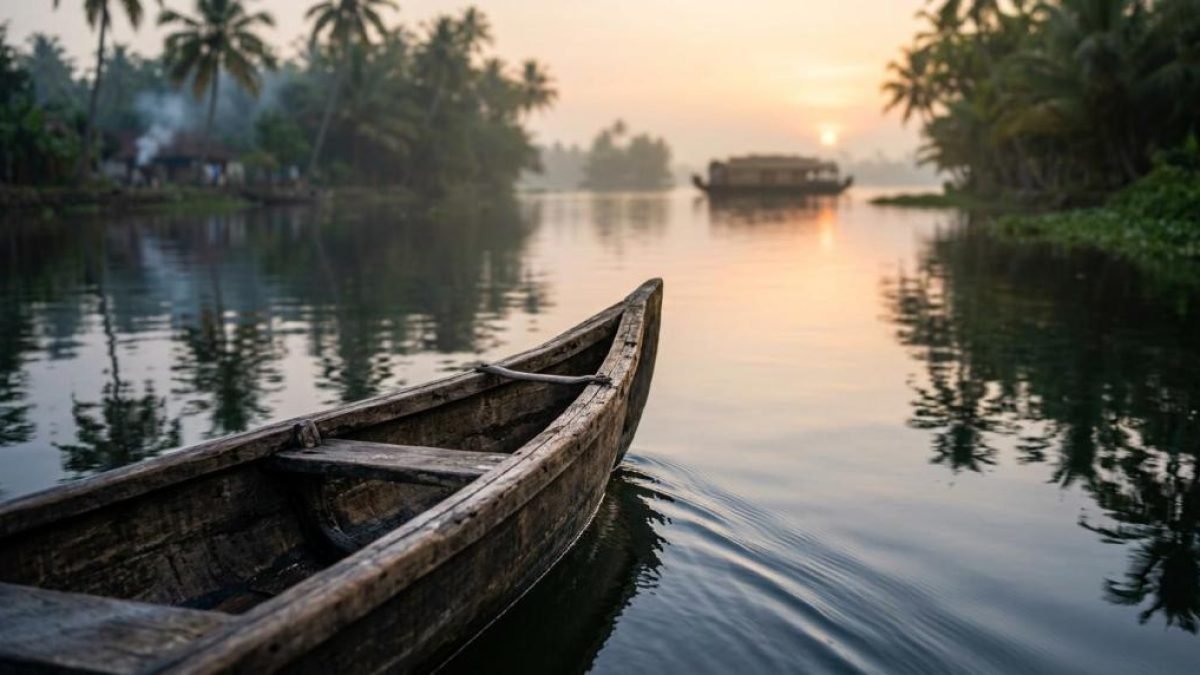
Some places ask for a full day of movement. Poovar asks for a slower pace.
Set south of Trivandrum in coastal Kerala, Poovar is one of those rare stops where the mood matters as much as the scenery. The Neyyar River reaches the Arabian Sea here, creating an estuary framed by calm backwaters, low green banks, and stretches of mangroves. You do not come to Poovar for a packed sightseeing schedule. You come for still water, soft light, and the quiet pleasure of watching landscapes meet.
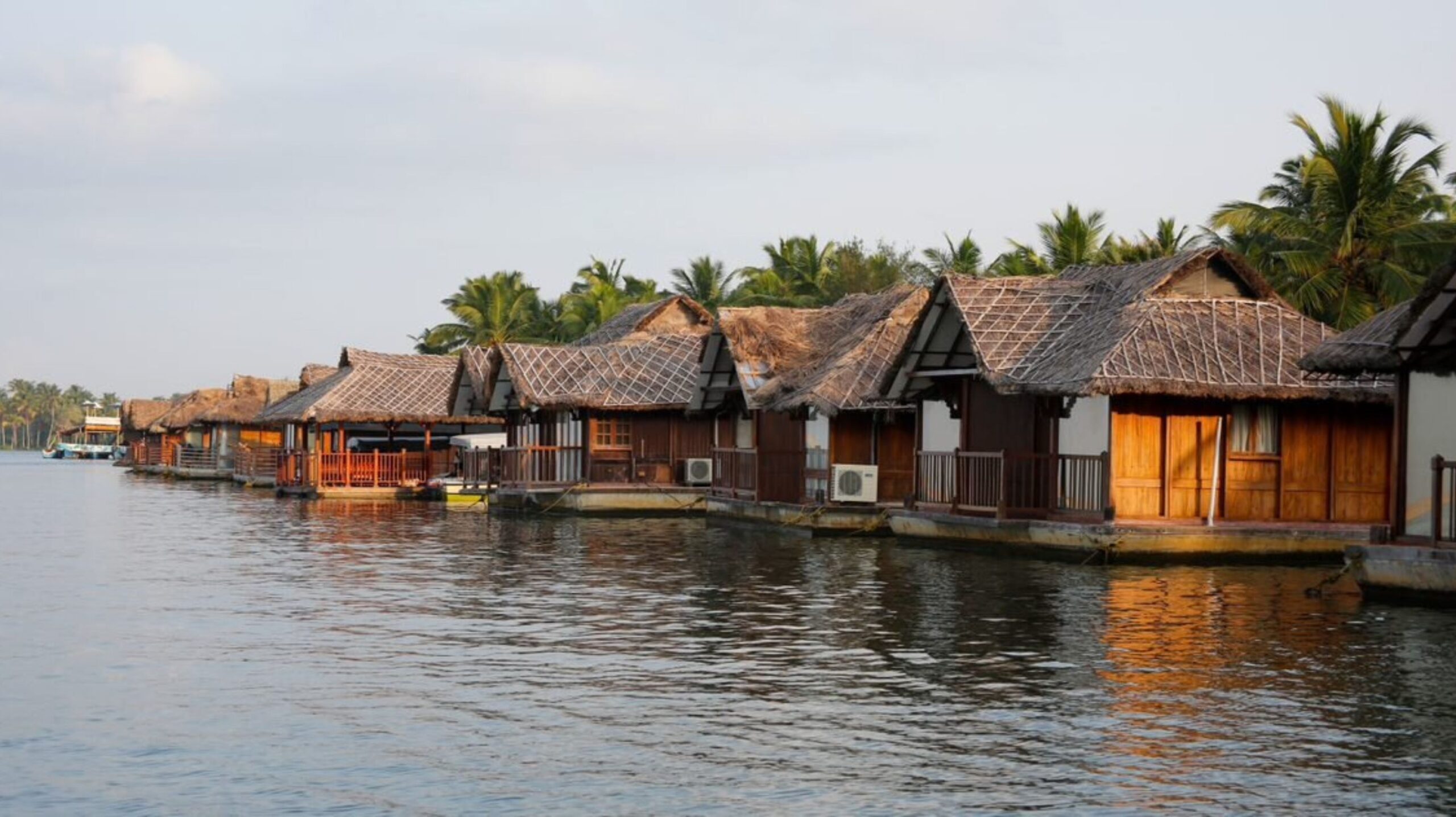
That character makes Poovar especially appealing for travelers who want a gentler side of South Kerala. It often fits beautifully into a relaxed coastal plan with Kovalam, and it also works as a half-day escape from Thiruvananthapuram when city sightseeing feels complete.
Where Poovar is located near Trivandrum
Poovar sits at the southern tip of Thiruvananthapuram district. Depending on the route and reference point, it is usually described as roughly 27 to 35 kilometers from Thiruvananthapuram, and about 12 kilometers south of Kovalam. It is also close to Neyyattinkara, which makes it easy to include in a short South Kerala circuit.
That geography matters because Poovar feels accessible without feeling urban. The drive from Trivandrum is not long, yet the atmosphere changes noticeably as the landscape opens into waterways and coastal stretches. By the time you reach the boating point, the pace has already shifted.
Poovar is not a major city attraction with crowded streets, shopping districts, or large monuments. Its strength is the setting itself: river, backwater, estuary, sea, and beach in one compact coastal pocket.
Why the Poovar estuary feels so distinctive
Kerala has many memorable backwater destinations, yet Poovar has a look and rhythm of its own. The estuary is the key reason. Here, the Neyyar River drains into the Arabian Sea, creating a meeting point that feels more open and coastal than inland backwater routes.
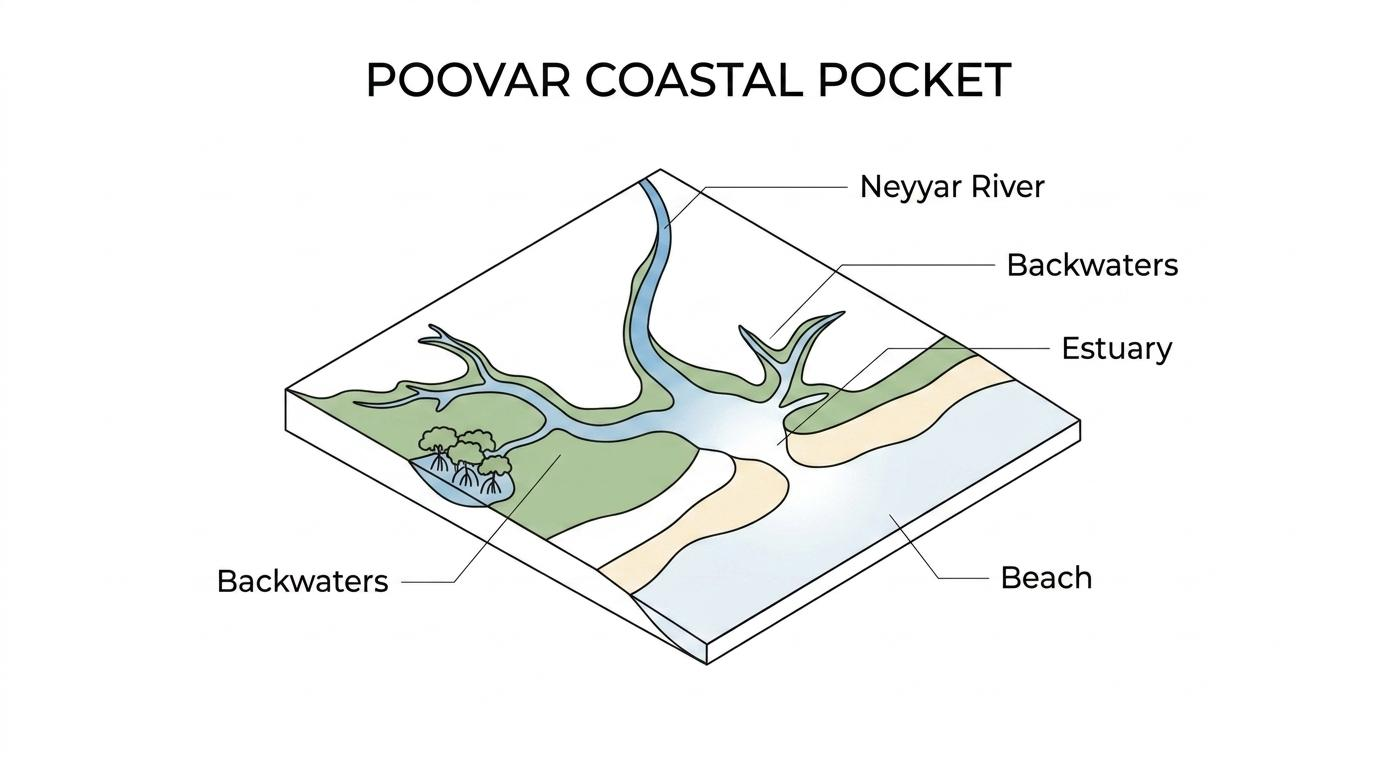
There is also a visual contrast that people tend to remember. The water channels remain calm and enclosed in parts, with mangroves and shaded edges, then suddenly widen toward brighter open views near the sea. That movement from sheltered water to broad estuary light gives a boat ride in Poovar a special texture.
Another reason Poovar stands apart is the sense of quiet. Even when tourism is active, the destination still feels more restful than many better-known beach belts. It suits travelers who enjoy scenery that unfolds gradually rather than places that demand constant activity.
And then there is the beach itself, which adds a little intrigue.
In many descriptions of Poovar, the beach is noted for being accessible by boat. That small detail changes the experience. Reaching a beach through water, rather than by a busy roadside approach, gives the outing a very different feel from a standard coastal stop.
What to do in Poovar for a slow coastal day
A visit to Poovar works best when expectations are set well. This is not the place for a long list of attractions checked off in rapid order. It is better treated as a scenic pause in the itinerary, especially for couples, families, and photographers, and travelers who enjoy water landscapes.
That does not mean there is nothing to do. It means the appeal is tied to simple pleasures done well.
- Boat ride through the backwaters
- Estuary views where river and sea meet
- Mangrove-lined channels
- Quiet beach time
- Late-afternoon photography
- A relaxed extension from Kovalam or Trivandrum
The strongest plan is often the simplest one: arrive without rushing, take a boat ride, spend time near the estuary zone, and let the destination set the pace. Many travelers find that Poovar is most rewarding when they stop trying to “do more” and instead give the landscape room to register.
Poovar boat rides, beach access, and mangroves
Boating is the core Poovar experience. It is the easiest way to see how the area shifts from inland-style backwater stretches to the estuary and coastal edge. The ride itself is usually gentle, which makes it suitable for many types of travelers, including families and older guests who prefer a calm outing.
For travelers bringing cameras, phones, or an extra layer on the water, Nordic Gear notes in its guide to drybags that simple protection against spray and sudden rain matters more than many people expect on slow boat outings.
The mangroves are part of what gives Poovar its identity. They soften the banks, filter the light, and create a sense of enclosure before the waterways open out again. This is where Poovar feels especially photogenic. Reflections, narrow channels, and the green tones of the shoreline create an atmosphere that is both tropical and restrained.
The boat-access beach is another reason many South Kerala itineraries include Poovar. Reaching the beach by water adds to the appeal, though expectations should remain realistic. This is less about beach clubs and crowded activity, and more about the unusual geography of a sandy strip placed between water systems.
A few practical points help set the day up well:
- Best pace: unhurried, with time for waiting, watching, and short walks
- Ideal timing: early morning for softer air, or late afternoon for better light
- Main experience: scenic boating rather than land-based sightseeing
- Photography focus: estuary light, mangroves, reflections, and wide water views
- Good travel match: Travelers planning a honeymoon, families, and travelers seeking a calm coastal break
If your idea of a perfect holiday includes loud beach scenes and nonstop activity, Poovar may feel too quiet. If your ideal day includes water, breeze, and long pauses, it can feel exactly right.
Poovar vs Kovalam vs Trivandrum for different travel styles
Poovar is often mentioned along with Kovalam, and that pairing makes sense. They are close enough to combine, yet the mood is very different. Trivandrum adds a third option for travelers who want city access, culture, and transport convenience.
The table below helps clarify where Poovar fits.
| Destination | Best Known For | Best For | Typical Pace | Time Needed |
|---|---|---|---|---|
| Poovar | Estuary, backwaters, mangroves, boat-access beach | Relaxed half-day or overnight coastal retreat | Slow and scenic | Half day to 1 night |
| Kovalam | Popular beach stretch, sea views, tourist facilities | Classic beach stay with easier access and more activity | Moderate | 1 to 2 nights |
| Trivandrum | City attractions, temples, museums, airport access | Travelers combining culture, logistics, and short excursions | Faster and more structured | 1 to 2 days |
For many visitors, the smartest choice is not deciding between them but combining them based on mood. A city stay in Trivandrum, a beach stop in Kovalam, and a calm boat outing in Poovar can work together very naturally.
Poovar is especially useful when an itinerary needs a softer ending. After hill stations, long drives, or temple circuits, an estuary afternoon can reset the tone of the trip.
Best time to visit Poovar in South Kerala
Poovar can be visited through much of the year, though the experience changes with weather and water conditions. The most comfortable months for many travelers are the drier, cooler season, when boat rides feel pleasant and outdoor time is easier in the middle of the day.
During or around the monsoon period, the landscape often looks richly green and dramatic. That can be very appealing for travelers who enjoy moody skies and lush scenery. The tradeoff is that rain may affect timings, comfort, and how long you want to stay outdoors.
Light matters in Poovar more than people often expect. Harsh midday sun can flatten the scenery, while early morning and late afternoon bring out the best in the water, palms, and estuary edge. If photography is part of the plan, timing is worth a little attention.
A simple packing approach is usually enough.
- Light cotton clothing
- Sun protection
- Sandals or easy footwear
- Sunglasses
- Camera or phone with storage space
- A light layer during rainy spells
Those small choices can make the outing more comfortable, especially when you are shifting between car travel, boating, and beach-side humidity.
Adding Poovar to a South Kerala itinerary
Poovar works best when it is placed with intention. Because it is close to Trivandrum and Kovalam, it can be included without adding strain to the schedule. That flexibility is one of its biggest strengths.
A few itinerary patterns tend to work especially well:
- Trivandrum to Poovar as a half-day excursion
- Kovalam stay with a boat trip to Poovar
- A short South Kerala coastal route including Trivandrum, Kovalam, and Poovar
- A relaxed final stop before departure from Trivandrum
It is also a strong fit for custom South India holidays where variety matters. A trip that includes tea country, wildlife, heritage neighborhoods, and busy roads gains balance from a stop like Poovar. Not because it is dramatic in the conventional sense, but because it offers contrast.
That contrast is exactly what makes Poovar memorable. South of Trivandrum, where the Neyyar River meets the Arabian Sea, Kerala presents one of its gentlest coastal scenes. A boat glides through mangroves, the estuary widens, the beach appears across the water, and the day becomes less about checking sights and more about settling into place.
For travelers who value that kind of calm, Poovar earns its spot with ease.