Kerala’s identity is closely tied to the high quality of its aroma. Long before many travelers saw its backwaters, hill stations, and beaches on modern itineraries, the region was known for spices that moved through global trade routes and shaped how the Malabar Coast was remembered. Even today, a walk through a plantation in the hills can explain more about Kerala than a museum label ever could.
Cardamom, pepper, vanilla, cinnamon, and herbs tell that story beautifully. Each one grows differently, needs a specific environment, and leaves its own mark on local food, farming, and travel experiences, much like the renowned Kerala spices. Together, they help explain why Kerala is still widely recognized as the Spice Garden of India.
Why Kerala spices remain central to the state’s identity
Kerala’s spice reputation is not just about taste. It comes from geography. High rainfall, rich soils, filtered mountain light, and cooler elevations in parts of the Western Ghats create ideal conditions for plantation crops. Official tourism sources repeatedly point to hill districts like Idukki and Wayanad as prime spice-growing areas, and that is easy to appreciate once you visit them.
The state’s spice map also has clear regional strengths. Kerala Tourism identifies Kottayam as mainly known for cardamom, pepper, and vanilla. This regional pattern matters for travelers because it shapes where plantation visits feel most rewarding.
Spice tourism, highlighting a wide variety of Indian spices and flavors, is now part of the larger Kerala holiday experience. Plantation walks are often paired with routes through Thekkady, Munnar, Kumarakom, and Wayanad, giving visitors a close look at how these crops are grown rather than simply sold in packets at roadside shops.
Cardamom in Kerala’s high-altitude districts
Among Kerala spices, cardamom has a special place because of its fragrance and its strong link to mountain terrain. It prefers cooler, shaded, high-altitude conditions, which is why Idukki stands out so clearly. Kerala Tourism describes Kumily in Idukki as a spice hub, and the surrounding plantation belt supports that reputation with steep slopes, misty mornings, and dense green cover.
Cardamom fields do not usually look dramatic from a distance. Their beauty is quieter. The plants grow low under taller shade trees, and much of the work happens close to the ground. Visitors expecting wide open rows may be surprised by how enclosed and forest-like many estates feel. That sense of humidity and filtered light is part of what makes the crop possible.
In culinary terms, cardamom carries range. It fits festive sweets, tea, biryani, meat marinades, and spiced desserts, yet it rarely dominates a dish when used well. Good cardamom smells fresh, sweet, and resinous, not dusty or flat. When bought whole, the pods hold that character far better than pre-ground powder.
The Spices Board’s research focus on small cardamom also reflects how important this crop remains at the national level. For travelers, that agricultural seriousness adds depth to a plantation tour. You are not looking at a novelty crop. You are seeing a living part of Kerala’s farm economy.
Which spices are famous in Kerala?
The spices of Kerala symbolize an illustrious tapestry of cultural and gastronomic heritage, dazzling the senses with cardamom, pepper, and vanilla among others.
Cardamom is celebrated for its aromatic elegance and versatility.
Black pepper, the “King of Spices,” infused history with its trade voyages, while offering warm, complex flavors to diverse cuisines. In tandem with cardamom, pepper thrives in the fertile Western Ghats, showcasing Kerala’s agricultural richness and historical significance in the spice trade, captivating both cooks and historians alike.
Vanilla, though less ancient in its Kerala roots, garners acclaim for its fragrant allure. Cultivated under meticulous conditions, it complements the state’s reputation for high-quality spices. Together, these spices encapsulate Kerala’s enchanting blend of tradition and innovation, elevating its stature as a beacon of flavors.
What spices are grown in Kerala?
Kerala’s verdant landscapes are renowned for cultivating a vibrant array of spices that enrich global cuisines.
With its perfect blend of tropical climate, fertile soil, and age-old cultivation techniques, Kerala is a treasure trove for spices. Cardamom, known for its aromatic brilliance, is a mainstay, contributing depth to both traditional and contemporary dishes. Its cultivation thrives in the cool, mist-clad mountain regions that span the Western Ghats.
Pepper, often heralded as the “King of Spices,” adds a fiery complexity to the culinary palette and has a storied past in Kerala’s trade legacy. Its vines elegantly drape over the lush landscape, echoing a history of exploration and commerce.
Vanilla, a relative newcomer in the Kerala spice family, captivates with its sweet, floral notes that seduce both the palate and the senses. Underpinning this diversity are cloves, cinnamon, nutmeg, and turmeric, each flourishing in Kerala’s unique ecosystem and contributing uniquely to its rich culture.
Together, these spices not only underscore Kerala’s role as a key player in the global spice trade but also exemplify the region’s unparalleled agricultural excellence.
What are the 7 Indian spices?
In the harmonious confluence of taste and tradition, seven Indian spices stand as pillars of culinary brilliance, painting a rich tapestry of flavors across global tables.
Cardamom, with its aromatic sophistication, and cumin, known for its earthy warmth, lead the charge. They are accompanied by coriander, an herbaceous wonder, and turmeric, a vibrant golden root known for its health qualities. These spices, along with clove and its pungent notes, and fennel with its sweet, licorice-like essence, create an ensemble that showcases India’s rich agricultural heritage.
These spices are not merely enhancers of flavor but are integral to the cultural identity and culinary practices weaving through the nation’s diverse regional cuisines. Each one carries depth and complexity that can transform basic dishes into gastronomic experiences, telling stories of ancient trade routes and cultural exchanges.
Lastly, saffron, although a precious and less common spice, adds a luxurious touch with its distinctive aroma and delicate flavor. Its threads, often incorporated into desserts and festive dishes, paint dishes with rich hues of yellow and orange. Collectively, these spices embody the vibrant diversity of Indian cuisine, transcending mere seasoning to become everyday staples that enhance the complex flavors beautifully and speak to the passion and dedication imbued in Indian culinary traditions.
Black pepper in Kerala plantations and home kitchens
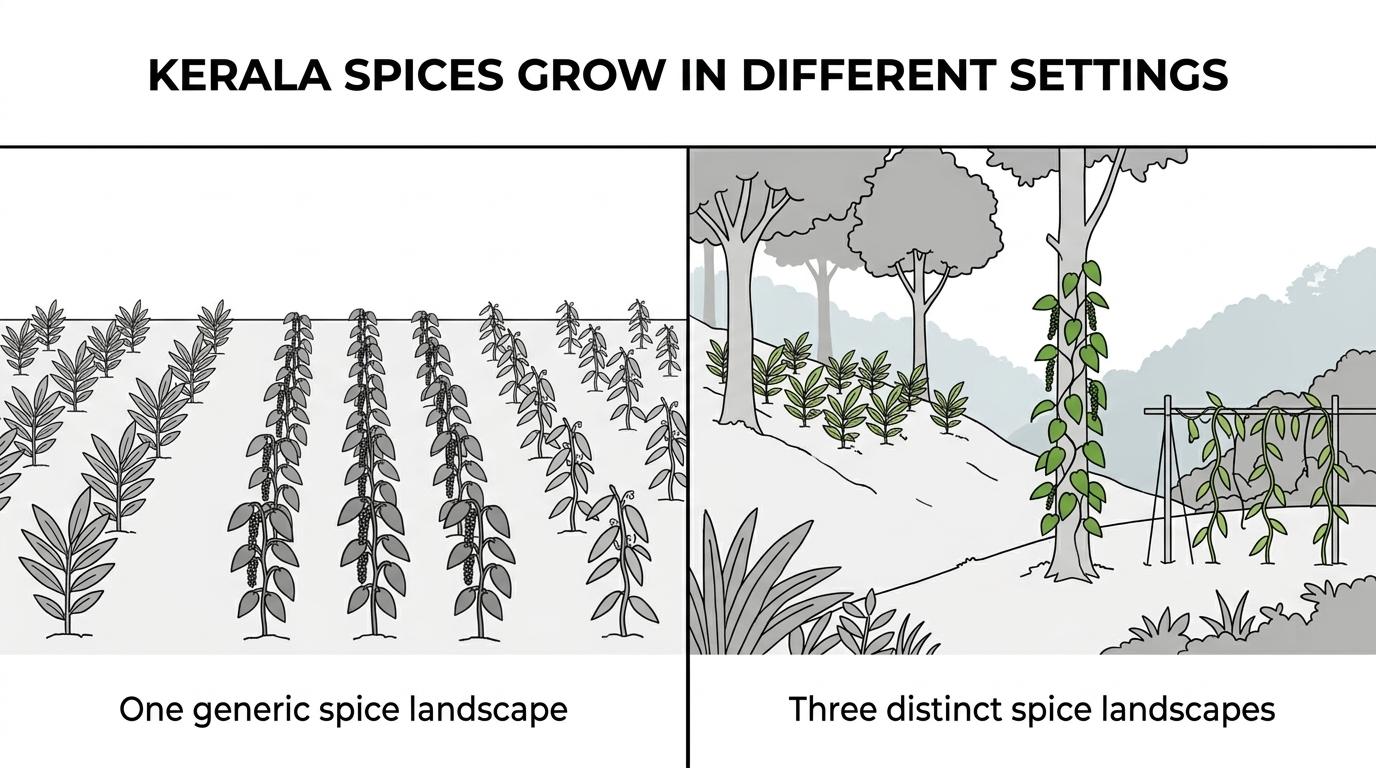
Pepper is sometimes treated as ordinary because it appears on tables everywhere, yet Kerala black pepper deserves far more respect than that casual familiarity suggests. Pepper vines climb live supports or shade trees, and the visual effect is striking. Instead of low shrubs or neat beds, you see vertical growth threaded through mixed plantation landscapes.
Kerala Tourism identifies Kottayam as a district mainly recognized for pepper cultivation, while Wayanad is also known for it. Pepper works well in these wetter zones, and it often appears alongside other plantation crops rather than in isolation. That mixed setting can be one of the most memorable parts of a spice estate visit, since it shows how diverse farming systems can be in Kerala’s hills.
Kerala Tourism also describes black pepper as one of the state’s major crops and has even framed Kerala as the world’s largest producer of black pepper. Whether a traveler approaches that claim from history, trade, or cuisine, the point remains clear: pepper has been central to Kerala’s image for centuries.
What makes pepper interesting on the ground is its complexity. The same spice can smell woody, fruity, sharp, or warm depending on maturity and processing. Whole black peppercorns from a fresh source often have a lively aroma that is far richer than what many people know from old supermarket jars, showcasing the diverse aromas that can be experienced firsthand during a visit to Kerala’s spice plantations.
After seeing pepper on the vine, many travelers start to use it differently at home. It feels less like a background seasoning and more like a primary ingredient.
Vanilla in Wayanad and mixed Kerala spice gardens
Vanilla brings a different texture to the Kerala spices story. It is softer in aroma, more delicate in cultivation, and often less visible in broad public conversation than cardamom or pepper. Yet in Wayanad, it remains an important part of the plantation mix that gives spice tours their layered appeal.
Unlike pepper, vanilla comes from an orchid. That fact alone changes how visitors read a plantation. It feels less rugged and more intricate. The crop depends on patient cultivation, and in many growing systems it needs careful support and management. When people hear “vanilla,” they often think of sweetness alone, but natural vanilla has floral, creamy, and gently smoky notes that make it far more complex.
Kerala Tourism specifically includes vanilla among Wayanad’s plantation crops, alongside pepper and cardamom. That matters because Wayanad is not just a scenic hill district. It is one of the best places to see how multiple spice crops can exist within the same wider agricultural setting.
Kerala spice regions at a glance
A quick comparison helps show why each spice feels distinct in Kerala.
| Spice | Key Kerala districts | Typical growing setting | What visitors often notice | Common uses |
|---|---|---|---|---|
| Cardamom | Idukki, Wayanad | Cool, high-altitude, shaded plantations | Moist air, low plants under tree cover, intense fragrance | Tea, desserts, biryani, festive cooking |
| Black pepper | Kottayam, Wayanad, Idukki | Vines grown on supports in humid plantation belts | Pepper climbing trees, mixed-crop estates, fresh sharp aroma | Daily cooking, marinades, soups, meat dishes |
| Vanilla | Wayanad | Managed plantation systems with support structures | Delicate vines, subtler scent, careful cultivation methods | Desserts, baking, flavoring, specialty products |
What Kerala spice plantation tours actually feel like
A good spice plantation visit is sensory before it is educational. The first thing many people notice is smell. Not one smell, but a sequence of them: wet earth, leaf litter, green pepper, cardamom pods, bark, flowers, cinnamon, and sometimes wood smoke from nearby homes or farm activity. That layered scent is part of what makes plantation tourism in Kerala feel so grounded.
The setting matters too. In places like Thekkady, Kumily, Idukki, and Wayanad, plantation visits often sit naturally within a wider itinerary. A traveler might spend the morning in misty hills, the afternoon learning how pepper dries or how cardamom is sorted, and the next day continue to the backwaters or coast. That variety keeps spice tourism from feeling niche or repetitive.
Many itineraries include plantation walks because they add context to food and landscape at the same time. They also work well for couples, families, and international visitors who want more than sightseeing from a car window.
A spice plantation visit often includes:
- short guided walks
- tasting or aroma sessions
- buying whole spices near the source
- seeing pepper vines and cardamom plots
- simple explanations of harvest and processing
The most rewarding visits usually balance information with atmosphere. People rarely remember every agricultural detail, but they do remember the smell of fresh cardamom rubbed between the fingers or the sight of pepper vines rising through a rain-fed hillside.
How to choose good cardamom, pepper, and vanilla in Kerala
Buying spices in Kerala can be exciting, though a little selection discipline helps. Plantation districts and reputable specialty outlets generally offer better freshness than generic souvenir counters. Whole spices are often the best choice because they keep flavor longer and let you judge quality by sight and smell.
It also helps to buy with a purpose. Cardamom for tea may not be the same grade you want for baking. Pepper for a table grinder may differ from pepper meant for slow cooking. As Steak-Out notes in its guide to the Maillard reaction, the timing of when pepper meets high heat can change both aroma and bitterness, which is one reason purpose matters when you buy it. Vanilla may appear as beans, extract, or processed products, so asking a few direct questions is worthwhile.
A few smart checks can make a real difference:
- Ask about origin: District-level sourcing often tells you more than branding alone.
- Check aroma first: Fresh spices should smell vivid, not stale or dusty.
- Prefer whole spices: They travel better and hold flavor longer.
- Look at appearance: Cardamom pods should feel full, peppercorns dense, vanilla products clearly labeled.
Price also deserves a balanced view. Very cheap spices may be older, blended, or lower grade. Very expensive ones are not automatically better. Reliable sourcing, freshness, and proper storage matter more than dramatic packaging.
Best Kerala travel routes for spice experiences
Travelers who want to focus on spices usually do best in the hill districts, not just in city markets. Munnar can also fit well into a spice-centered trip, especially when paired with other plantation country and scenic drives.
Wayanad is another strong choice, especially for those who want a broader plantation mix that includes cardamom, pepper, vanilla, and cinnamon. Its slower pace can appeal to travelers who prefer longer stays, nature-driven sightseeing, and a less crowded rhythm.
If the goal is to combine spice landscapes with Kerala’s better-known highlights, these route pairings often work well:
- Thekkady and Kumarakom: Hills, plantations, then backwaters
- Munnar and Thekkady: Scenic highlands with tea and spice contrasts
- Wayanad circuit: Pepper, cardamom, vanilla, forested hill travel
- Kochi to Idukki route: Urban heritage followed by plantation country
The right route depends on pace, season, and travel style. Some people want a short plantation stop folded into a larger Kerala vacation. Others want several days in the hills with guided estate visits, nature walks, and food built around local ingredients.
That flexibility is part of what makes Kerala spices so appealing from a travel point of view. They are not isolated products sitting on a shelf. They are woven into specific districts, climates, farming traditions, and trip routes. When a holiday includes time in Idukki, Wayanad, or nearby plantation belts, cardamom, pepper, and vanilla stop being abstract names and become part of a wider holiday route itself.