Kerala’s religious history is often introduced through temples, mosques, synagogues, and royal trade ports. Yet one of its most enduring cultural threads is the St Thomas Christian tradition, a heritage that links faith, migration, commerce, and local memory across nearly two millennia.
According to long-held community tradition, St Thomas the Apostle reached the Malabar Coast in 52 C.E., landing near Kodungallur when the ancient port of Muziris was active. From that belief grows a remarkable Christian presence that has remained rooted in Kerala while also carrying ties to the wider early Christian world.
What makes this heritage so compelling is its continuity. These are not relics set apart from daily life. They are active churches, pilgrimage hills, annual feasts, and family traditions that still shape communities across the state.
The roots of the St Thomas Christian tradition in Kerala
The St Thomas Christians, also called Thomas Christians or Malabar Christians, are widely recognized as one of the oldest Christian traditions outside the West. In Kerala, their story is part of the region’s civilizational memory, not a marginal footnote. It sits beside the history of maritime trade, cultural exchange, and the growth of layered religious identities along India’s southwest coast.
Within the tradition, St Thomas is believed to have founded Christian communities after arriving in Kerala. Official Kerala tourism sources connect that memory strongly with Kodungallur and nearby Azhikode, where a church associated with his landing is revered as the first Christian church in India. Whether a visitor approaches the subject as a pilgrim, a student of religion, or a cultural traveler, that apostolic claim remains central to how the community sees itself.
There is also an important distinction worth keeping in view. The apostolic origin belongs to sacred tradition and community memory, while the wider historical record points to Kerala’s long and active contact with foreign traders and Christian influences from West Asia. Those two strands, faith memory and historical context, do not cancel each other out. In Kerala, they exist side by side.
Why Kerala became a home for early Christian communities
Kerala was never isolated. Its coastline opened onto major maritime routes that connected the Malabar Coast to Arabia, the Mediterranean, and other parts of Asia. Ports like Muziris made the region a meeting ground for merchants, ideas, and belief systems long before modern borders shaped the map.
That trade setting helps explain why Christianity could take root here very early. Kerala Tourism notes that the state’s long coastline and foreign trade contributed to Christianity’s place in Kerala’s socio-cultural life. A faith community with external links could settle, adapt, and grow in a society already accustomed to exchange.
Over time, the St Thomas Christian tradition became deeply local. Malayalam-speaking Christian communities developed customs, church institutions, feast calendars, and social patterns that were unmistakably Keralan. At the same time, liturgical and ecclesiastical ties with Syriac Christian traditions gave the community a wider spiritual horizon. That blend is one of the strongest reasons this heritage feels so distinct even today.
Key St Thomas Christian pilgrimage sites in Kerala
A visit to St Thomas Christian heritage in Kerala is often best approached through its sacred geography. A few places stand out again and again because they hold the strongest devotional and historical associations.
| Site | Area | Heritage significance | What visitors often notice |
|---|---|---|---|
| St. Thomas Church, Azhikode | Near Kodungallur | Linked by tradition to the apostle’s landing at ancient Muziris in 52 C.E.; often described as the first church in India | Deep apostolic memory, coastal setting, strong pilgrimage atmosphere |
| Malayattoor Church and Hill | Ernakulam district | One of Kerala’s most important Christian pilgrim centres; associated with St Thomas and the Kurisumudi hill | Prayerful ascent, panoramic hill setting, major feast season energy |
| St. Mary’s Church, Niranam | Pathanamthitta district | Known as Niranam Valiya Pally; counted among the churches tied to the St Thomas tradition | Historic church setting, active parish life, strong local devotion |
| Palayur Church | Thrissur district | A major site in the Thomas Christian narrative and one of the ancient church locations linked to the apostle | Blend of sacred tradition and regional church history |
| Kottakkavu Church | North Paravur | Included in the traditional group of early churches associated with St Thomas | Quiet heritage setting near the old trade belt |
| Nilackal | Central Travancore region | Part of the early church circuit associated with the apostolic tradition | Forest-linked setting and strong historical imagination |
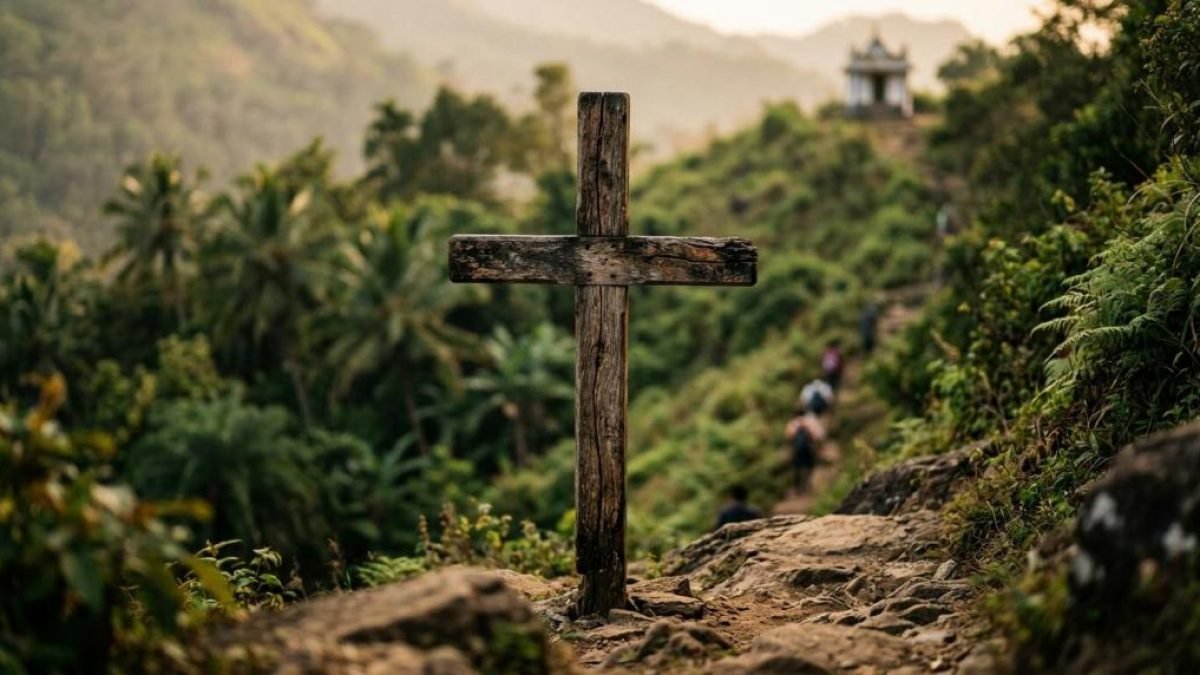
Malayattoor deserves special mention. It is not only one of the best-known Christian pilgrimage centers in Kerala, but is also revered internationally. The hill shrine, often referred to through the Kurisumudi tradition, turns a church visit into a physical act of devotion. The climb, the cross, and the view together give the site unusual spiritual intensity.
Travelers interested in Kerala’s ancient port history often pair Kodungallur and nearby Christian sites with the broader Muziris heritage region. That combination helps place church tradition within a larger network of trade, migration, and cultural exchange.
The Ezhara Pallikal tradition in Kerala Christian heritage
A central phrase in this story is Ezhara Pallikal, often translated as the “seven and a half churches.” The term refers to the group of ancient churches traditionally associated with St Thomas in Kerala. Official Kerala tourism references identify Kodungallur, Kottakkavu, Palayur, Kollam, Kokkamangalam, Niranam, and Nilackal within this sacred memory.
For many visitors, the importance of the Ezhara Pallikal tradition is not simply numerical. It gives shape to a spiritual map. Instead of seeing one isolated monument, you begin to see a network of places tied together by belief, movement, and liturgical life.
This is where Kerala’s Christian heritage becomes especially vivid.
A route centered on these churches can reveal several layers at once:
- apostolic tradition
- port history
- village Christianity
- pilgrimage culture
- living worship
- regional identity
Not every traveler will visit every site, and not every site is equally monumental in scale. Still, even a selective circuit can be deeply rewarding because the meaning lies in continuity between places, not only in one grand building.
What makes St Thomas Christian heritage distinct
Part of the answer lies in age, but age alone is not enough. Many old religious places feel important. St Thomas Christian heritage in Kerala feels different because it remains woven into ordinary life. Church compounds are full of prayer, family gatherings, local memory, and annual rhythms that residents carry forward with care.
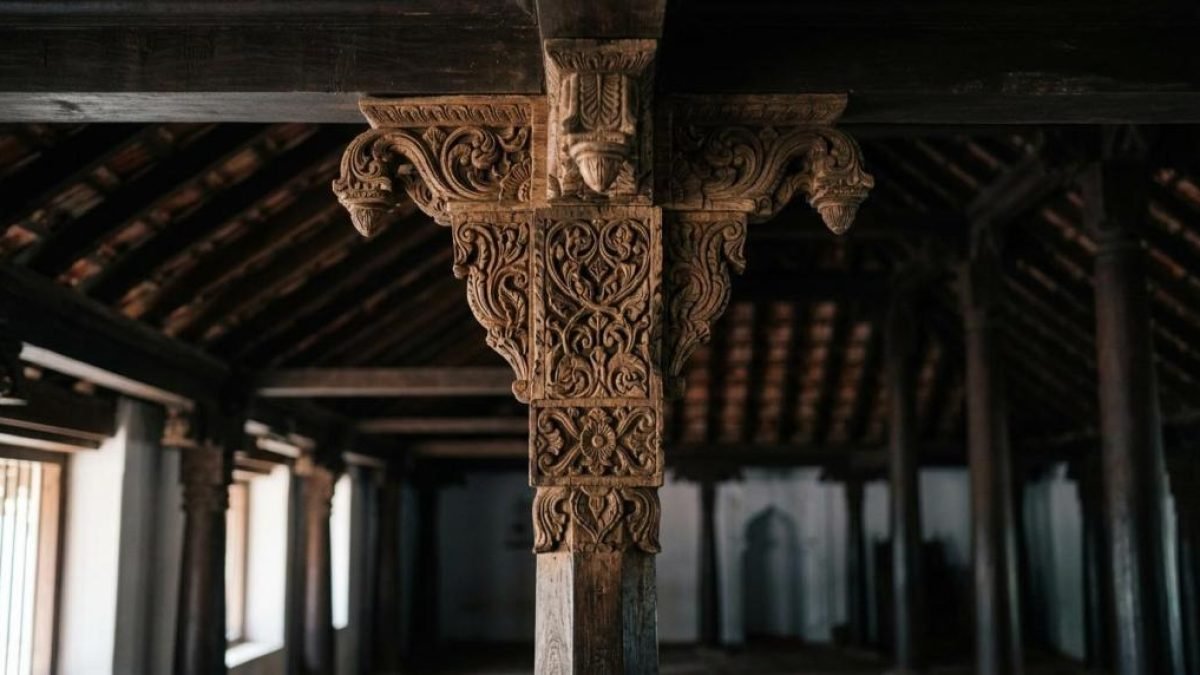
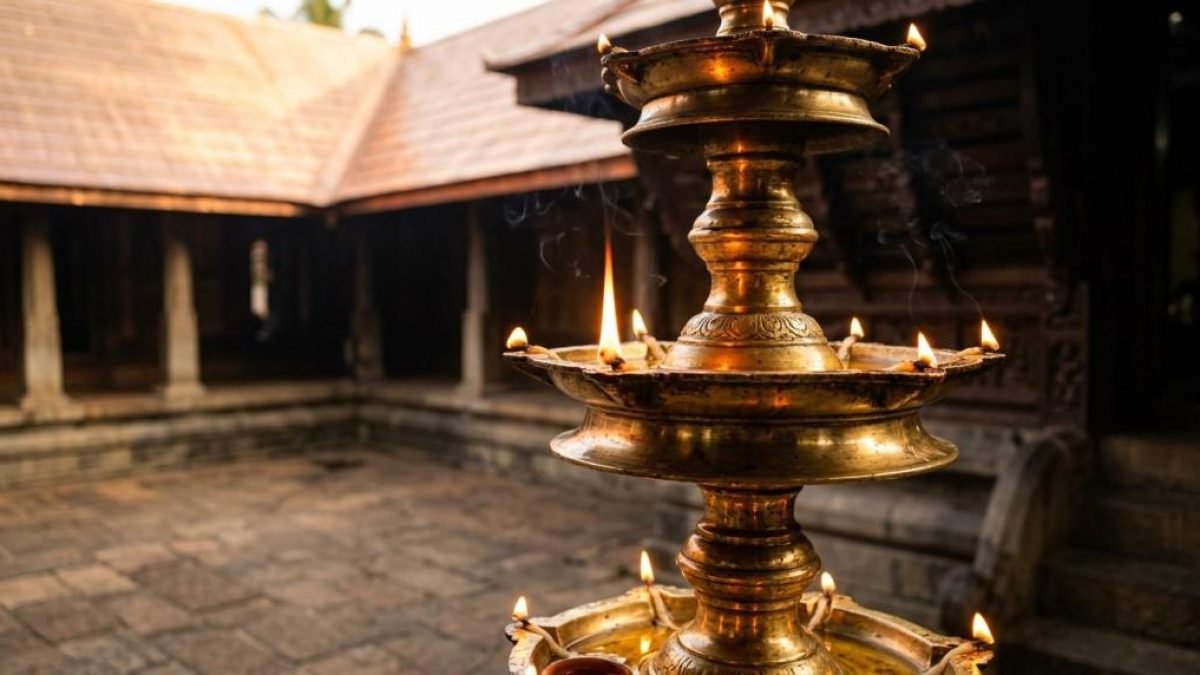
The architecture also tells a subtle story. Depending on the site, visitors may notice church forms shaped by local building traditions rather than imported European models alone. The setting, courtyard patterns, rooflines, and devotional objects often reflect a long process of adaptation within Kerala’s climate and cultural setting.
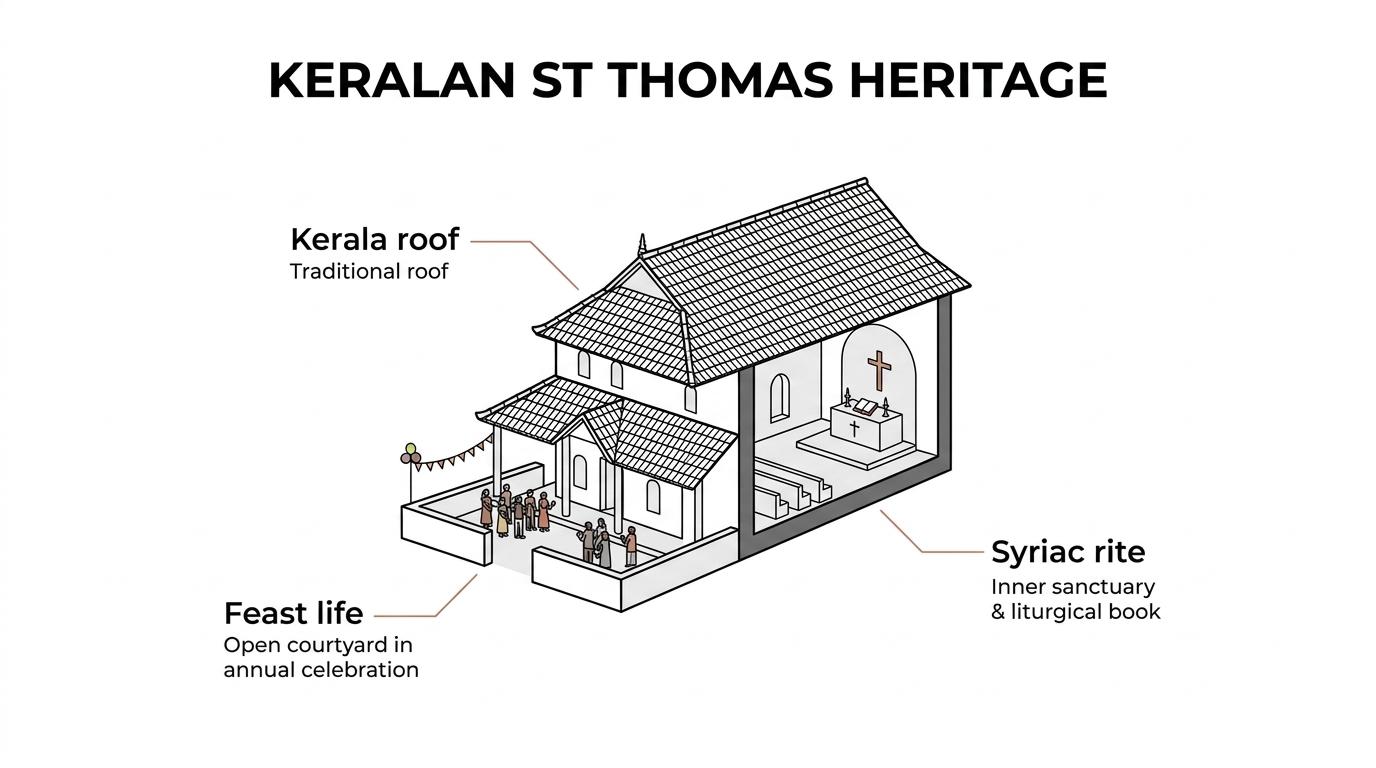
The liturgical and ecclesiastical legacy adds another dimension. Across centuries, Thomas Christian communities maintained ties with Syriac Christian traditions, which influenced worship, texts, and spiritual culture. Today, the wider St Thomas Christian family includes multiple denominations and church traditions, each carrying part of that inheritance in different ways.
Feast days make this heritage especially tangible. At places like Niranam, annual celebrations draw worshippers who come not only for ritual observance but also for collective memory. These events remind visitors that heritage here is not a static archive. It is something rehearsed and renewed.
Visiting St Thomas Christian sites in Kerala with respect
A heritage visit is richer when approached with attentiveness. These are sacred spaces first, visitor sites second, and that order matters.
A few simple habits usually help:
- Dress: modest clothing is the safest choice for churches, feast grounds, and hill shrines
- Timing: morning visits often feel calmer, while feast days bring color, crowds, and stronger devotional energy
- Photography: ask before taking pictures inside sanctuaries or during prayer services
- Participation: quiet observation is welcome in many places, but active ritual participation should follow local guidance
- Pacing: allow time for both the spiritual atmosphere and the historical setting
For travelers planning a culture-focused Kerala trip, it is often wise to leave room between sites. Rushing from church to church can flatten the experience. A slower rhythm lets the coastal context, village surroundings, and prayerful mood come into focus.
Building a Kerala itinerary around St Thomas Christian heritage
St Thomas Christian sites can fit naturally into several kinds of Kerala travel plans. A short heritage route might focus on Kodungallur, North Paravur, and Palayur, especially for travelers based in Kochi or already interested in the old Muziris trade corridor. This coastal belt offers one of the clearest introductions to apostolic tradition in place.
A second route can center on Malayattoor, where the experience is shaped by ascent and pilgrimage rather than urban history. It suits travelers who want a devotional stop within easy reach of Kochi, airport access, or a broader central Kerala itinerary.
A third route can move south toward Niranam and nearby church regions, where the atmosphere often feels more settled and parish-centered. That kind of trip works well for visitors interested in active congregational life rather than only landmark status.
When these sites are thoughtfully paired with Kerala’s backwaters, hill districts, or heritage towns, the result is not a crowded checklist but a more rounded reading of the state. You begin to see how faith communities grew alongside ports, rivers, farms, and trade roads, and how old traditions still hold their place in the present.
For travelers who want Kerala beyond postcard scenery, this heritage offers something rare: a living record of how a global faith took local root and stayed unmistakably, confidently, and enduringly Keralan.