Kerala’s seafood culture is one of the clearest ways to taste the state itself. The coast brings in marine fish and prawns, the backwaters shape famous freshwater and brackish-water dishes, and local kitchens turn a short list of ingredients into food with remarkable range. Coconut milk can soften a curry. Kudampuli can sharpen it. A banana leaf can add aroma without changing the ingredient list much at all.
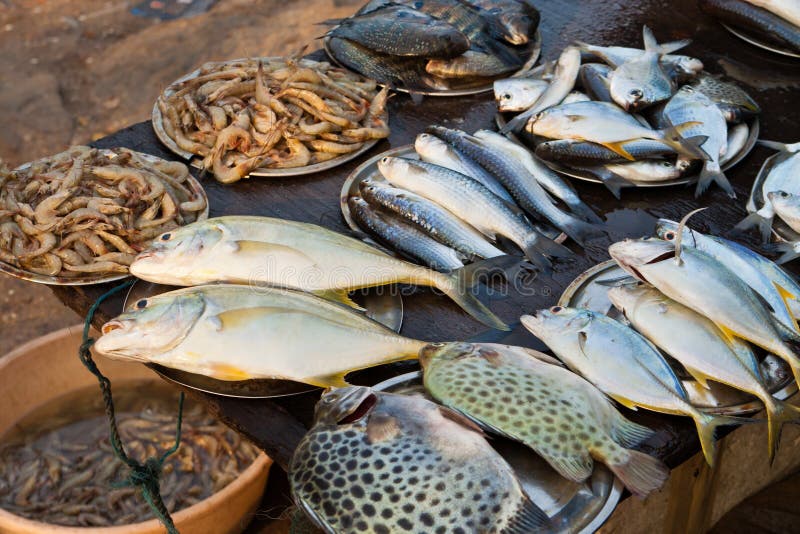 What stands out is not just freshness, though that matters a great deal. It is the way Kerala keeps returning to a few signature seafood staples and preparing them in distinct regional styles. Official tourism and fisheries references point again and again to pearl spot, mussels, prawns, crustaceans, and fish curry as central parts of the local table.
A good starting lineup looks like this:
- Karimeen Pollichathu
- Karimeen Mappas
- Chemmeen Kari
- Kallummakaya Ularthiyathu
What defines Kerala seafood flavors
Kerala seafood is shaped by geography, but it is also shaped by recipe choices, cooking vessels, fats, acids, and serving traditions. Earthen pots are still tied to many fish and prawn curries. Coconut oil gives a recognizable finish. Curry leaves, ginger, garlic, turmeric, black pepper, and green chilies appear often. Rice remains the most natural partner, though appam, kappa, and pathiri also fit beautifully with seafood.
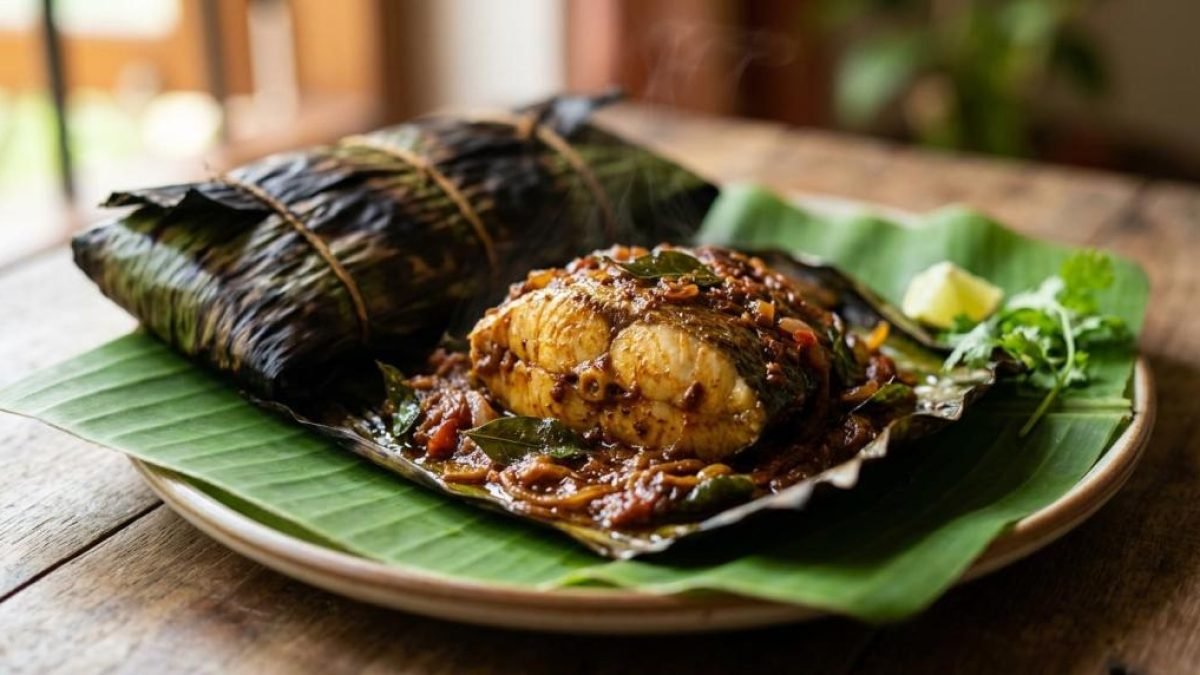
Another defining feature is the balance between richness and brightness. Coconut milk adds body and softness, while kudampuli brings a deep, smoky tartness that cuts through rich gravies. In banana-leaf preparations, the wrapping itself helps the fish stay moist and absorb spice while picking up a subtle leaf aroma.
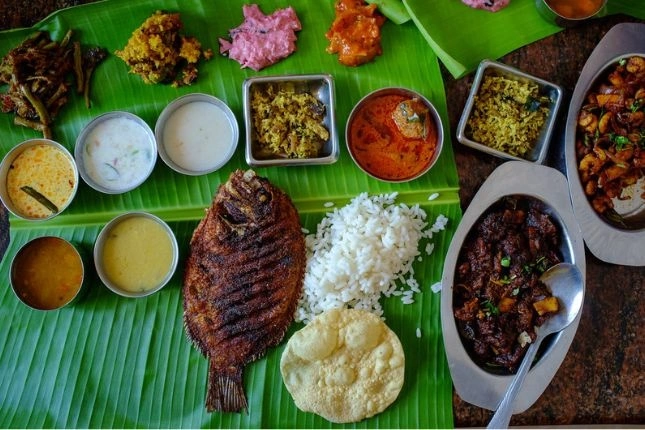
Kerala’s official food references also show how strongly seafood is tied to regional identity. Malabar-style mussels feel different from a backwater pearl spot dish, even when the pantry overlaps. That regional variety is what makes a seafood-focused trip across Kerala so rewarding.
| Seafood staple | Local name | Classic Kerala preparation | Flavor markers | Often associated with |
|---|---|---|---|---|
| Pearl spot | Karimeen | Pollichathu, Mappas | Coconut milk, spice paste, banana leaf | Backwaters, central Kerala |
| Prawns | Chemmeen | Chemmeen Kari | Kudampuli, coconut oil, earthen-pot cooking | Coastal and backwater kitchens |
| Mussels | Kallummakkaya | Ularthiyathu | Peppery, roasted, spiced, dry-style finish | Malabar, especially Kozhikode |
| Mixed fish | Meen | Fish curry, fry, roast | Clay-pot gravies, curry leaves, rice pairings | Across Kerala |
Karimeen dishes in Kerala: why pearl spot matters
Karimeen is pearl spot, identified in official fisheries references as Etroplus suratensis. It is one of Kerala’s most recognized fish for a reason. The flesh is delicate but not weak, flavorful without being overpowering, and ideal for spice-forward cooking that still lets the fish remain the focus.
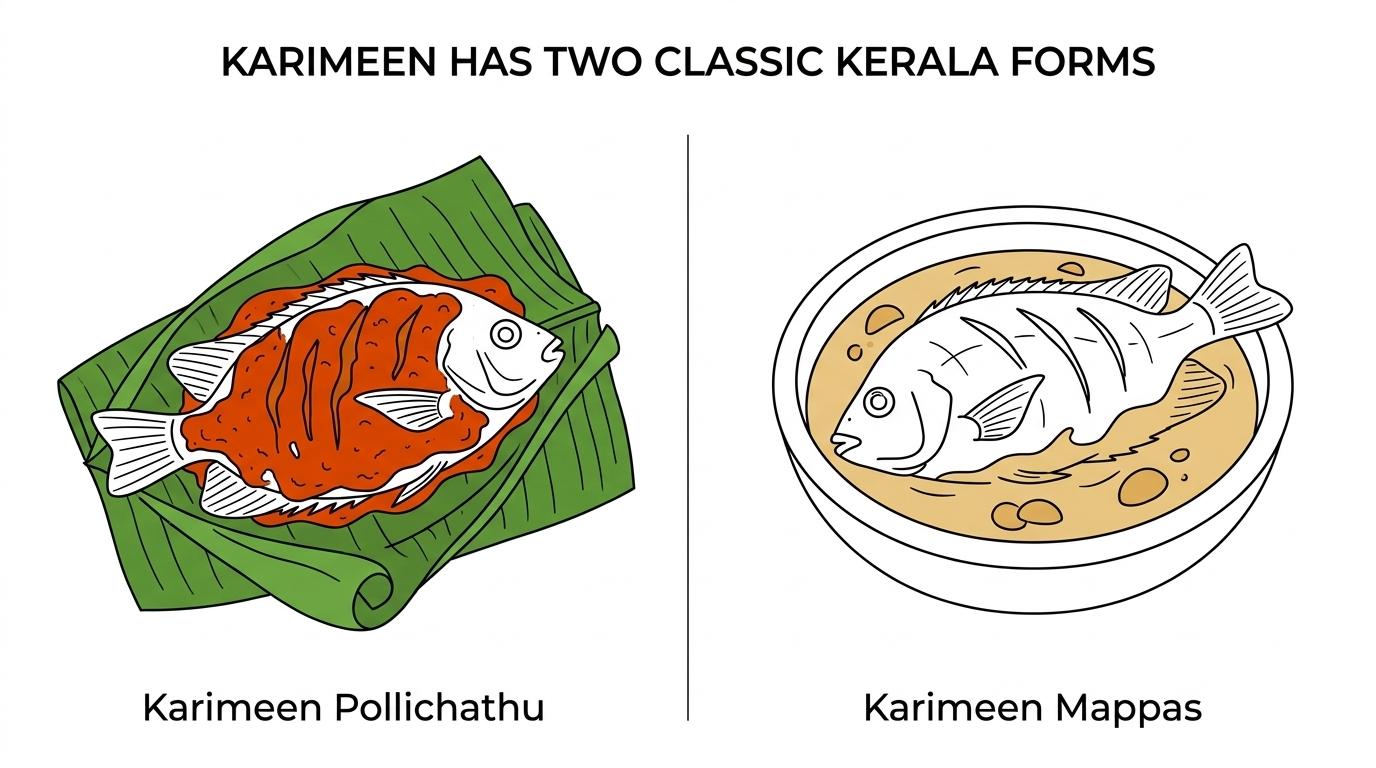
Two preparations define the fish for many travelers. The first is Karimeen Pollichathu, a marinated pearl spot cooked in a banana leaf. The wrapping keeps the fish juicy and lets the masala cling closely to the surface. When done well, each bite gives smoke, spice, gentle sweetness from onion and tomato, and the unmistakable fragrance of leaf-wrapped cooking.
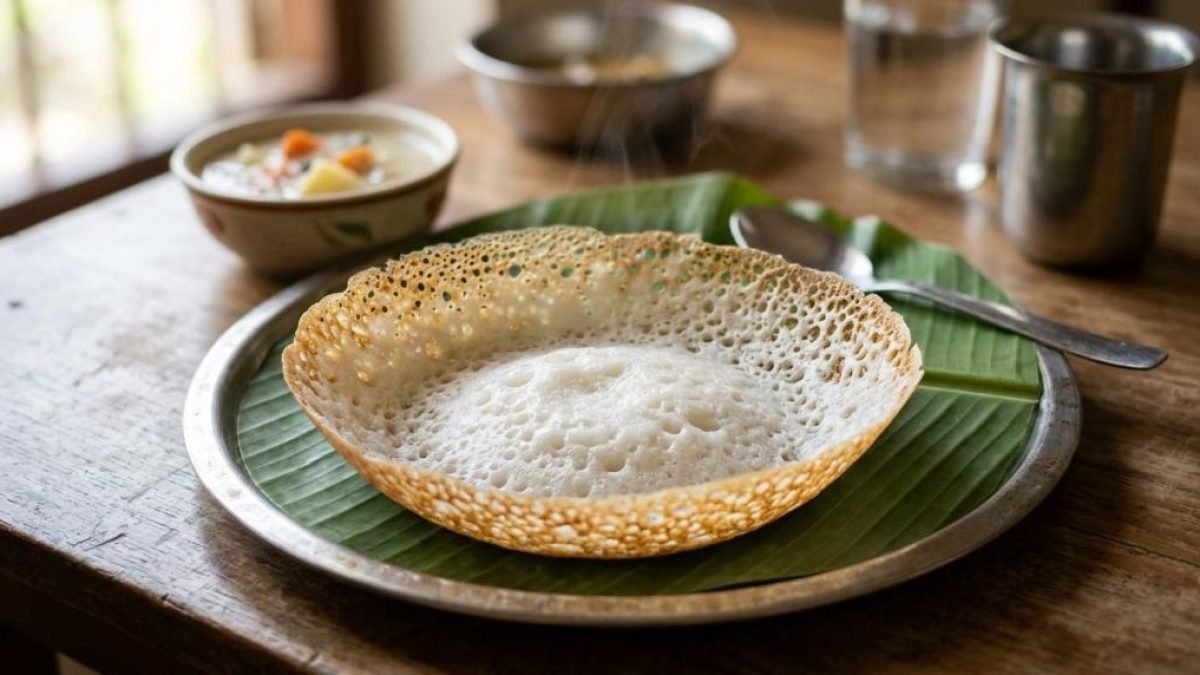
The second is Karimeen Mappas, which Kerala Tourism describes as a seafood delicacy made with coconut milk and a hot spice mix. This version is softer in mood than Pollichathu. It is creamy, aromatic, and especially satisfying with appam or rice. If Pollichathu feels dramatic and direct, Mappas feels rounded and comforting.
Pearl spot is also tied closely to the backwaters. In places like Alleppey and Kumarakom, it often appears on menus as more than a famous dish. It becomes part of the local setting itself, eaten near the waters where the fish is culturally rooted.
Kallummakkaya dishes in Malabar Kerala
If Karimeen represents backwater prestige, Kallummakkaya represents Malabar character. The term refers to mussels, and official fisheries references list both green mussel, Perna viridis, and brown mussel, Perna indica, among Kerala’s brackish-water species. That detail matters because it places mussels firmly within Kerala’s own food geography, not as a fringe ingredient but as a recognized local staple.
One of the best-known preparations is Kallummakkaya Ularthiyathu, a Kerala-style mussel dish highlighted in official tourism material and especially associated with northern Kerala, particularly Kozhikode. It is often served with steamed rice, which makes sense. The dish is bold, savory, and built for simple pairings.
Unlike a curry, ularthiyathu usually aims for concentration. The mussels are cleaned, cooked, and then brought together with spices in a way that lets their briny, mineral flavor stand up clearly. Depending on the kitchen, the result can be peppery, coconut-forward, or drier and darker from roasting the masala longer.
Malabar cooks are especially good at letting texture matter. Mussels should never feel hidden inside the spice coating. The best plates keep a lively bite while still carrying the full force of the masala.
Prawns and Chemmeen Kari in Kerala coastal cooking
Prawns occupy a different space in Kerala seafood culture. They are versatile, easy to pair with rice, and capable of absorbing strong seasoning quickly. That is one reason Chemmeen Kari appears so consistently in discussions of Kerala food.
Kerala Tourism describes Chemmeen Kari as a seafood dish prepared with prawns, coconut oil, coccum or kudampuli, curry leaves, turmeric, coriander, pepper, ginger, garlic, and green chili. The method includes cooking in an earthen vessel and finishing with a mustard-and-curry-leaf tempering. That final touch matters. It gives the curry a fresh aromatic lift right at the end.
A well-made prawn curry should feel lively, not heavy. The tart edge of kudampuli keeps the richness in check, and the prawns themselves cook fast enough to stay tender. This is often one of the safest and most satisfying seafood orders for visitors who want a dish with strong Kerala identity and broad appeal.
Kerala fish curry styles across regions
There is no single Kerala fish curry. That is part of the appeal. The phrase can point to sharply sour red curries, gentler coconut-based gravies, or roast-style dishes with less liquid and more clinging masala.
In central and southern parts of Kerala, fish curry often leans on clay-pot cooking, curry leaves, chili, and kudampuli. The earthen vessel does more than look traditional. It supports slow, even heat and helps the curry settle into itself. By the second serving, the flavors often deepen.
In some home-style and tourism-facing preparations, coconut milk enters the picture and changes the character of the dish entirely. The result is less austere and more rounded, suited to travelers who want spice but also softness. Served with red rice, white rice, or appam, these curries show how Kerala can shift from sharp and coastal to mellow and lush without leaving its own culinary grammar.
Malabar seafood styles and spice balance
Malabar seafood cooking often carries a fuller spice profile, with roasted notes and stronger black pepper presence. Coconut still matters, but it may appear as grated coconut, coconut oil, or a background richness rather than a fully creamy gravy.
Backwater seafood styles and coconut milk
Backwater-oriented dishes often feel gentler and more fragrant. Coconut milk, shallots, and softly cooked masala can create seafood dishes that taste layered rather than fiery. That is part of why Karimeen Mappas feels so tied to the region.
Where to eat Kerala seafood: houseboats, toddy shops, and local restaurants
Seafood in Kerala is not limited to formal dining rooms. Some of the most memorable meals happen in settings where the food is woven into everyday life. A houseboat lunch in Alleppey can bring freshly cooked fish or prawns to the table just as the backwaters drift past outside. That setting is not a gimmick when the kitchen is good. It is a natural extension of place.
Toddy shops are another classic setting, especially for those who want assertive local flavors. Menus often include fish fry, prawn dishes, and spicy sides that feel honest and direct. Service can be brisk, and the experience is more about flavor than polish, which is exactly the appeal for many travelers.
Coastal restaurants and heritage-style dining spaces offer a wider menu of local delicacies and often a gentler entry point for international guests or families. These are good places to compare styles side by side, ordering pearl spot one way and prawns another, while keeping the rest of the meal familiar with rice, appam, or mild vegetable sides.
When choosing where to eat, a few habits help:
- Ask about the catch: the day’s fresh fish often leads to the strongest plate
- Check the cooking style: curry, fry, roast, or banana-leaf preparation can change the entire experience
- Set the spice level: many kitchens can moderate heat without losing character
- Pair the dish well: rice for curries, appam for coconut-based gravies, kappa for robust spicy seafood
Practical tips for ordering Kerala seafood in Kerala
Travelers often assume the “famous” dish is always the best order. In Kerala, the smarter move is often to ask what the kitchen is cooking especially well that day. A fresh local fish in a simple curry can easily outshine a signature item made without care.

It also helps to think in contrasts. If you order Karimeen Pollichathu, pair it with a mild side and plain rice. If you choose Chemmeen Kari, add appam or steamed rice and skip extra gravies. With Kallummakaya Ularthiyathu, let the mussels be the boldest thing on the table.
For travelers with a shorter itinerary, this simple pattern works very well:
- One banana-leaf fish preparation
- One coconut-milk seafood curry
- One kudampuli-based prawn or fish curry
- One Malabar-style mussel dish
Planning a Kerala seafood route across Kochi, Alleppey, Kumarakom, and Kozhikode
A seafood-focused Kerala itinerary becomes much stronger when it follows the food geography of the state. Kochi offers a broad introduction, with access to classic coastal seafood restaurants and a strong mix of traditional and polished dining spaces. Alleppey and Kumarakom are ideal for Karimeen, especially when paired with a backwater stay or houseboat experience.
Kozhikode adds the Malabar dimension, which is where Kallummakaya becomes especially important. This is the place to taste how northern Kerala handles spice, roasting, and seafood texture with confidence. A route that combines Kochi, the backwaters, and Malabar gives a fuller picture than staying in just one region.
For travelers building a custom holiday, seafood can be more than a meal category. It can shape the route itself, linking waterside stays, local markets, houseboat lunches, coastal drives, and region-specific dining into one coherent food experience. That is when Kerala seafood stops being a checklist and starts feeling like a real part of the place.