Some beaches ask you to keep moving. Marari asks you to slow down.
On Kerala’s central coast near Alappuzha, Marari Beach has a quiet confidence that feels rare in a travel landscape crowded with activities, checklists, and noise. This is not the kind of shoreline built around loud beach shacks, packed promenades, or nonstop water sports. It is better known as a peaceful stretch beside Mararikulam, a fishing village where daily life still shapes the rhythm of the coast.
That difference is exactly why Marari stays with people. It offers space to breathe, long walks on a palm-backed shore, time for an Ayurvedic treatment, and small glimpses of village life that feel genuine rather than staged. If your idea of a beach holiday includes stillness, comfort, and a strong sense of place, Marari deserves a place on your Kerala plan.
Why Marari Beach feels different from other Kerala beaches
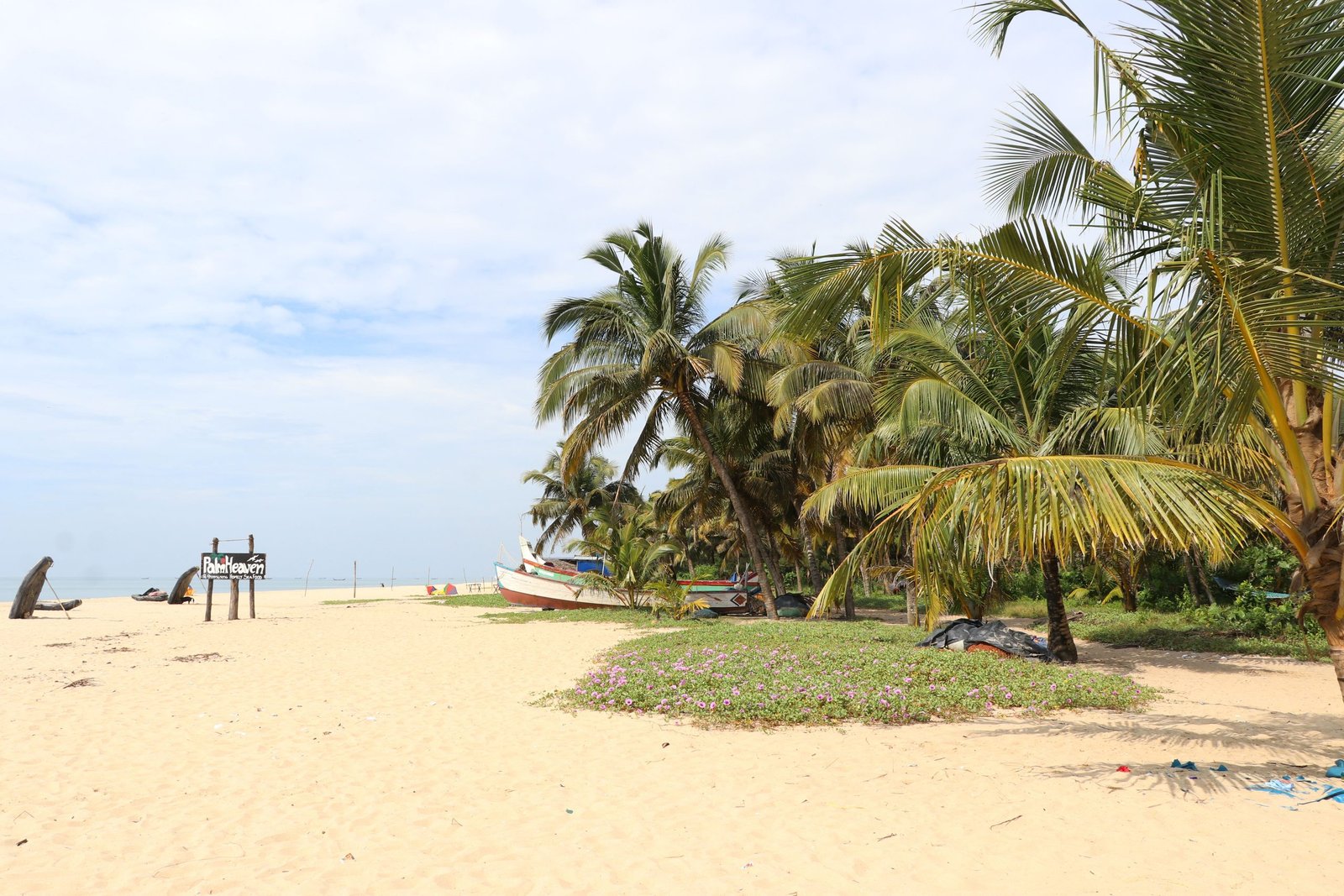
Marari’s appeal begins with what it does not try to be. It does not compete with busier beach towns on entertainment. It does not promise a packed schedule. Instead, it offers a softer coastal experience, shaped by the nearby fishing community and by the open, uncluttered character of the shoreline.
Kerala Tourism consistently positions Marari as a serene beach destination for relaxation, wellness, and cultural connection. That description is accurate. The beach is ideal for people who enjoy walking, reading, resting, or simply watching light change over the Arabian Sea.
The atmosphere is one of restraint, and that works in its favor. A few stays are tucked back among palms. The coast feels spacious. The village setting gives the area a grounded identity that many polished resort destinations lose over time.
For many travelers, Marari becomes the part of Kerala where the trip finally settles into its own pace.
What to expect at Marari Beach
The beach itself is long, open, and visually clean. Sand, sea, coconut palms, and fishing life define the scene more than commercial activity. You may see fishermen at work, nets drying, or local movement through the village lanes behind the shore. That connection between beach and village is one of Marari’s strongest qualities.
Swimming conditions can vary with sea and weather, so Marari is better approached as a place for shoreline time rather than a highly programmed beach day. Long walks are one of the most rewarding ways to experience it, especially in the early morning or toward sunset when the light softens and the heat drops.
A relaxed day here often looks like this:
- Sunrise beach walk
- Slow breakfast under palms
- Midday plan: rest, read, or book a wellness break
- Late afternoon: cycle through village roads or return to the shore
- Simple seafood dinner
- Early night with sea breeze in the background
That rhythm may sound modest, but that is the point. Marari gives value through calm rather than spectacle.
Best time to visit Marari Beach in Kerala
The most comfortable season for Marari Beach is from December to March. This period lines up with Kerala’s cooler, drier months, and official tourism guidance consistently recommends it as the best time to visit.
During these months, beach walks are more pleasant, humidity feels easier to manage, and day trips around the region are usually more comfortable. December, January, and February are generally the sweetest months for travelers who want mild mornings, pleasant evenings, and predictable sightseeing conditions.
From March to May, Kerala’s coastal belt becomes hotter and more humid. Marari can still be appealing if your priority is quiet resort time and you are comfortable with tropical heat, but outdoor activities in the middle of the day become less inviting.
The monsoon has its own beauty, though it changes the experience. Kerala typically receives the southwest monsoon in June or July and the northeast monsoon in October or November. Rain, rougher seas, and dramatic skies can create a deeply atmospheric stay, especially for wellness-focused travelers, but this is not the best season for a classic beach holiday.
| Season | Weather pattern | Marari experience | Best for |
|---|---|---|---|
| December to March | Cooler, drier, pleasant | Best overall beach conditions | First-time visitors, couples, families |
| March to May | Hot and humid | Quiet, sunny, slower afternoons indoors | Resort stays, shorter beach breaks |
| June to September | Southwest monsoon | Rainy, lush, moody coastal setting | Wellness stays, off-season calm |
| October to November | Intermittent rain from northeast monsoon | Mixed conditions, fewer crowds | Flexible travelers |
How to reach Marari Beach from Kochi and Alappuzha
Marari is easy to include in a Kerala itinerary because it sits within practical reach of the state’s main travel corridors. Most international and many domestic travelers arrive through Cochin International Airport. From there, the coast near Alappuzha is a straightforward road transfer.
Alappuzha is the nearest major town and rail base for most visitors heading to Marari. If you are traveling by train, Alappuzha Railway Station is often the most convenient arrival point. Kochi also works well for travelers combining city, backwaters, and coast in one route.
This accessibility is one reason Marari appears so often in well-planned Kerala holidays. It can work as a first stop after arrival, a beach finale after the hills and backwaters, or a restorative pause between busier destinations.
A simple routing often looks like this:
- From Kochi: airport or city transfer by private car
- From Alappuzha: short onward road journey to the beach area
- With backwaters: pair Marari with a houseboat or canals stay
- With longer South India travel: use Marari as the quiet coast segment before departure
For travelers who want fewer hotel changes, Marari is especially useful. It offers rest without requiring a long detour.
Marari Beach for relaxation, wellness, and village life
Marari works best when you let the place set the mood.
Wellness is a natural fit here. Kerala Tourism identifies the beach as a destination suited to Ayurvedic wellness, and that feels right because the environment supports the treatment philosophy. Quiet surroundings, open air, and a slower routine make it easier to give time to massage, therapies, and proper rest. A wellness break in Marari rarely feels rushed.
The cultural side of Marari is quieter than in historic cities, but it is present. The fishing village context matters. This is not a resort bubble cut off from local life. Small interactions, local roads, churches, homes, and working coastal routines give the area texture. You notice life happening around you, not as a performance, but as the everyday fabric of the place.
Cycling is one of the best ways to experience that side of Marari. The village lanes, coconut groves, and slower traffic create a setting where an unhurried ride can become a real highlight of the stay.
Who will enjoy Marari Beach the most
Marari is not universal, and that honesty helps people choose well. Travelers who want nightlife, shopping strips, or high-energy marine activities may find it too quiet. People who want stillness usually feel the opposite.
Marari tends to suit these travel styles especially well:
- Couples looking for privacy and time together
- Families who prefer calm over crowds
- Solo travelers who enjoy reading, walking, and reflection
- Wellness-focused travelers
- Slow travel fans: people who value atmosphere over activity count
- Kerala return visitors: travelers who have already seen the major highlights and want a quieter coast
It is also an excellent fit for premium customized holidays where comfort matters as much as sightseeing. A few days here can balance a more active Kerala route beautifully.
How Marari Beach fits into a Kerala itinerary
Marari rarely needs to carry an entire trip on its own. Its strength comes from how well it complements Kerala’s other landscapes.
A classic route might begin in Kochi, continue to Munnar or Thekkady, move into the backwaters around Alappuzha or Kumarakom, and then end at Marari for recovery time before departure. That sequence works because each stop changes the pace. Hills, wildlife, waterways, and then coast. By the time you arrive in Marari, the quiet feels earned.
Another smart option is a shorter plan built around Kochi, a houseboat or backwater stay, and Marari. This is especially strong for honeymooners, families with limited time, or international travelers who prefer fewer transfers.
Marari also makes sense for travelers who want a beach stay without going all the way to Kerala’s more activity-oriented coastal towns. It gives access, comfort, and a real sense of Kerala’s coastal identity in a compact format.
Marari Beach compared with busier beach destinations
The easiest way to understand Marari is to compare it with what many people imagine when they hear “beach holiday.”
Busier beach towns often offer restaurants in dense clusters, nightlife, water sports, shopping, and a strong social scene. Marari is lighter on all of that. What you get instead is privacy, village character, and room to slow down.
That trade-off is not a compromise for the right traveler. It is the main attraction.
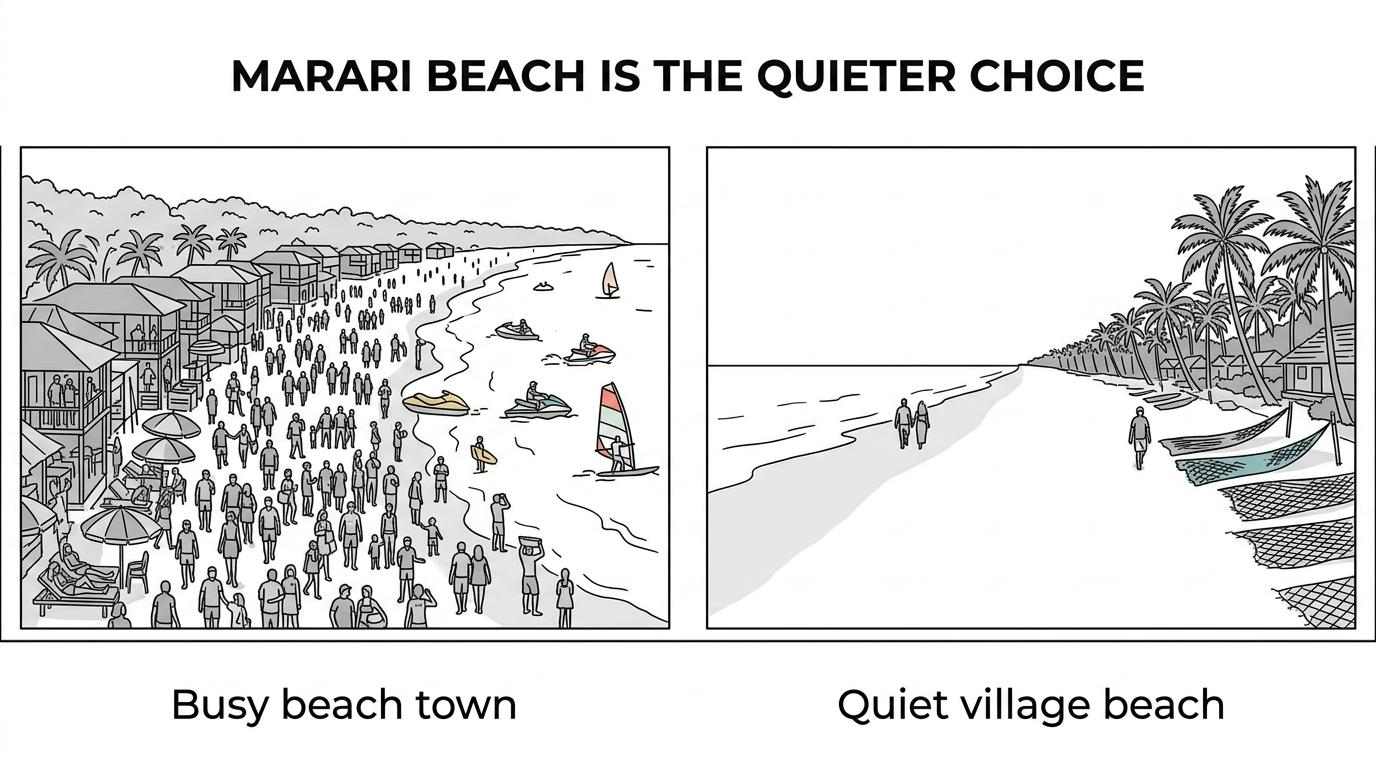
If you are deciding between Marari and a more active beach destination, ask yourself one simple question: do you want the coast to entertain you, or do you want it to quiet everything down?
Practical tips for planning a Marari Beach stay
A little planning helps you get more from Marari because the destination is intentionally low-key. It is wise to choose your accommodation carefully, think about transfers in advance, and set expectations around what the beach offers.
A few smart habits can make the stay smoother:
- Stay length: 2 to 3 nights works very well for most itineraries
- Daily timing: walk outdoors early and late, rest during peak afternoon heat
- Packing: light cotton clothing, sandals, sun protection, and insect repellent
- Mindset: come for calm, not a packed activity board
If you are combining Marari with the backwaters, spacing the itinerary well matters. A night on a houseboat or in a backwater resort followed by a beach stay creates a natural shift from movement on the water to stillness by the sea. That pairing is one of the most satisfying ways to experience this part of Kerala.
Marari rewards travelers who stop asking, “What should I do next?” and start asking, “How do I want to feel while I’m here?” That is a very different kind of luxury, and on this quiet Kerala coast, it feels exactly right.