
Few places in Kerala deliver the same combination of raw water power, rainforest atmosphere, and easy road access as Athirappilly and Vazhachal. They are close to each other, shaped by the same river, and yet they feel distinct enough to deserve separate attention in any well-planned Kerala itinerary.
Set on the Chalakudy River in the Sholayar forest range of the Western Ghats, these waterfalls bring together scenic drama and ecological richness. Athirappilly is the main spectacle. Vazhachal is the quieter companion. Seen together, they create one of the most rewarding nature outings in Thrissur district.
Why Athirappilly and Vazhachal Waterfalls Matter in Kerala Travel
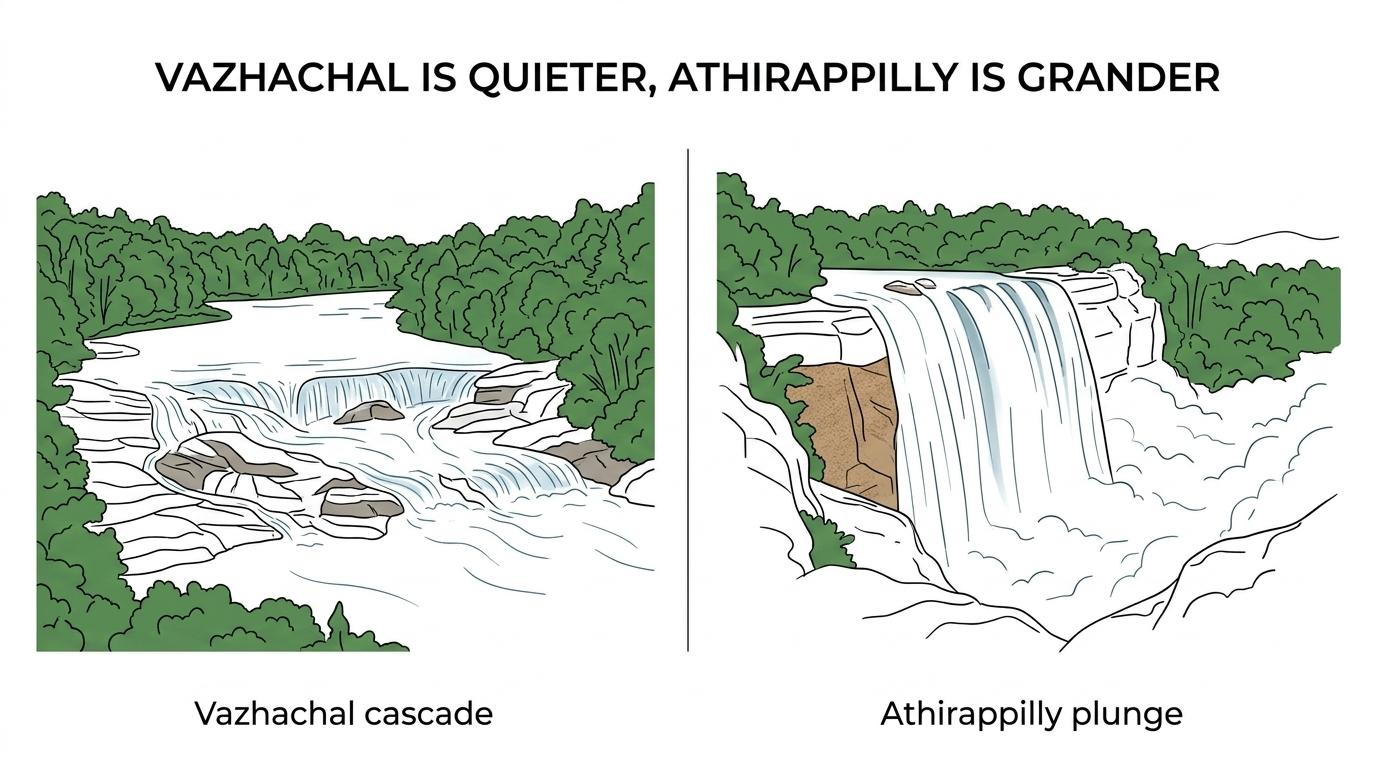
Athirappilly is widely recognized by official tourism sources as the largest waterfall in Kerala, with a drop of about 80 feet. That fact alone gives it star status, but the setting is what makes it memorable. The river broadens, gathers force, and then crashes over a rocky ledge into a mist-filled basin framed by dense tropical greenery.
Vazhachal, less than 5 km away, offers a different mood. The water spreads across layered rock, the flow is lower and wider in feel, and the surrounding forest seems to come closer to the visitor. If Athirappilly is the grand statement, Vazhachal is the thoughtful pause after it.
A strong Kerala nature circuit often works best when both are included on the same day.
| Feature | Athirappilly Waterfalls | Vazhachal Waterfalls |
|---|---|---|
| River | Chalakudy River | Chalakudy River |
| Setting | Large plunge-style waterfall in forested surroundings | Lower, broader cascade amid thick greenery |
| Distance between sites | Main destination | About 3 to 5 km from Athirappilly |
| Best known for | Kerala’s largest waterfall, dramatic views | Calm forest atmosphere, easy add-on stop |
| Best season | Monsoon and winter | Monsoon and winter |
| Visitor note | More dramatic top and lower view experience | Rocks can be slippery near the water |
Athirappilly Waterfalls Views and Visitor Experience
Athirappilly is a place of scale. You can feel it before you fully see it. The sound rises through the trees, the air turns cooler, and then the river opens into a broad white curtain of water.
Most visitors enjoy Athirappilly from two general perspectives: the upper viewpoint and the lower area reached by steps and a walking path. The upper section gives a wide look at the river before its drop. The lower side delivers the classic panorama, with spray, rock, and the full spread of the falls in view. During monsoon, this lower angle can feel almost cinematic.
The descent is worth planning for. It is not extreme, but it does involve steps and uneven ground. Comfortable footwear makes a real difference, especially after rain. Families, couples, photographers, and first-time visitors all tend to spend longer here than expected because the falls change character with light, cloud, and water volume.
Morning often brings softer light and a fresher atmosphere. Later in the day, the site can be busier, though the waterfall still holds attention with ease.
Vazhachal Waterfalls Forest Setting and River Landscape
Vazhachal sits very close to Athirappilly, yet it should not be treated as an afterthought. The setting is calmer, with more emphasis on the river moving through rock and forest than on a single dramatic plunge. This makes it especially appealing for travelers who enjoy landscape, bird calls, and the feeling of being inside a living forest belt.
Official tourism material often highlights the ecological character of this region, including endemic flora and fauna. Even if a visitor comes mainly for the waterfalls, the broader environment becomes part of the experience. The road itself, lined with deep green vegetation, prepares you for that shift.
The main caution here is simple: rocks near Vazhachal can be slippery. Scenic beauty is everywhere, but this is not a place for casual scrambling near wet edges.
Best Season for Athirappilly and Vazhachal Waterfalls
The strongest season for both waterfalls is the monsoon. This is when Athirappilly looks most powerful and when the surrounding forest appears at its richest. Mist, heavy flow, wet leaves, and cloud-filtered light give the entire area a dramatic character that many travelers consider the most memorable.
Winter is also a very good time to visit. The water volume is usually still attractive, the weather is cooler, and the air often carries a gentle mist in the early hours. For visitors who want comfort along with strong scenery, winter can be the ideal balance.
Summer is usually better for easier road travel and lighter crowds on some days, but the flow may be less impressive than in monsoon or right after it. If the waterfalls are the main purpose of the trip, timing matters.
A practical way to think about the seasons is this:
- Monsoon power
- Winter comfort
- Post-monsoon greenery
- Summer convenience
How to Reach Athirappilly and Vazhachal from Kochi and Chalakudy
Athirappilly is accessible enough for a day trip, which adds greatly to its appeal. Official sources place it about 30 km from Chalakudy town, and the route from Kochi generally takes around two and a half hours depending on traffic and weather. Cochin International Airport is commonly cited as the nearest major airport, at roughly 55 km away. Chalakudy railway station is the nearest practical rail point, about 30 km from the falls.
The road approach is part of the experience. As the urban edges fade, the landscape shifts toward plantations, village stretches, and then forested terrain. Private cabs are the most comfortable choice for visitors who want flexibility between viewpoints and the nearby Vazhachal section. Self-drive travel is also common, though extra care is wise during wet weather.
Common starting points include:
- Kochi
- Chalakudy
- Thrissur
- Cochin International Airport
Athirappilly and Vazhachal Day Trip Plan
A same-day visit works very well when timed with care. Starting early gives cooler weather, lighter traffic, and a better chance of unhurried viewing at Athirappilly before mid-day crowds build. Vazhachal then fits naturally into the route as the second nature stop.
A simple plan often works better than trying to pack too much into the day.
- Arrive at Athirappilly in the morning for the main waterfall views.
- Spend enough time at both the upper and lower viewing areas.
- Continue to Vazhachal for a slower stop focused on forest scenery and river views.
- Return before dark, especially during rainy months.
Travelers with more time may prefer an overnight stay in the broader area or combine the waterfalls with nearby eco and village stretches on another day. That creates space for a less rushed pace, which suits this region well.
Safety Tips for Athirappilly and Vazhachal Waterfalls
Waterfall landscapes are beautiful because they are active and changeable. Rain, moss, spray, rock edges, and sudden shifts in river force all demand a little discipline from visitors. A relaxed outing becomes much better when safety is part of the plan from the start.
Keep these points in mind while visiting:
- Footwear: Wear shoes or sandals with reliable grip.
- Distance: Stay behind barriers and marked visitor areas.
- Rain conditions: Expect slippery steps, wet railings, and reduced traction.
- Children: Keep them close near viewpoints and walking paths.
- Photography: Pause in stable spots rather than backing up for a wider frame.
- Timing: Begin early if you want better visibility and less crowd pressure.
This is especially true at Vazhachal, where the rock surface can become slick even when the water appears calm.
Athirappilly and Vazhachal for Photography, Couples, and Families
Athirappilly is one of those rare places that suits different travel styles without losing its identity. Photographers get changing light, mist, depth, and strong contrasts between white water and dark rock. Couples often appreciate the dramatic setting and the intimate feel of the forest approach. Families tend to value the straightforward road access and the ability to pair a major natural attraction with a manageable day outing.
The experience does change by season. Monsoon photography is bold, moody, and full of motion. Winter photography is clearer and softer. Families with older parents or very young children may prefer winter for easier movement and more predictable conditions.
If you are planning a customized Kerala trip, these waterfalls pair especially well with Kochi. They can also fit into broader South India travel plans that continue into Munnar, Thekkady, Kumarakom, or even Tamil Nadu, depending on the route and available days.
Nearby Nature Stops Around Athirappilly and Vazhachal
The drive around Athirappilly is part of the reward, not just a link between one attraction and another. Forest stretches, river views, and changing elevations add depth to the outing. Nearby spots in the wider belt, including roadside viewpoints and green rest areas, can turn a short excursion into a fuller nature day.
Charpa Falls is often noticed during the route, especially in the rainy season when water spills close to the roadside. Thumboormuzhy, closer to the lower approach side of the circuit, is another pleasant stop for travelers who enjoy gardens, river landscapes, and a gentler pace. These additions work best when the day is not overpacked.
A well-paced plan gives Athirappilly the spotlight, Vazhachal the quiet attention it deserves, and the surrounding forest road enough room to leave an impression.
Mist, river sound, and dense green slopes do the rest.