Day 1 — Arrive Cochin, transfer to the retreat
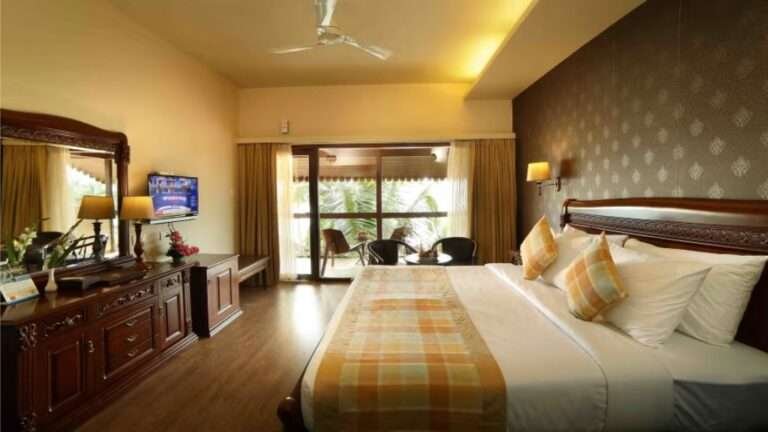
Your driver meets you inside the terminal at Cochin International Airport. It is a little under two hours south to Mararikulam, on flat coastal road. You will be shown your room, given the day’s schedule, and left alone.
No treatment begins today. Long-haul arrivals need a night’s sleep before a physician can make a useful assessment, and starting therapy on the day of a twelve-hour flight would distort the diagnosis. Dinner follows the house diet from the first evening. Overnight at the retreat.
Day 2 — Consultation, diagnosis and your programme
A long first consultation with the Ayurvedic physician: medical history, current medication, sleep, digestion, and Nadi Pariksha, the traditional pulse diagnosis. From this the physician determines your prakriti — your constitutional type — and any current imbalance, and designs the fourteen-day schedule around it.
Bring any recent blood work, a list of prescribed medication with dosages, and details of any surgery or ongoing condition. The physician needs to know all of it, and treatments are modified or withheld accordingly.
Your first treatments usually begin the same afternoon, gently. Yoga and meditation start tomorrow morning. Overnight at the retreat.
Days 3 to 5 — Preparation (Purvakarma)
The preparatory phase, and the part most people expect to be the whole holiday. Snehapanam, internal and external oleation, saturates the tissues with medicated oils. Abhyanga, a full-body synchronised massage by two therapists working in rhythm. Swedana, herbal steam, to open the channels.
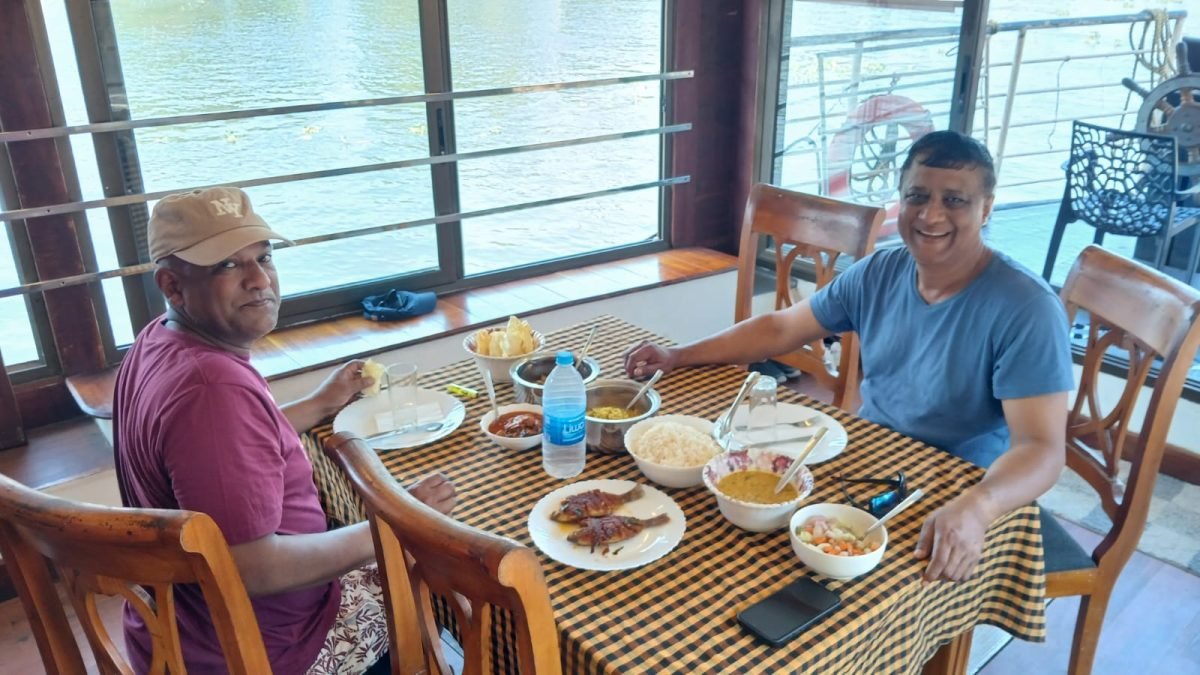
Two treatments a day, morning and late afternoon, roughly ninety minutes each. Between them there is nothing scheduled. Mornings begin with yoga at around seven and the prescribed diet starts in earnest — vegetarian, cooked to your physician’s specification, with no alcohol, no caffeine and no cold drinks for the duration.
Most guests find days three to five the easiest and most pleasant of the fortnight. Overnight at the retreat.
Days 6 to 10 — Main therapies (Pradhanakarma)
The central phase, and the reason fourteen nights are necessary. Which of the therapies you receive depends entirely on your physician’s assessment — this is where a designed programme differs from a menu.
The treatments most commonly prescribed include Shirodhara, a continuous stream of warm medicated oil across the forehead; Pizhichil, in which warm oil is poured over the body while two therapists massage; Njavarakizhi, a massage using boluses of medicinal rice; Udvartana, a herbal powder massage; and Nasya, nasal administration of medicated oils. Eliminative procedures such as Virechana or Basti are prescribed only where the physician judges them appropriate.
Be prepared for this phase to be demanding. It is common to feel tired, to sleep a great deal, and to have a day or two of low energy while the body responds. That is expected rather than a sign something has gone wrong, and your physician reviews you throughout. It is also why nothing else is scheduled during these days and why we would not combine this fortnight with touring. Overnight at the retreat.
Days 11 to 13 — Recovery (Paschatkarma)
The supervised return to normal, and the phase most commonly skipped by shorter programmes — which is the main reason people finish them feeling worse than when they arrived.
Treatments become gentler and less frequent. The diet is gradually widened under the physician’s direction, a process known as Samsarjana Krama. Energy typically returns noticeably around day eleven or twelve, and most guests describe the last three days as the point where the fortnight makes sense.
If you feel able, this is when a short outing becomes reasonable — the fishing boats landing in the morning, the coir weaving co-operatives, or simply a longer walk on the beach. Nothing is required. Overnight at the retreat.
Day 14 — Closing consultation
A final consultation with the physician, a second pulse reading, and a written regimen to continue at home: dietary guidance for your constitution, daily routine, and any preparations prescribed for you. You can order the medicines through the centre.
The physician will also advise when to return if a follow-up programme would help. Traditionally these are done annually or at seasonal changes rather than continuously. The afternoon is free. Overnight at the retreat.
Day 15 — Departure
Just under two hours back to Cochin International Airport. We recommend leaving three and a half hours before an international departure.
One piece of practical advice that matters more after Panchakarma than after a normal holiday: keep the diet light for the first week home, avoid alcohol for a fortnight if you can, and do not book anything strenuous for the first few days. The physician will tell you the same thing, and the people who follow it are the ones who keep the benefit.