Some beach towns ask you to choose one mood. Quiet or social. Scenic or practical. Spiritual or easygoing. Varkala Cliff is appealing because it resists that split.
Here, the cliffside path, the Arabian Sea, the beach below, temple traditions, yoga spaces, cafés, and sunset-facing stays all sit close together. The result is not raw wilderness and not a polished resort bubble either. It feels lived-in, visual, and pleasantly active.
That mix is exactly why Varkala Cliff has such a strong following among travelers who want more than a beach chair, but less than a packed sightseeing circuit.
What Varkala Cliff feels like in real life
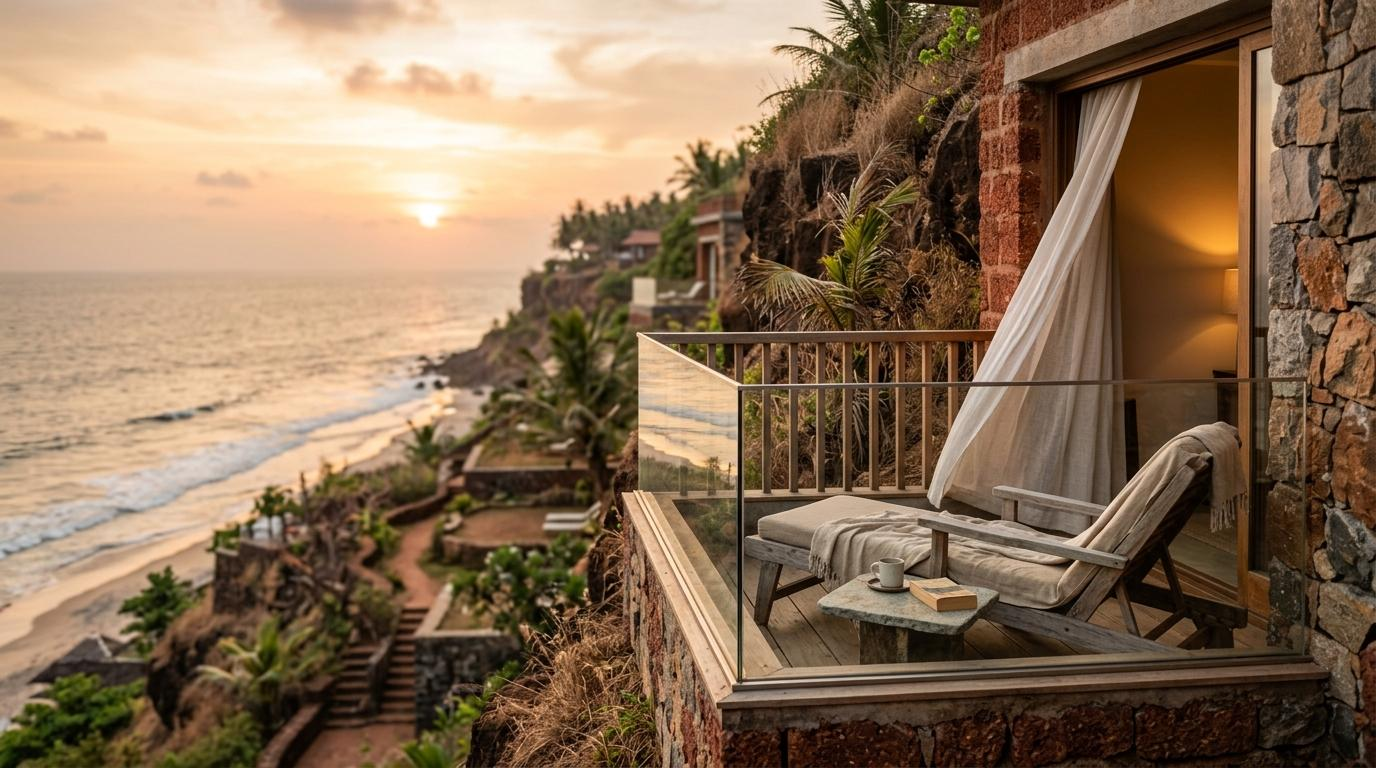
The first impression is vertical. Much of coastal Kerala opens gently toward the sea, but Varkala presents a laterite cliff above the shoreline, with the water stretching out below. Official tourism sources describe it as the only beach in southern Kerala where cliffs stand adjacent to the Arabian Sea, and that geography shapes everything about the visit.
You do not just “go to the beach” here. You move along a cliffside promenade, look down at the sand, pause for tea or fresh seafood, watch surfers or swimmers below, and catch sea breeze almost constantly. The setting creates a rhythm that feels both relaxed and observant.
The atmosphere is social, though not always loud. Many visitors spend part of the day drifting between cafés, small shops, yoga classes, beach access points, and scenic viewpoints. Even when you are doing very little, there is enough visual movement around you to keep the place engaging.
A typical day around Varkala Cliff often includes:
- sunrise or early light by the sea
- a walk along the cliff path
- time on the beach below
- café breaks with a view
- sunset watching from the promenade
That pattern makes Varkala especially satisfying for travelers who like places with built-in flow.
Why Varkala Cliff stands out on Kerala’s coastline
Its beauty is not only about beach appeal. Varkala’s cliff has geological importance as well. UNESCO’s tentative listing describes it as a dynamic coastal geomorphic system, which means the site has scientific value in addition to its visual drama. Even without a background in geology, visitors sense that the landform is unusual.
This matters because the place feels distinct, not interchangeable. Kerala has many attractive coastal stretches, yet Varkala has a stronger sense of form. The cliff frames the sea, the sea gives scale to the cliff, and the settlements above the shoreline create a more layered experience than a flat beach road typically does.
There is also a cultural dimension. Nearby Janardhana Swamy Temple adds a spiritual note to the area, and official destination material regularly presents Varkala as a town where beach life and devotional traditions coexist. That blend gives the destination a broader identity than “sun and sand.”
If you are the kind of traveler who values setting as much as activity, Varkala Cliff tends to feel memorable very quickly.
What to do around Varkala Cliff and Papanasam Beach
Varkala works well because it offers enough to fill a stay of two to four nights without pressuring you into a strict schedule. You can keep the trip very light or add gentle structure.
Kerala Tourism highlights sunbathing, swimming, surfing, yoga, meditation, and Ayurveda therapies among the main activities here. Incredible India also points to cliffside cafés, fresh seafood, artisan stores, and sunset views as part of the experience. Those details match what many travelers are actually looking for: not constant motion, but variety within walking distance.
The beach below the cliff is central to the visit, though sea conditions matter. Official sources note that waves can be strong at times, so checking local conditions before entering the water is wise. Varkala is enjoyable even for non-swimmers, but anyone planning regular beach time should stay realistic about the sea.
Here are the experiences that shape most stays:
- Beach time: Swimming, sitting on the sand, or simply watching the surf
- Cliffside walks: Easy strolls with sea views and café stops
- Yoga and wellness: Classes, meditation sessions, and Ayurveda-oriented downtime
- Temple visits: A cultural layer that gives the town more depth
- Sunset dining: One of the simplest and most rewarding ways to spend an evening
A longer stay can also include nearby backwaters, lagoons, or a slower day built entirely around wellness. That flexibility is one of Varkala’s strongest points.
Best time to visit Varkala Cliff
Season matters here more than many first-time visitors expect. Kerala Tourism identifies October to February as the best period to visit Varkala, with The monsoon months bringing heavy rain from June to August during the southwest monsoon. The climate is generally warm and humid, so the key question is less about cold weather and more about comfort, sea conditions, and your preferred travel style.
From October through February, the destination is at its most widely appealing. The air is usually more comfortable for walking, the cliffside setting is at its best for long outdoor stretches, and the beach atmosphere is more inviting for most travelers.
March to May can still work, especially for visitors who do not mind heat and want a quieter rhythm. Midday can feel intense, though, so those trips are better suited to travelers who are happy to slow down, rest during the hottest hours, and plan activity for mornings and evenings.
The monsoon months bring a different version of Varkala. The coast can look dramatic and beautiful, but heavy rain can affect beach use, views, movement, and overall convenience. That period suits a narrower set of travelers.
| Season | What it feels like | Best for | Watch-outs |
|---|---|---|---|
| October to February | Pleasant, active, scenic | First-time visitors, couples, mixed-interest trips | Higher demand |
| March to May | Hot, bright, quieter at times | Heat-tolerant travelers, shorter stays | Midday discomfort |
| June to August | Rainy, moody, less beach-focused | Monsoon fans, slow wellness breaks | Heavy rain, rougher sea |
| September | Transitional | Flexible travelers | Conditions can vary |
Who Varkala Cliff suits best
This destination is not “for everyone,” and that is actually useful. Its appeal is strongest when your travel style matches its strengths.
Varkala Cliff is a very good fit for travelers who want scenery with convenience. You can enjoy sea views, food, beach access, light shopping, yoga, and a bit of culture without spending long hours in transit. That makes it attractive for short Kerala itineraries and for travelers who prefer depth in one place over rushing between many stops.
It is especially appealing for:
| Traveler type | Why Varkala Cliff works well |
|---|---|
| Couples | Romantic sea views, sunset dining, easy pacing |
| Solo travelers | Walkable setting, social but manageable atmosphere |
| Friends | Cafés, beach time, wellness, casual evenings |
| Families with older children or teens | Visual appeal and varied activities in one area |
| International visitors | Familiar comfort mixed with strong local character |
| Wellness-focused travelers | Yoga, meditation, Ayurveda-oriented stays |
Couples often appreciate the balance. Varkala can feel intimate without being isolated. A day might include coffee with a sea view, a swim if conditions allow, a temple visit, a massage or yoga session, and dinner at sunset. That is a strong formula for a short coastal break.
Solo travelers also tend to do well here because the setting supports independence. It is easy to fill time on your own without feeling cut off, and the social energy is light enough that you can join in or step back as you prefer.
Families can enjoy Varkala too, though it is usually a better fit for those with older children or teens than for travelers seeking a fully enclosed resort setup with large private play spaces.
Who may prefer another Kerala beach destination
Varkala’s strengths are clear, but they come with trade-offs. If your ideal beach break means total quiet, very wide open sand, or a resort-first experience, another coastal destination may fit better.
The cliff layout also means movement is not always as simple as a flat beach town. Accessing the beach involves changes in level, and some travelers may find that less convenient than they expected.
A few profiles may want to think twice:
- Pure seclusion seekers: Varkala is scenic, but it is not a private-feeling coast
- Mobility-sensitive travelers: Cliffside access and beach approach can be less easy
- Adventure-first travelers: There is activity here, but it is not built around nonstop action
- Very young-family resort travelers: Some may prefer a more contained property-led beach stay
That said, many of these concerns can be handled with good planning. The right hotel location, room category, and transfer setup can make the experience much smoother.
The balance between spirituality, leisure, and café culture
One of the most interesting things about Varkala Cliff is that it avoids feeling one-dimensional. Some beach destinations become entirely about nightlife. Others become so meditative that they feel inactive by evening. Varkala sits somewhere in the middle.
The presence of Janardhana Swamy Temple contributes to that balance. You are in a place with devotional significance, yet the overall destination still feels open to beachgoers, wellness travelers, and casual vacationers. This creates a tone that is more layered than a purely commercial seafront.
The café culture matters too. Travelers often underestimate how much a good promenade changes a stay. Being able to walk, pause, look out over the sea, eat well, and continue at your own pace adds a sense of ease that many destinations struggle to provide.
If your ideal coastal trip includes both reflection and comfort, Varkala tends to deliver that combination naturally.
How to plan a comfortable Varkala Cliff stay
The experience changes quite a bit depending on where you stay. A property close to the cliffside promenade gives you easier access to views, cafés, and evening walks. A quieter stay slightly away from the busiest stretch may suit travelers who want rest after sunset.
When planning, think less about star rating alone and more about how you want each day to feel. In Varkala, location can shape the trip as much as the hotel itself.
A practical approach usually works best:
- Stay length: Two to four nights suits most travelers
- Room choice: Sea-facing or near-cliff rooms add real value
- Beach safety: Check conditions before swimming
- Season timing: October to February is the strongest window for most trips
- Trip pairing: Varkala combines well with Kovalam, Alleppey, Kochi, or a wider Kerala route
For travelers building a customized Kerala holiday, Varkala often works best as the “breathing space” in the itinerary. After temple towns, backwater stays, wildlife zones, or city arrivals, it gives the trip a slower coastal chapter with scenery and comfort still very much in play.
That is why it remains such a smart choice: Varkala Cliff is not just a place to look at the sea. It is a place to stay with it, move beside it, and let the landscape shape the pace of your days.