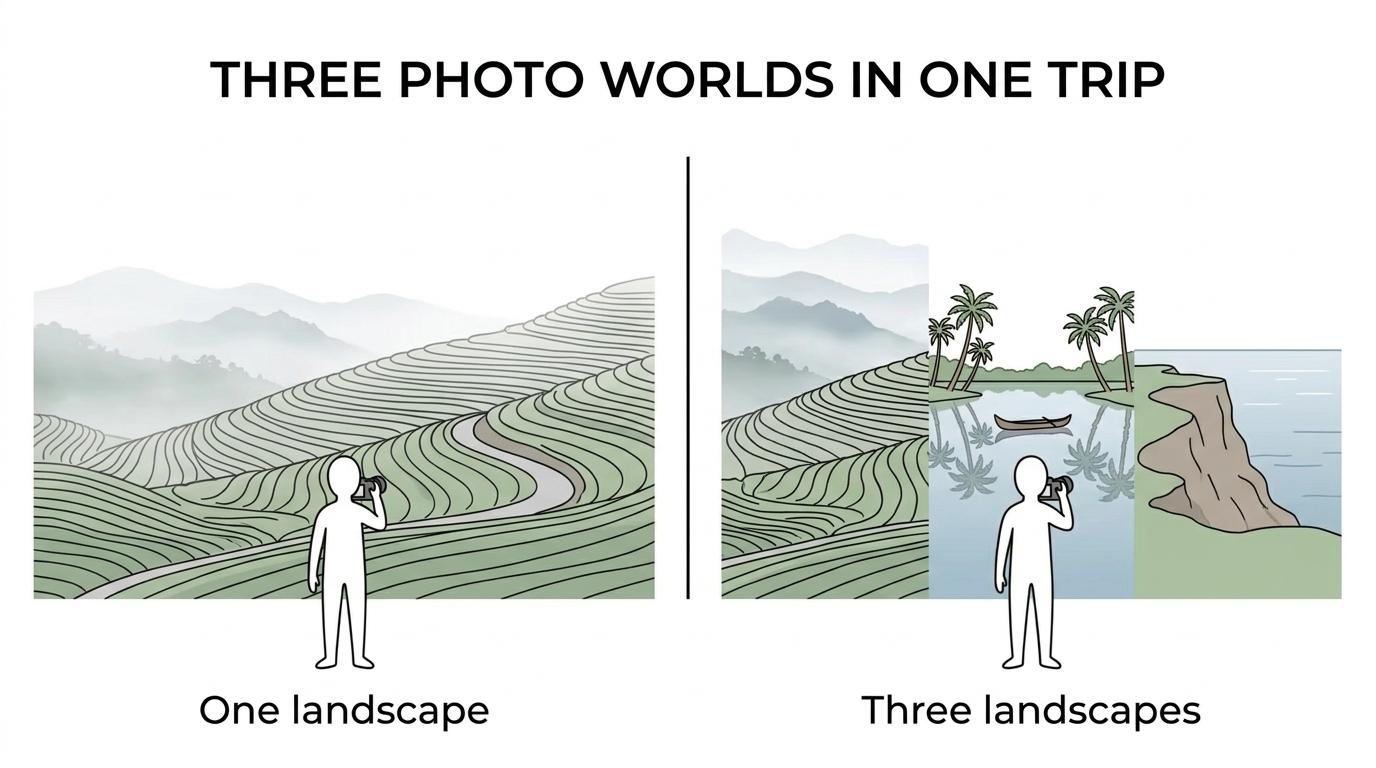
Kerala rewards photographers who like variety without constant long transfers. Within one state, it is possible to move from misty tea country to mirror-like backwaters, then finish the day on a cliff above the Arabian Sea. That density changes the way a photography trip feels. Instead of committing to one landscape type, you can build a portfolio with hills, village life, canals, beaches, forts, plantations, and monsoon skies in a compact window of time.
Light is the real editor here. Kerala’s locations are strong on their own, yet the images that stay with people usually come from timing: low cloud over Munnar at first light, bright open sky over Varkala before sunset, or the silver sheen that settles over Kuttanad after rain. A good plan is less about packing every landmark into one trip and more about pairing the right places with the right weather window.
Why Kerala photography stands out across short distances
Kerala is often spoken about as one visual idea, but that flattens what makes the state so good for serious image-making. Official tourism references point to specific viewpoints and terrain types rather than one generic “scenic Kerala.” That distinction matters. Top Station in Munnar offers broad mountain views and layered valleys. Varkala Cliff frames the sea from above. Alappuzha Beach Lighthouse combines coastline with a glimpse of the backwater zone. Each location asks for a different eye.
This range gives photographers two advantages. First, subject contrast comes naturally. A single trip can hold cool mountain air, humid canal country, and salt-bright coastal light. Second, weather variation becomes part of the creative process rather than a problem to avoid. If hill views close in with fog, that same fog may improve the mood of plantation roads or forest edges.
A few visual themes repeat across the state:
- mist and layered hills
- reflective water surfaces
- palms as framing elements
- red earth, green foliage, blue-grey rain skies
Kerala light by season and weather
Kerala’s climate follows a recognizable pattern, and photographers benefit from treating that pattern as a planning tool. State climate sources describe a hot season from March to May, the southwest monsoon from June to early October, the northeast monsoon from October to December, and a cooler winter period in January and February. The high ranges stay cooler than the plains, while lowland areas can feel warm and humid for much of the year.
That seasonal rhythm affects visibility, contrast, color saturation, and comfort on location. Hot pre-monsoon weeks can produce harsh midday light, but early mornings remain strong, especially in the hills. The southwest monsoon brings heavy rain, dramatic clouds, lush greens, wet roads, and softer daylight. The northeast monsoon still carries rain, though conditions can shift more quickly. Winter is often the easiest period for clean views, gentler temperatures, and longer field days.
The best season depends on what you want in the frame, not on some universal “best time” label.
| Region | Best light style | Strong months for many travelers | What to expect |
|---|---|---|---|
| Munnar and nearby hills | Sunrise, mist, diffused cloud light | January to March, October to February | Layered mountains, tea estates, soft morning atmosphere |
| Vagamon and uplands | Early morning and late afternoon | October to February | Meadows, rolling slopes, moody skies |
| Wayanad | Morning forest light, post-rain texture | October to February, monsoon for mood | Forest edges, viewpoints, richer greens |
| Alappuzha and Kuttanad | Sunrise, blue hour, overcast reflections | November to February, monsoon for drama | Canals, paddy fields, boats, mirror-like water |
| Varkala coast | Sunset, bright cloud breaks | October to March | Cliff views, sea horizon, warm evening color |
| Bekal and north Kerala coast | Sunset and side light near forts | October to March | Fort silhouettes, beach curves, open coastal skies |
Hill station photography locations in Munnar, Vagamon, and Wayanad
Munnar remains one of Kerala’s most dependable photography bases because its terrain gives shape to light. The region sits around 1,600 meters above sea level and is known for misty tea gardens, winding roads, and mountain rivers. That altitude changes the mood quickly. A clear sunrise can turn into drifting fog within minutes, which is excellent for layered compositions and restrained color palettes.
Top Station is widely noted for its panoramic mountain and valley views. On clear mornings, it offers the kind of depth landscape photographers chase: receding ridges, plantation geometry, and shifting cloud bands. Echo Point works differently. Instead of vast distance, it favors water, reflections, and human scale. Plantation roads near Munnar can be just as productive as formal viewpoints, especially when soft fog simplifies the scene.
Vagamon brings a gentler visual rhythm. Meadows and rolling slopes create cleaner lines than the busier tea landscapes of Munnar. It is a strong choice for wide frames, environmental portrait sessions, and drone-style compositions where terrain shape matters more than landmark recognition. Wayanad, by contrast, often feels denser and wilder, with forest margins, viewpoints, waterfalls, and richer post-rain foliage.
When working the hill stations, keep these timing notes in mind:
- Sunrise window: Best for mist layers, calmer wind, and cleaner mountain depth
- Mid-morning: Good for plantation texture once fog starts lifting
- Late afternoon: Useful for side light on slopes and roads
- Monsoon days: Better for mood, close details, and atmospheric scenes than for distant vistas
Backwater photography locations in Alappuzha and Kuttanad
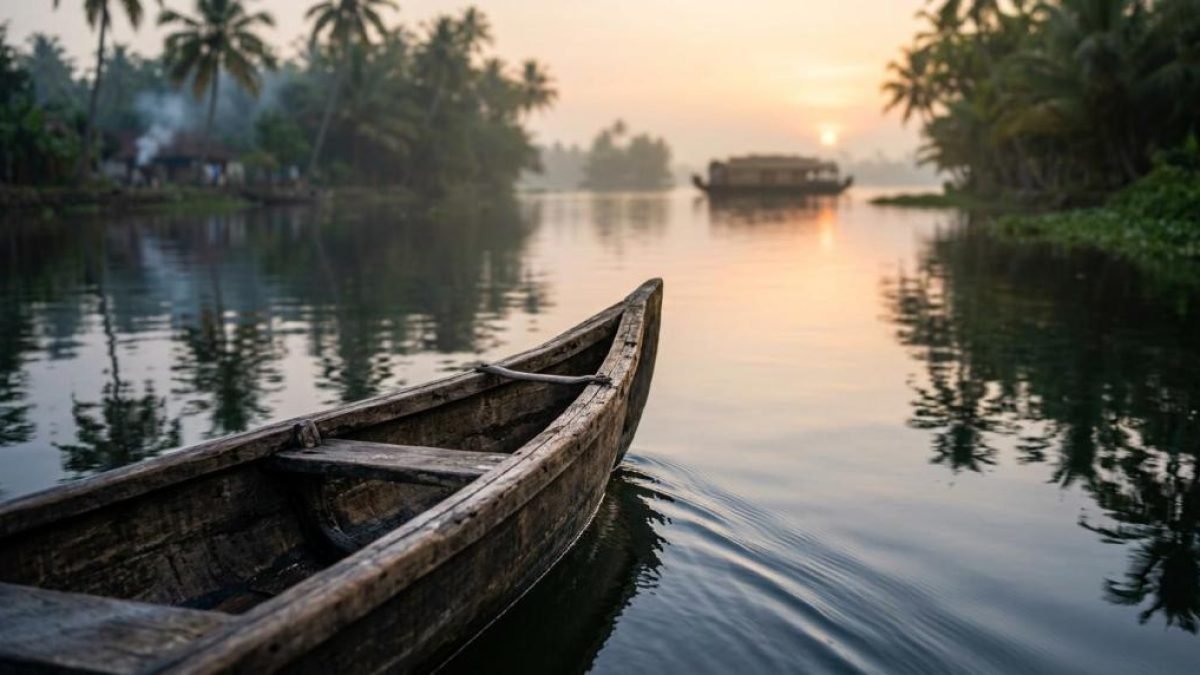
If the hills are about depth, the backwaters are about surface. Alappuzha and Kuttanad offer quieter compositions built on reflection, geometry, and rhythm. Kerala Tourism describes Kuttanad as a low-lying landscape with sprawling backwaters, palm-fringed islets, canals, coconut groves, and paddy fields cultivated below sea level. That unusual geography gives photographers more than postcard boat scenes. It creates structure.
Morning is often the best time here because the water is calmer and local activity begins early. Canoes, ferries, workers moving through narrow canals, and soft smoke from kitchens all add detail without visual clutter. Overcast weather is especially useful in the backwaters. Instead of flattening the image, cloud cover can reduce glare and deepen the green tones.
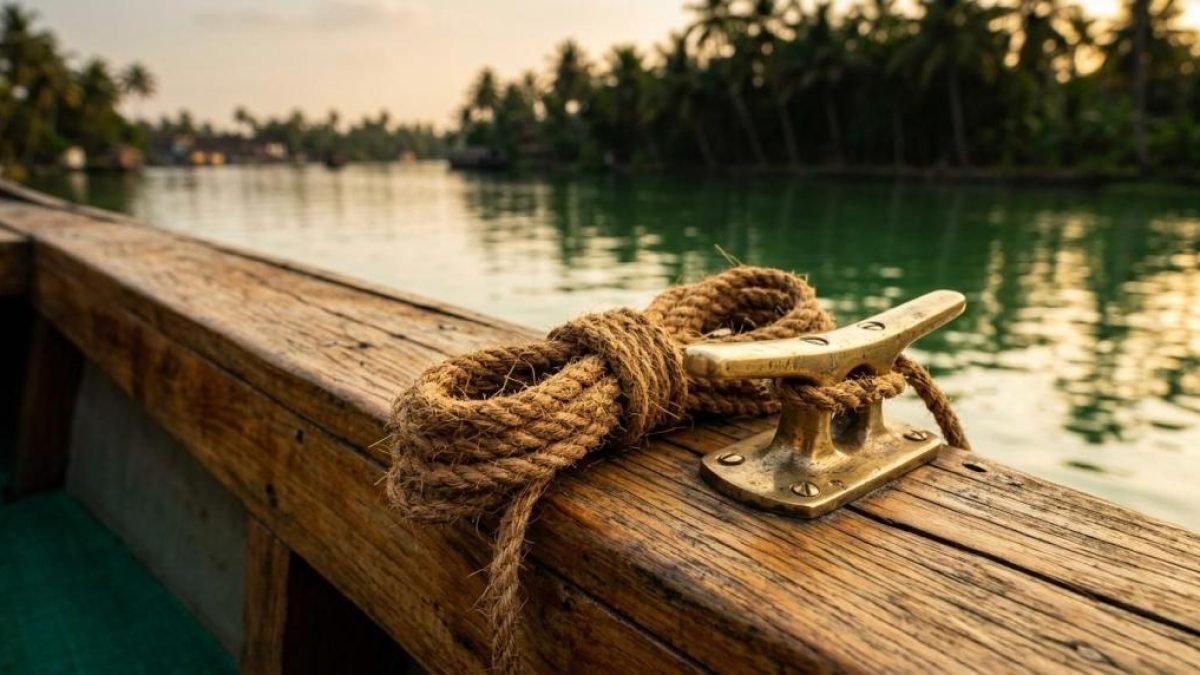
Houseboats are part of the visual identity of Alappuzha, though smaller craft often make better subjects than better shooting platforms. From a photography perspective, fixed stops, village edges, smaller jetties, and embankment roads usually offer stronger angles than photographing constantly from the deck of a moving boat. Sunrise over still canals and late afternoon light on the paddy margins can both be excellent, though the mood is very different.
A practical shooting approach helps:
- Wide lens: canal scenes, boat interiors, environmental context
- Short telephoto: isolating workers, palms, and repeating lines
- Polarizer: cutting glare from water and wet foliage
- Dry protection: rain cover, sealed bag, microfiber cloths
Beach and fort photography locations in Varkala, Bekal, and Alappuzha
Kerala’s coast is not one visual category. Varkala, Bekal, and Alappuzha each produce distinct images. Varkala’s cliff setting is the most dramatic. The elevation above the Arabian Sea gives photographers horizon control, foreground options, and the chance to layer people, cliff edge, surf, and sky in one frame. It is especially good at sunset, when the coastal light turns warm but stays open enough for detail.
Bekal adds mass and history. Fort walls meeting the sea create stronger shapes than a typical beach scene, and the location works well for silhouettes, architectural framing, and long-exposure water movement. The north Kerala coast often feels a little broader and less compressed than the busy central shoreline, which can help when composing cleaner seascapes.
Alappuzha Beach Lighthouse deserves attention because it offers a rare overlap of coast and backwater identity. Elevated viewpoints are valuable in Kerala because so much of the lowland landscape sits at eye level. From the lighthouse zone, you can read the coastline as a graphic line while still sensing the inland water network.
Coastal conditions change quickly, so flexible expectations matter more than rigid shot lists. A cloudless sunset may be pretty, but broken cloud often gives a richer result. Sea haze can soften the horizon. Brief rain can clear the air and deepen color minutes later.
Kerala photography planning for light, access, and pacing
A strong Kerala photography trip is rarely built by chasing only famous viewpoints. The better strategy is to combine one or two anchor destinations with nearby secondary locations that suit the same light. Munnar plus Top Station and plantation roads makes sense. Alappuzha plus Kuttanad canals works the same way. Varkala pairs naturally with cliff and beach sessions rather than long same-day detours inland.
This is where pacing becomes more important than quantity. Photographers often do better with fewer hotel changes and more repeated attempts at dawn and dusk. Returning to the same location under different weather can yield a much better set of images than moving constantly. The state’s compact geography helps, but early starts and realistic transfer times still matter.
When mapping a route, think in terms of light categories rather than city names:
- Mist light: Munnar, Vagamon, upper Wayanad
- Reflective light: Alappuzha, Kuttanad, Kumarakom side stretches
- Open coastal light: Varkala, Bekal, Alappuzha Beach
- Rain mood: monsoon roads, plantations, canal villages, forest edges
For travelers who want both comfort and productive field time, customized routing can make a real difference. A well-planned private itinerary can place a hill stay before a backwater segment, then finish on the coast, reducing repeated travel and preserving the best shooting hours. That structure is especially useful for couples, solo photographers, and small groups who want flexible starts, reliable transfers, and enough breathing room for weather changes.
Camera gear and shooting technique for Kerala conditions
Kerala rarely asks for extreme gear, but it does reward thoughtful packing. Humidity, rain, and changing temperatures are the real variables. A lightweight kit with weather protection often performs better than a heavy setup that slows movement on steps, trails, docks, and boat landings.
A two-lens setup is enough for most trips: one wide zoom for landscapes and interiors, one mid-range telephoto for compression, portraits, and details. Add a polarizer, spare batteries, and practical rain protection. Ocean Dive notes in its guide to a weekend diving kit that dry storage, backup basics, and quick-access protection matter most when equipment is moving repeatedly between wet and exposed environments, which is much the same problem photographers face along Kerala’s coast and backwaters. If you plan long exposures on the coast or in the backwaters, bring a compact tripod that is stable on uneven ground.
Technique matters as much as hardware. In hill stations, expose carefully for bright mist and darker foregrounds. In backwaters, watch for glare and distracting reflections near the frame edge. On the coast, keep an eye on horizon placement and sea haze. During monsoon spells, look beyond the “big view” and work smaller stories: droplets on tea leaves, wet temple streets, fishing nets at rest, textured fort walls, or a lone canoe cutting through grey water.
Building a Kerala photography itinerary that feels purposeful
The most rewarding Kerala image sets usually come from contrast. A trip that begins in the hills, passes into the backwaters, and ends on the coast can feel visually complete without becoming rushed. Three nights in a hill base, two nights near the backwaters, and two nights on the coast often create a strong rhythm for serious amateurs and professionals alike.
The goal is not to photograph everything. It is to give light enough room to shape the trip.
 When the plan respects season, terrain, and shooting hours, Kerala becomes unusually generous. A misty ridge at dawn, a canal turned to glass, and a sunset from a sea cliff can all belong to the same week, and each scene carries a different voice. That is what keeps photographers coming back.