Onam is the moment when Kerala feels both deeply rooted and joyfully open. Streets, homes, temples, community grounds, and waterways all take on a festive rhythm. Flowers appear at doorsteps, banana leaves are laid out for grand meals, and families gather with a sense of return that sits at the heart of the season.
The legend of Mahabali is deeply intertwined with the essence of Onam. According to popular belief, Mahabali was a benevolent and beloved king whose reign was marked by prosperity and equality. His story speaks to themes of humility and generous leadership, as it is said that Onam celebrates his annual visit to Kerala to see his loyal subjects. This mythological narrative adds a layer of cultural and emotional depth to the festival, underscoring its significance as a time of communal joy, remembrance, and gratitude.
Vishnu, a central deity in Hinduism, plays a significant role in the mythological context of Onam. According to Hindu belief, it was Vishnu in the form of Vamana, his fifth avatar, who challenged King Mahabali’s ego by requesting three paces of land. Mahabali, known for his generosity, agreed, only to find Vamana transforming into a giant and covering the earth and skies with two strides. When there was no space for the third step, Mahabali offered his own head, thus illustrating humility and sacrifice. The story not only highlights Vishnu’s pivotal role in maintaining cosmic order but also enriches the cultural narrative of Onam, as the festival commemorates Mahabali’s noble spirit and return to Kerala.
For Malayali travelers, Onam is not just a date on the calendar. It is a statewide cultural season tied to memory, harvest, hospitality, and public celebration. If the goal is to see Kerala at one of its most expressive times of year, Onam offers exactly that.
Mythology plays a pivotal role in the celebration of Onam, enriching the festival with stories and traditions passed down through generations. The tale of King Mahabali and the Vamana avatar brings a mythical dimension to the festivities, infusing the celebrations with a sense of reverence and cultural continuity. These narratives not only connect the past with the present but also highlight the festival’s deep spiritual and cultural roots, making Onam a unique blend of history and heritage.
Onam is a part of a larger tapestry of Hindu festivals celebrated across India, each with its distinct flavor and cultural significance. While Onam is particularly associated with Kerala, its themes of harvest, gratitude, and togetherness echo sentiments found in other Hindu festivals, such as Diwali’s celebration of light over darkness or Holi’s embrace of colors and communal joy. This connection to the broader spectrum of Hindu celebrations enhances Onam’s appeal and underscores the diversity within Indian cultural expressions.
What Onam in Kerala celebrates
Onam is widely recognized as Kerala’s national festival, and it carries more than one meaning at once. It is linked to the cherished story of King Mahabali, the just and generous ruler whose annual return is celebrated with affection across Kerala. The festival is also connected to the Vamana avatar of Vishnu, which gives the season an important place in Hindu tradition.
For the Malayali community, Onam is not merely a festival but a cultural emblem that defines their identity and heritage. This time of year is eagerly anticipated, as it serves as a vibrant reminder of their deep-rooted traditions and communal values. Malayalis, regardless of where they are in the world, find a way to celebrate this festival with grandeur, often returning to their homeland or recreating its rituals in their places of residence abroad. The enduring significance of Onam for Malayalis highlights the festival’s universal appeal, spanning beyond geographical boundaries and uniting the community in a shared sense of pride and belonging.
Thiruvonam, the most significant day of the Onam festival, is when the celebrations reach their peak. It marks the day when King Mahabali is believed to visit his people, and homes are filled with elaborate feasts, traditional music, and dances. Families prepare extensive meals known as ‘Onasadya,’ served on banana leaves, showcasing an array of flavors that represent the hospitality and culinary richness of Kerala. The day is both a culmination and a highlight of the Onam season, reflecting the festive spirit and cultural significance of the festival.
Kathakali, a classical Indian dance-drama from Kerala, is an integral part of the Onam festival’s celebrations. Known for its elaborate makeup, heavy costumes, and detailed gestures, Kathakali performances are often based on stories from Hindu mythology, including the tales of Mahabali and Vamana, which resonate deeply during the festivities. As audiences gather to witness these artistic expressions, the dance enriches the cultural tapestry of Onam, offering an enthralling glimpse into Kerala’s rich tradition of storytelling and performance arts.
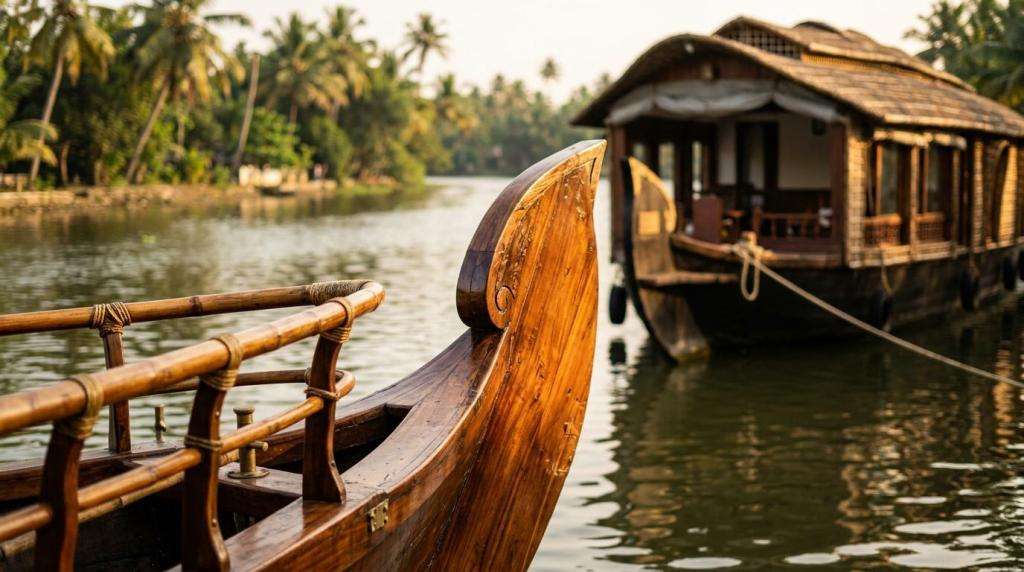
Among the vibrant activities associated with Onam, Vallamkali, or the snake boat race, stands out as a thrilling testament to Kerala’s cultural vitality. Held on the serene waters of the state’s extensive backwaters, Vallamkali showcases teamwork, strength, and skill as intricately designed longboats glide through competition.
Onam Kali, a collection of traditional group games, adds another layer of excitement to the festival. These games, often played outdoors on lush green fields, encompass a variety of activities that emphasize strength, strategy, and camaraderie among the participants. They are not just a source of entertainment; Onam Kali represents a community spirit and a tribute to agricultural prosperity, forming an essential part of the cultural fabric during the Onam celebrations.
The synchronized rowing not only captivates onlookers but also strengthens community bonds, embodying the joyous spirit of the festival while celebrating Kerala’s rich maritime heritage.
At the same time, Onam is a harvest festival. That dual identity matters. It explains why the festival feels spiritual, social, and seasonal all at once. It belongs to temples and households, but it also belongs to fields, food, and community life.
This is one reason Onam speaks to so many people, including Malayalis living far from Kerala, who fondly remember the legend of Mahabali associated with the festival. The festival carries the idea of homecoming, abundance, gratitude, and shared joy.
Among the diverse activities that characterize Onam, Onam Kali and Kummattikali hold a special place. It refers to traditional games played during the festival, engaging people of all ages in friendly competition and camaraderie. From tug-of-war to local variants of tag and ball games, these activities are not only a source of fun but also a means to preserve cultural heritage and foster community spirit. Each game has its own significance and often links back to the region’s agrarian roots, celebrating the bountiful harvest and the spirit of togetherness.
When Onam in Kerala takes place
Onam falls in the Malayalam month of Chingam, usually in August or September. Official tourism references describe the main festive period as the ten days beginning with Atham and building toward Thiruvonam, the most important day of the season.
That timing places Onam right inside one of Kerala’s most active travel windows. Monsoon landscapes are still lush, cultural calendars are full, and many destinations see stronger demand because people want to be in Kerala during the celebrations.
| Onam season element | What it means |
|---|---|
| Chingam | The Malayalam month when Onam is celebrated |
| Atham | The opening day of the main 10-day festival period |
| Thiruvonam | The peak festive day associated with the visit of Mahabali |
| August to September | The usual travel-season window for most visitors |
| Statewide celebrations | Homes, temples, towns, and tourism centers join the festive mood |
Travelers planning around Onam should remember that the exact dates shift each year, since the festival follows the traditional calendar rather than a fixed Gregorian date.
Core Onam traditions in Kerala
What makes Onam unforgettable is the way rituals and public celebration flow into daily life. Some traditions are quiet and intimate. Others are large, musical, and highly visual. Together, they create the full texture of the season.
One of the most recognized customs is the Pookkalam, the floral carpet arranged at entrances and courtyards. These designs often grow more elaborate over the course of the ten festival days. They are beautiful to look at, but they are also acts of welcome, patience, and family participation.
Food stands at the center of Onam as well. The Onasadya is the grand vegetarian feast served on a banana leaf, and it remains one of the most anticipated parts of the festival. A traditional sadya brings together many dishes, each adding contrast in texture, spice, sweetness, and tang. It is a meal built for togetherness.
Public celebrations add another layer. Kerala Tourism regularly highlights Vallam Kali, the famed boat races, along with Pulikali, the tiger-themed folk performance, as festival highlights. Swings, music, dance, and local pageantry also appear across many towns and neighborhoods.
Illustrated set of Onam traditions showing a floral pookkalam, banana-leaf sadya meal, snake boat race, Pulikali performer, festive clothes, and a swing.

After a paragraph like this, the main traditions are easiest to remember in a simple set:
- Pookkalam floral carpets
- Onasadya feast
- Vallam Kali boat races
- Pulikali: body-painted tiger dance performances
- Onakkodi: new clothes worn during the festival
- Swings and family gatherings
Pookkalam and Onasadya during Onam in Kerala
Pookkalam and Onasadya show two sides of Kerala’s festive culture. One is visual and decorative. The other is culinary and communal. Both are tied to care, preparation, and the welcome extended to guests and family alike.
Watching a household prepare a pookkalam can be as memorable as seeing a large public display. The same is true of the sadya. A banquet hall version may be impressive, but a well-prepared meal in a home or heritage setting often reveals the deeper rhythm of the festival.
Vallam Kali and Pulikali during Onam in Kerala
When Onam steps into public space, energy rises quickly.
Long, sleek snake boats moving in powerful rhythm across Kerala’s waterways create one of the season’s most dramatic sights. In another setting, Pulikali fills streets with percussion, painted performers, and a playful intensity that turns spectators into eager participants.
Best places to experience Onam in Kerala
Onam is celebrated across the state, so there is no single “correct” place to be. Still, some locations are especially meaningful. The Thrikkakkara Vamana Moorthy Temple is often regarded as a central site in the larger Onam tradition, and many people see it as an important spiritual focal point during the festival period.
Cities and towns also host organized cultural programs that are ideal for visitors who want a structured festival atmosphere. Public performances, floral displays, food events, and community gatherings make urban centers lively during this time. Kochi, Thiruvananthapuram, and Thrissur often feel especially animated.
Then there are the region-specific highlights. Alappuzha and Kottayam are strong choices for travelers drawn to boat-race culture and backwater settings. Thrissur is closely associated with Pulikali. Village areas, meanwhile, often offer the warmest look at family-led customs, though access usually works best with local planning and pre-arranged logistics.
What Onam season means for Kerala travel planning
Onam is festive, but it is also busy. Hotels, heritage stays, private villas, houseboats, and transport services can fill quickly in popular circuits. Demand spikes are especially common in places where festival programming, backwater travel, or premium stays overlap.
That does not mean the season is difficult. It means planning matters. Travelers who want the best choice of accommodations, trained chauffeurs, private transfers, and well-timed sightseeing usually benefit from confirming arrangements well ahead of arrival.
A flexible plan also helps. Some visitors want full exposure to public festivities. Others prefer a quieter holiday with just a few curated Onam experiences folded into a broader Kerala itinerary. Both approaches work well when the schedule is realistic and local distances are respected.
A few practical travel points are worth keeping in mind:
- Book early: premium stays and houseboats can sell out faster around festival dates
- Check local event timing: boat races and public programs may not all happen on the same day
- Allow extra transit time: festive traffic can affect city movement
- Private ground transport
- Cultural meal experiences
How to experience Onam in Kerala respectfully
Visitors do not need deep ritual knowledge to enjoy Onam well, though attentiveness makes the experience richer. Dress modestly when visiting temples or family-centered spaces. Accept hospitality graciously. If a sadya is served traditionally, follow the pace of the meal rather than rushing through it.
Photos are welcome in many public settings, but permission matters in homes, temple premises, and close-up cultural moments. A festival is not just an event to watch. It is also a shared emotional space for the people celebrating it.
These habits help visitors join the mood with confidence:
- Observe first: take a moment to see how locals are participating
- Ask politely: especially before photographing rituals, people, or meals
- Dress appropriately: light, modest clothing suits both the climate and the occasion
- Warm curiosity
- Patience in crowds
- Respect for local timing
Why Onam in Kerala feels different from other festivals
Many festivals are spectacular. Onam is spectacular too, but that is not the whole story. Its power comes from the way it joins domestic ritual, public celebration, seasonal memory, and statewide identity without forcing them apart.
A visitor may begin the day with a temple visit, pass a floral display in a hotel courtyard, sit down to a beautifully served sadya at lunch, hear festival music in a town square by evening, and end the day beside quiet water in the backwaters. Few cultural seasons hold that range so naturally.
There is also a striking emotional balance to Onam. It is festive without feeling superficial. It is traditional without feeling closed. It carries pride, yet it remains generous to outsiders who arrive with genuine interest.
For travelers looking at Kerala through food, culture, faith, landscape, or family life, Onam brings those threads together in a vivid and memorable way. The season does not just show Kerala in celebration. It shows Kerala in self-expression, with warmth, confidence, and a sense of welcome that stays with people long after the trip is over.