Kerala’s craft heritage is easiest to appreciate when you look at the materials first. Coconut husk becomes durable fiber. Cotton cloth becomes ceremonial dress. Gold-toned zari becomes a visual language of festivity. What might seem simple at a glance is, in Kerala, shaped by region, labor, memory, and long-practiced skill.
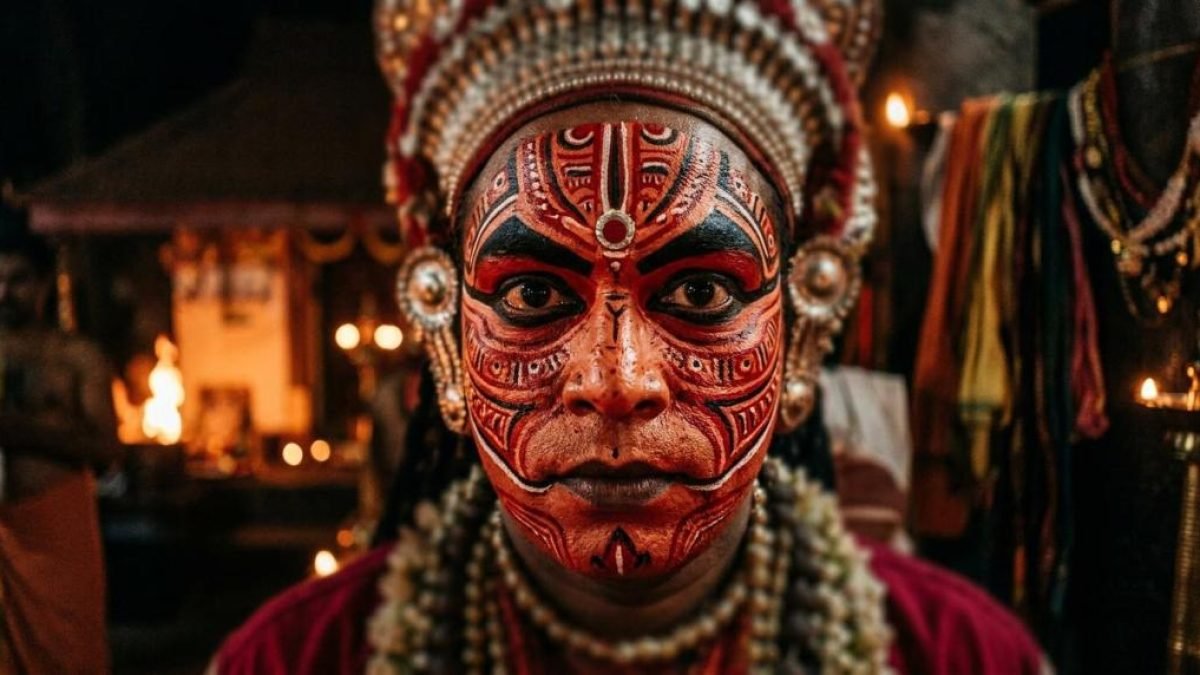
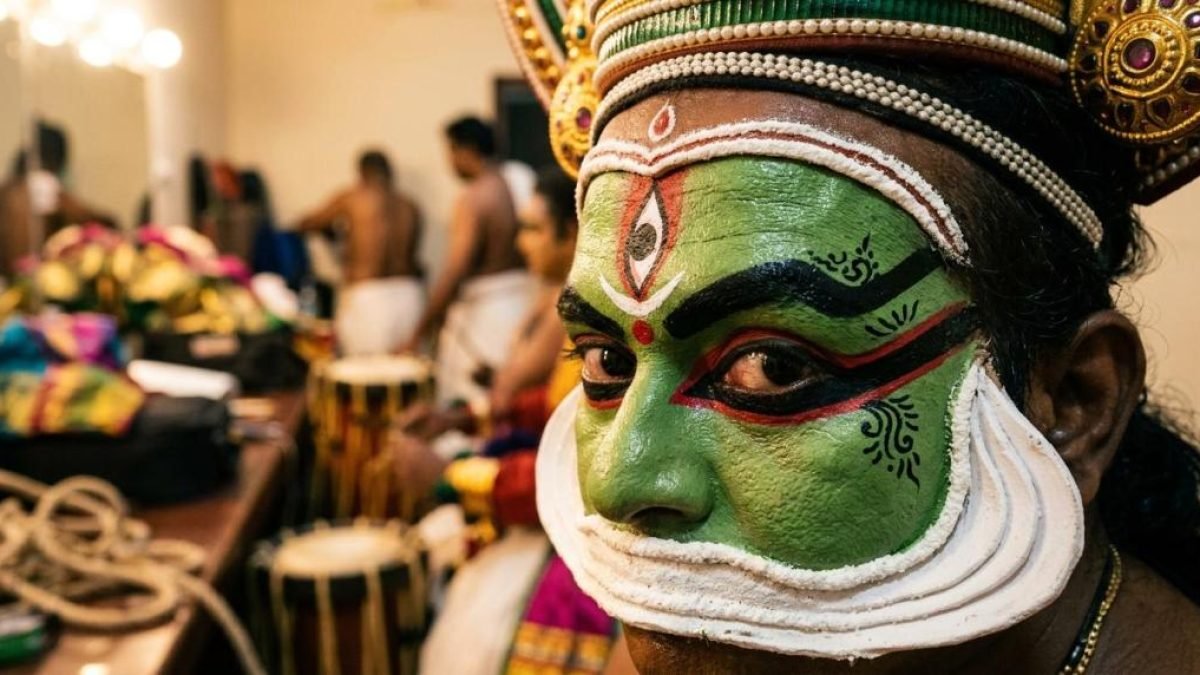
Folk art in Kerala extends beyond mere aesthetic value; it encapsulates the cultural heritage and identity of the state. The vibrant forms of dance, music, and painting are deeply rooted in everyday life and are a rich representation of local beliefs, traditions, and histories. These artistic expressions are often community-centered, evolving through collective memory and shared labor, and are seamlessly woven into the very fabric of Kerala’s social and cultural practices. This connection to the community and environment is evident in how folk art preserves stories and values across generations.
Among the many traditional crafts of the state, two stand apart for how clearly they represent Kerala itself: coir and kasavu. Kerala Tourism identifies both as major handicraft traditions, and official sources still tie them to active production hubs, working artisans, and a living economy rather than a museum past. That matters. These are not just old forms kept alive for display. They remain woven into daily life, seasonal rituals, and trade.
Kerala craft traditions shaped by material and place
A useful way to read Kerala’s craft culture is to see how closely each craft is linked to a specific raw material and a specific geography. Coir belongs to the coconut belt. Kasavu belongs to weaving centers where loom practice, dress traditions, and festive customs have stayed strong across generations.
That link between place and product gives Kerala’s craft traditions unusual clarity. You can often trace an object back to a small set of towns, a familiar landscape, and a community of makers whose work has changed less than outsiders might expect. Official tourism and government references keep coming back to the same fact: these traditions are still organized around distinct materials and production centers.
| Craft tradition | Core material | Main production identity | What it is known for |
|---|---|---|---|
| Coir | Coconut husk fiber | Strong concentration in Alappuzha district | Mats, rugs, carpets, geotextiles, utility goods |
| Kasavu | Off-white cotton with gold zari border | Chendamangalam, Balaramapuram, Kuthampully | Sarees, set mundu, mundum neriyathum, festive wear |
That concentration is one reason these crafts are so rewarding to see in Kerala itself. A traveler is not just buying an item. They are stepping into a regional system of knowledge.
Coir craft in Kerala from coconut husk to practical design
Kerala Tourism describes coir as a major traditional handicraft category made from coconut husks. The basic transformation is striking. A rough agricultural byproduct is processed into fiber, spun, twisted, and woven into articles that are both useful and attractive. Few craft traditions show the state’s practical intelligence as clearly as coir does.
Coir products cover a wide range. Some are household staples, some are decorative, and some are used in environmental applications. Kerala Tourism notes that artisans make mats, carpets, furniture, and other utility and decorative items from coir. The material is strong, textured, biodegradable, and visually tied to the tropics without feeling fragile or ornamental.
Common coir products from Kerala include:
- door mats
- rugs
- mattresses
- carpets
- garden articles
- furniture
- geotextiles
The last category deserves special attention. Kerala Tourism states that coir geotextiles are used as a natural option to prevent soil erosion and help renew vegetation. That means coir is not only part of Kerala’s heritage economy. It also remains relevant in current conversations about natural materials, land care, and lower-impact design.
Alappuzha and the scale of Kerala coir production
When people refer to Kerala as a coir center, they are often pointing, directly or indirectly, to Alappuzha. Official data from the Directorate of Industries and Commerce in Kerala shows just how concentrated the sector is. The Alappuzha district infrastructure page states that the coir industry provides employment to about 2 lakh workers, and 84% of them are women. The same page says 7,584 of Kerala’s 9,078 coir units registered with the Coir Board are in Alappuzha, and that the district accounts for 95% of the coir sector.
Those numbers turn a familiar craft story into something larger. Coir is not simply an old village skill preserved out of sentiment. It is a substantial labor network with deep social impact, especially for women’s employment.
Kerala Tourism adds another important layer. The state, according to its tourism material, accounts for 61% of coconut production and more than 85% of coir products, while around 50% of available coir husk is used to produce coir goods. That level of integration between agriculture and handicraft gives coir a strong economic base.
There is also clear evidence that the industry remains active in trade terms. The Coir Board continues to publish annual export statistics, monthly export data, and average monthly prices for different varieties of coir yarn, including 2024-25 figures. A craft with current export tracking is not fading into nostalgia. It is still moving through markets, warehouses, workshops, and households.
Kasavu weaving in Kerala and the meaning of ceremonial cloth
If coir represents Kerala’s material practicality, kasavu represents its visual identity. Kerala Tourism describes kasavu as an off-white cotton saree with gold zari borders and calls it an iconic symbol of Kerala. That description is accurate, though still smaller than the full cultural meaning of kasavu in daily life and celebration.
Kasavu is widely associated with festive dressing. Kerala Tourism says kasavu-bordered clothing has been worn for special occasions in Kerala for more than 300 years. The enduring appeal lies in restraint. The fabric is not loud. The palette is quiet. The gold border does the work of signaling grace, occasion, and belonging.
Kasavu is also broader than the single image of a saree. Traditional dress references often include:
- set mundu
- mundum neriyathum
- kasavu sarees
- festival blouses and coordinated drapes
This is where craft and culture meet most visibly. A kasavu garment can carry associations with temple visits, family ceremonies, harvest season and public celebrations while still feeling contemporary. That balance between continuity and freshness is one reason kasavu has stayed central rather than becoming occasional costume.
The three kasavu weaving centers in Kerala
Official tourism sources identify Chendamangalam, Balaramapuram, and Kuthampully as the three main weaving centers for kasavu fabrics. That detail is valuable because it shows that kasavu is not spread evenly across Kerala. It comes from a few places with longstanding weaving identities.
Each center carries its own reputation in the broader textile landscape of the state. Travelers interested in Kerala craft traditions often benefit from seeing how weaving is grounded in community rhythms rather than detached factory production. Kerala Tourism notes that kasavu fabrics are still made using traditional methods in the looms by artisans. That continuity matters as much as the finished garment.
When looking at the three centers, it helps to keep these distinctions in mind:
- Balaramapuram: widely associated with traditional handloom weaving and classic Kerala dress forms
- Chendamangalam: known for weaving heritage shaped by local community histories
- Kuthampully: strongly identified with kasavu textiles and ceremonial wear
Even without a technical lesson in loom structure or yarn count, a visitor can usually sense the difference between cloth made for anonymous retail and cloth shaped by a place with memory. In kasavu weaving, that sense remains very strong.
What makes coir and kasavu feel distinctly Kerala
Not every regional craft becomes a cultural shorthand. Coir and kasavu do. They do so for different reasons.
Coir is tied to the coconut landscape that marks Kerala so powerfully. It reflects utility, adaptation, and environmental intelligence. Kasavu is tied to the visual code of Kerala’s ceremonial life. It reflects rhythm, dignity, and continuity. One comes from fiber extracted from the husk of a coconut. The other depends on the interplay of white cotton and gold zari. Together, they show how Kerala turns local material into something enduring and recognizable.
That distinction becomes even clearer when you compare how each craft lives in public imagination.
- Coir: household use, trade, women’s work, export, design, erosion control
- Kasavu: festival dress, identity, ritual, weaving centers, heirloom value, public celebration
This is one reason craft-focused travel in Kerala can be far richer than standard shopping. You are not moving from store to store. You are reading the state through texture, labor, and dress.
Buying Kerala crafts with a more informed eye
Travelers often want to take home something authentic but are unsure what to look for. With coir and kasavu, a little context helps. Handmade does not always mean rustic-looking, and polished presentation does not always mean industrial production. The better question is whether the object still shows a real relationship to Kerala’s craft systems.
When buying kasavu, pay attention to the quality of the cotton, the finish of the border, and the balance of the design. When buying coir, notice density, weaving tightness, and whether the product is meant for utility, décor, or garden use.
A few practical checks can make the purchase more meaningful:
- Material first: ask whether the coir item uses natural coconut fiber and what the intended use is
- Weaving origin: ask if the kasavu piece is linked to Balaramapuram, Chendamangalam, or Kuthampully
- Use case: choose coir rugs, mats, or geotextile-based garden items based on where they will actually be used
- Craft value: expect labor-intensive handloom and handworked pieces to reflect time and skill in the price
That approach makes shopping less about souvenirs and more about selecting pieces that still carry the logic of the place they came from.
Seeing Kerala craft traditions during travel
For many visitors, crafts become memorable when they are placed inside a wider itinerary. A morning in a weaving center feels different after time in temples, old neighborhoods, or backwater regions where the local economy is visible in everyday detail. A coir stop in or near Alappuzha feels stronger when linked with the coast, waterways, and coconut groves that supply the raw material.
This is where custom travel planning can be especially useful. Craft visits usually work best when paired with the right pace, local interpretation, and realistic transfer times rather than squeezed into a rushed day. Kerala’s major craft zones are specific, and the experience improves when they are approached with intention.
A well-planned craft-focused route in Kerala might include:
- Alappuzha for coir-linked heritage and backwater context
- Balaramapuram or Kuthampully for handloom traditions
- local textile or handicraft outlets with traceable sourcing
- cultural stops where kasavu is seen in use, not only on display
Seen this way, Kerala’s craft traditions are not side attractions. They are one of the clearest ways to read the state itself: through fiber, cloth, labor, ceremony, and the places where all of them still come together.